

Ever stumbled upon the word “cumbersome” in a book, email, or news article and wondered what it really means? You’re not alone! It’s one of those words that sounds sophisticated but is actually quite simple once you understand it.
In this guide, we’ll unpack everything about the term “cumbersome” — including its definition, origin, and how it’s used in everyday life and business. You’ll also find examples, synonyms, and FAQs to help you use it confidently in your writing or conversations.
🧐 What Does “Cumbersome” Mean?
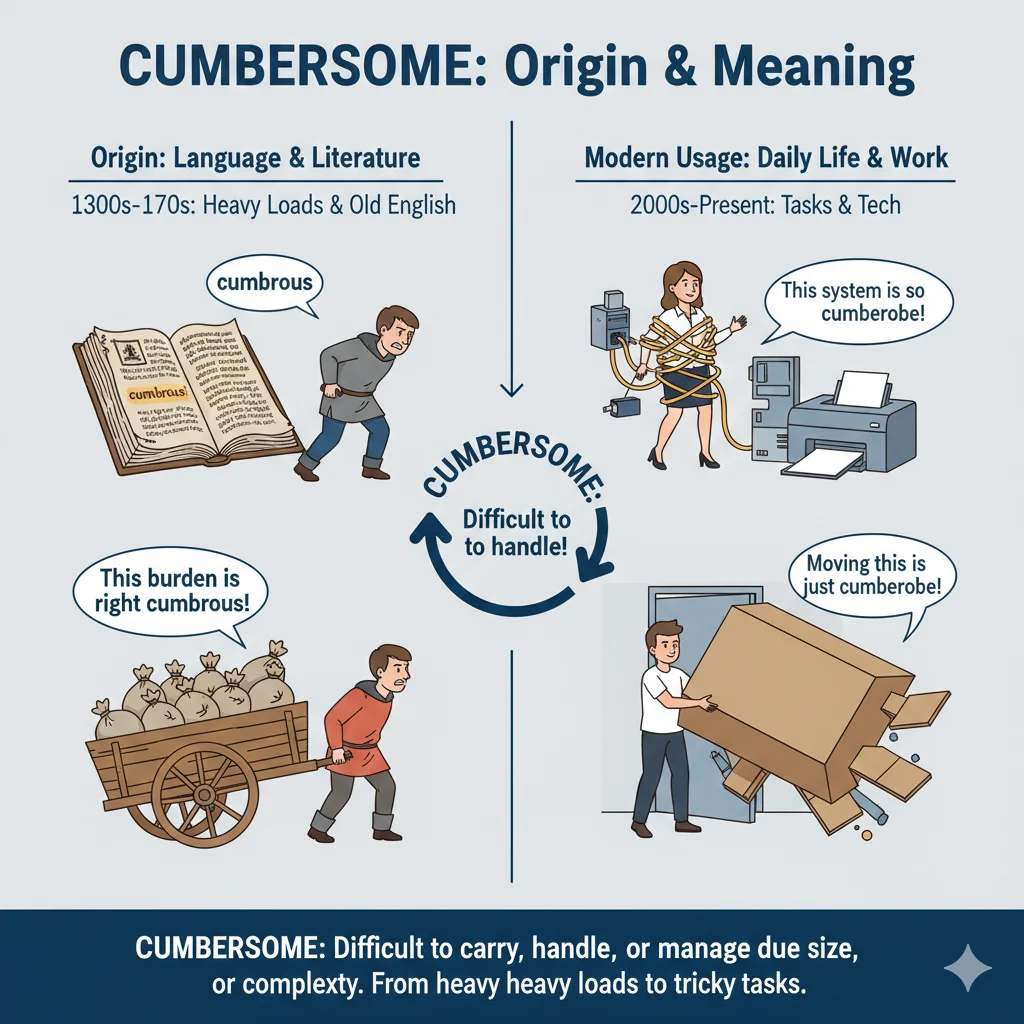
Cumbersome means something large, heavy, or complicated that’s difficult to carry, handle, or deal with.
It’s often used to describe objects, systems, or processes that are awkward, slow, or inconvenient.
✅ Part of Speech: Adjective
✅ Used in: Everyday English, business, and technical writing
Example:
“The old filing system was too cumbersome, so the company switched to digital records.”
📚 Origin and Popularity
The word “cumbersome” dates back to the 14th century, derived from the Middle English word “cumbrous,” which meant troublesome or burdensome.
It comes from the root “cumber,” meaning to hinder or obstruct. Over time, “cumbersome” evolved to describe anything awkward or hard to manage — whether physical or metaphorical.
It’s commonly used today in business reports, academic writing, and formal speech, especially when describing inefficient systems or procedures.
🌐 Cumbersome Meaning in Different Contexts
| Context | Meaning | Example |
| In Everyday Use | Something physically awkward or hard to handle | “The suitcase was too cumbersome to carry upstairs.” |
| In Business | A process or system that’s inefficient or slow | “The approval procedure is too cumbersome for small projects.” |
| In Technology | Complex or outdated software that’s hard to use | “This interface feels cumbersome compared to modern apps.” |
| In Legal/Official Writing | Complicated language or documentation | “The contract’s cumbersome wording made it hard to understand.” |
💬 Examples of “Cumbersome” in Sentences
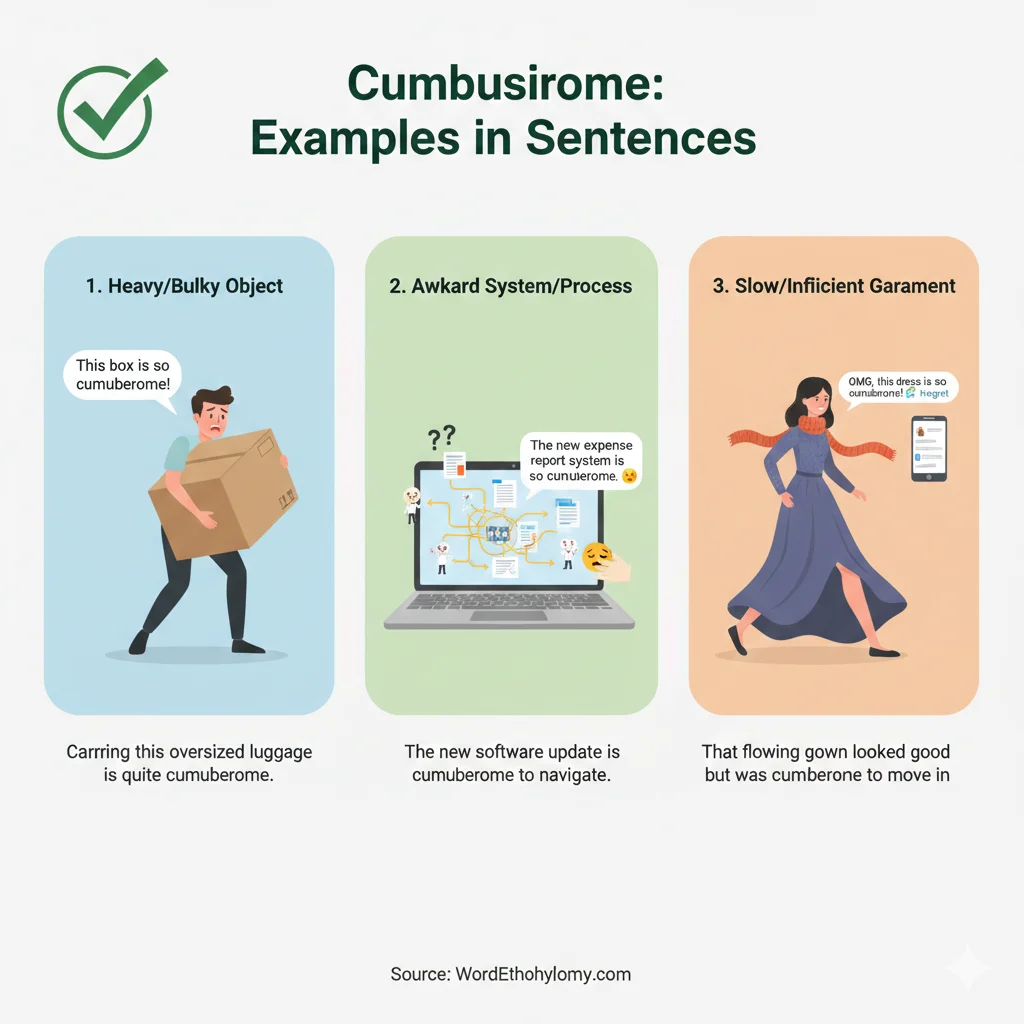
Here are a few ways you might see or use the word in real life:
- “Carrying that large box through the narrow hallway was cumbersome.”
- “The company’s old database was cumbersome and inefficient.”
- “He found the government’s application process extremely cumbersome.”
- “Her explanation was so cumbersome that no one understood the main point.”
- “Switching to a simpler system helped eliminate cumbersome paperwork.”
📘 Tip: You can use “cumbersome” both for physical things (like luggage) and non-physical ones (like bureaucracy or software).
Ineffable Meaning: Definition, Origin, and How to Use It Correctly
🔁 Similar or Related Terms
| Word | Meaning | Use Case Example |
| Bulky | Large and hard to move | “The bulky furniture couldn’t fit through the door.” |
| Unwieldy | Hard to handle or control | “The unwieldy tool required two people to use it.” |
| Complicated | Hard to understand or deal with | “The process was too complicated for beginners.” |
| Inefficient | Wasting time or resources | “Their system was outdated and inefficient.” |
🧠 How to Use “Cumbersome” Correctly
Do’s ✅
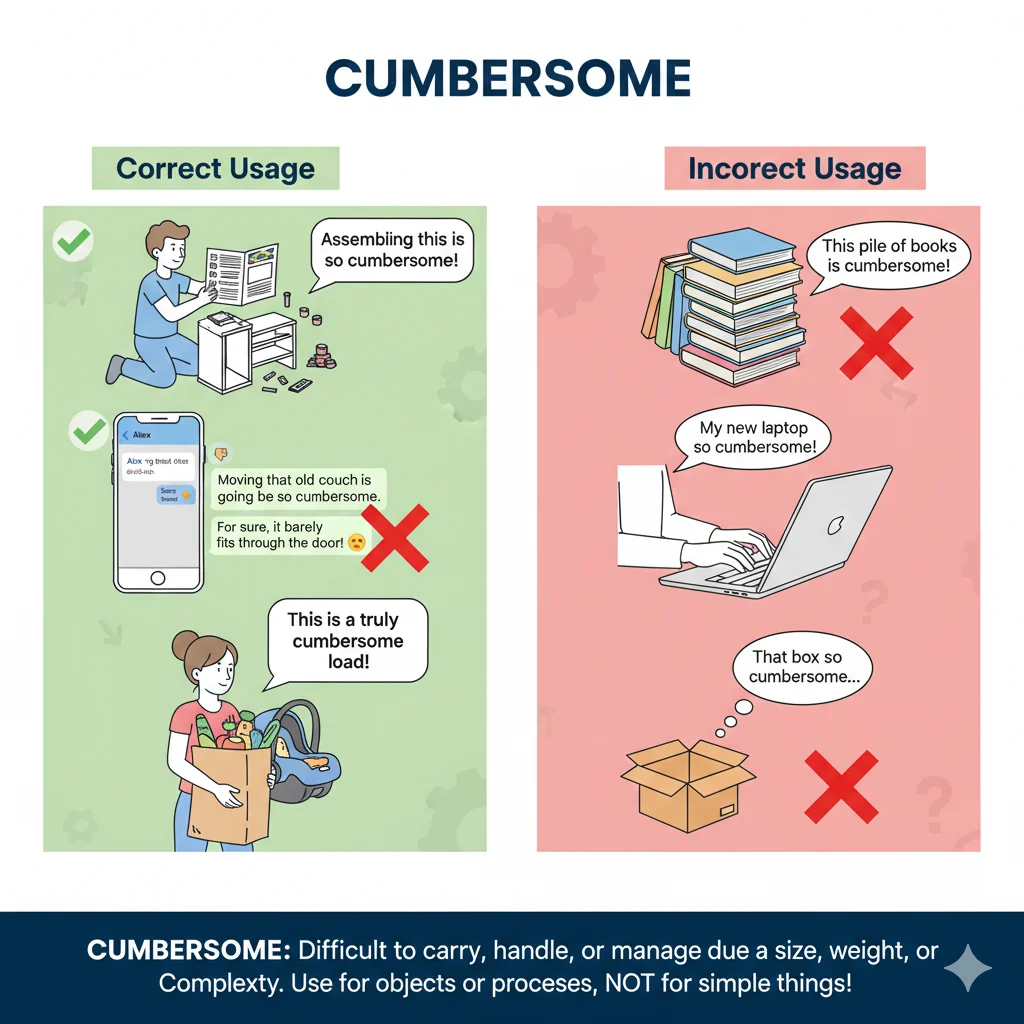
- Use it to describe something heavy, complex, or awkward.
- Use it in both formal and casual contexts.
- Pair it with processes, systems, or physical objects.
Don’ts ❌
- Don’t use it for people. (“He is cumbersome” ❌ sounds odd.)
- Avoid overusing it where simpler words like “hard” or “difficult” fit better.
Example:
✅ “The login process is cumbersome.”
❌ “He is cumbersome.”
⚠️ Common Mistakes or Misinterpretations
- Mistake #1: Thinking “cumbersome” means “lazy.”
→ ❌ Wrong! It means awkward or inefficient, not slow by choice. - Mistake #2: Using it only for physical things.
→ It can also describe abstract concepts, like “a cumbersome policy.” - Mistake #3: Using it in informal slang.
→ “Cumbersome” is more of a formal English word than a casual one.
❓FAQ Section
1. What does “cumbersome” mean in simple words?
It means something hard to manage or handle because it’s big, heavy, or complicated.
2. Is “cumbersome” a positive or negative word?
It’s generally negative — it describes inconvenience or inefficiency.
3. Can you use “cumbersome” in a sentence?
Yes! Example: “The form-filling process was too cumbersome for new users.”
4. What’s the difference between “cumbersome” and “complicated”?
Complicated focuses on difficulty in understanding, while cumbersome focuses on difficulty in handling or managing.
5. Where is “cumbersome” used most often?
You’ll see it in formal writing, business documents, and technical contexts where something is inefficient or awkward.
6. What are synonyms for “cumbersome”?
Common ones include awkward, bulky, clumsy, complex, and inefficient.
🏁 Conclusion
Now you know that “cumbersome” describes anything that’s awkward, heavy, or overly complicated — from physical objects to business procedures.
It’s a powerful adjective for expressing frustration with inefficiency or inconvenience.
So next time you’re struggling with a slow process or bulky item, you’ll know exactly which word fits: “cumbersome.”
💡 Now that you know what “cumbersome” means, you’ll never be confused again! Keep exploring our site for more word meanings and trending English phrases.

Jon McGregor is a language and word-meaning expert at Meanovia.com. He specializes in explaining complex words, phrases, and modern language trends in a clear, approachable style. His mission is to help readers quickly grasp the true meaning behind every term, making language learning and understanding effortless and engaging.