
Ever heard someone mention a “crone” in a movie, book, or online discussion and wondered what it really means? 👵 The word “crone” carries deep symbolic and cultural layers — from ancient mythology to modern feminism. In simple terms, a crone refers to an old, wise woman, often depicted as powerful, mysterious, and connected to life’s deeper cycles.
In this guide, you’ll learn:
- The definition of “crone”
- Its origin and evolution through history
- How the word’s meaning differs by context
- Real-world examples and usage tips
- Related terms, FAQs, and more

🌿 What Does “Crone” Mean?
The word “crone” traditionally means an old woman, often one who is wise, experienced, or mystical.
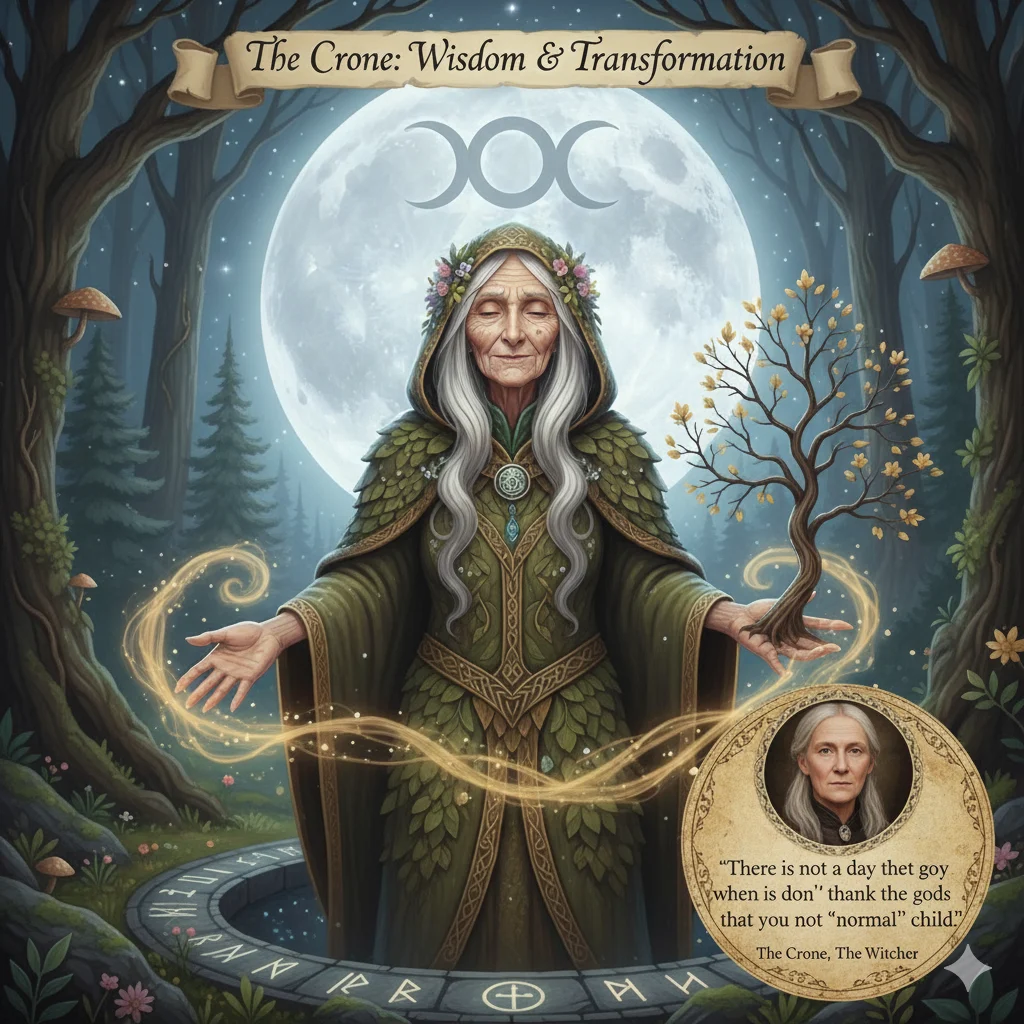
In mythology and modern spirituality, the crone represents wisdom, transformation, and endings — the final stage in the feminine life cycle after the Maiden and Mother.
It’s not slang or an acronym, but an archetypal and symbolic term used in literature, psychology, and folklore.
🕰️ Origin and Popularity
The term “crone” comes from the Middle English word “carogne”, meaning “dead flesh” or “carrion,” which was once a derogatory term for old women.
However, its deeper, mythological origin comes from ancient pagan and Celtic traditions, where the Crone was revered as the embodiment of wisdom, death, and rebirth.
Quick Timeline of Evolution
| Period | Meaning / Perception |
|---|---|
| Medieval Era | Negative connotation – old, haggard woman (linked with witches) |
| Renaissance | Depicted in literature as mysterious and dangerous |
| 20th Century | Reclaimed by feminists and spiritual circles as a wise elder archetype |
| Modern Day (2020s) | Symbol of power, wisdom, and female empowerment |
Today, the word has regained respect in spiritual, feminist, and psychological contexts, representing aging with dignity, self-awareness, and intuition.
🪶 Crone Meaning in Different Contexts
The meaning of “crone” changes depending on where it’s used — from mythology to everyday language.
🧙 In Mythology and Folklore
- Represents the third aspect of the Triple Goddess (Maiden, Mother, Crone).
- Symbolizes wisdom, endings, and rebirth — not evil, but necessary transformation.
- Often portrayed as a guide or oracle in stories.
📚 In Literature
- The crone archetype appears in fairy tales (like the witch in Hansel and Gretel) and fantasy stories.
- Sometimes negative, but often symbolizes hidden knowledge or the wise mentor figure.
🌺 In Modern Spirituality & Feminism
- Used to honor older women who embody strength and intuition.
- Movements like Goddess Spirituality celebrate the Crone as a teacher and healer.
💬 In Everyday Language
- Can still be used as an insult meaning “an unpleasant old woman.”
- But when used respectfully, it celebrates female wisdom and maturity.
| Context | Tone | Meaning |
|---|---|---|
| Mythology | Sacred | The wise elder or goddess form |
| Literature | Mixed | Old woman or magical figure |
| Feminism | Positive | Empowered elder woman |
| Everyday Speech | Negative | Derogatory term for old woman |
💬 Examples of “Crone” in Conversations
In Literature:
“The crone in the story gave the hero the secret to breaking the curse.”
In Modern Use:
“She embraces her crone energy — wise, independent, and unapologetically herself.”
In Negative Context:
“He rudely called the old woman a crone — which was unfair and disrespectful.”
🌕 Similar or Related Terms
Here are a few related archetypal or symbolic words often connected with “crone”:
| Term | Meaning / Connection |
|---|---|
| Witch | Often confused with “crone”; may symbolize female power or rebellion |
| Hag | Similar term, usually used insultingly for an old woman |
| Elder | Neutral term for an older, respected person |
| Sage | Gender-neutral term for a wise individual |
| Matriarch | Female leader or head of a family, respected for wisdom |
🌼 How to Use “Crone” Correctly
✅ Do’s:
- Use “crone” when referring to wisdom, elder energy, or mythology.
- Capitalize “Crone” when discussing the Goddess archetype.
- Use it with reverence in spiritual or literary discussions.
❌ Don’ts:
- Avoid using “crone” as a casual insult.
- Don’t apply it to younger women; it represents age and transformation.
Example:
✅ “She embodies the Crone — wise, intuitive, and free.”
❌ “Don’t be such a crone!” (derogatory)
⚠️ Common Mistakes or Misinterpretations
- Mistake 1: Assuming “crone” always means an ugly or evil witch — this is outdated.
- Mistake 2: Using “crone” interchangeably with “hag” — they’re not the same.
- Mistake 3: Thinking it’s slang — it’s an ancient symbolic word with spiritual roots.
In reality, the modern Crone archetype celebrates inner power and life wisdom, not fear or ugliness.
❓ FAQ: Crone Meaning Explained
1. What does “crone” mean today?
Today, “crone” refers to a wise, older woman who embodies experience, independence, and spiritual depth.
2. Is “crone” a bad word?
Historically, yes — it was once used as an insult. However, modern spiritual and feminist communities have reclaimed it as empowering.
3. What’s the difference between a crone and a witch?
A crone symbolizes wisdom and age, while a witch refers to someone who practices magic. They can overlap, but they aren’t identical.
4. What does “crone energy” mean?
It refers to embracing the strength, wisdom, and authenticity of mature womanhood — especially in spiritual or self-growth contexts.
5. Where did the crone archetype originate?
It originated from Celtic and pagan mythology, representing the third phase of the feminine life cycle.
6. How is the crone represented in pop culture?
Characters like Yoda (as a male counterpart) or the Oracle in The Matrix reflect the wise elder archetype — rooted in the same symbolic tradition.
🌙 Conclusion
The crone meaning goes far beyond the stereotype of an old woman — it’s a symbol of wisdom, transformation, and power. From ancient myths to modern feminism, the Crone represents life’s natural cycle of growth and rebirth.
Now that you understand what “crone” truly means, you’ll see her presence everywhere — in stories, art, and perhaps even within yourself. 🌕
Keep exploring our site for more word meanings, mythic symbols, and internet terms explained clearly.

Evie Wyld is a word-meaning specialist at Meanovia.com. She simplifies complex words, phrases, and language trends, helping readers quickly grasp the exact meaning behind every term in a clear and approachable way.