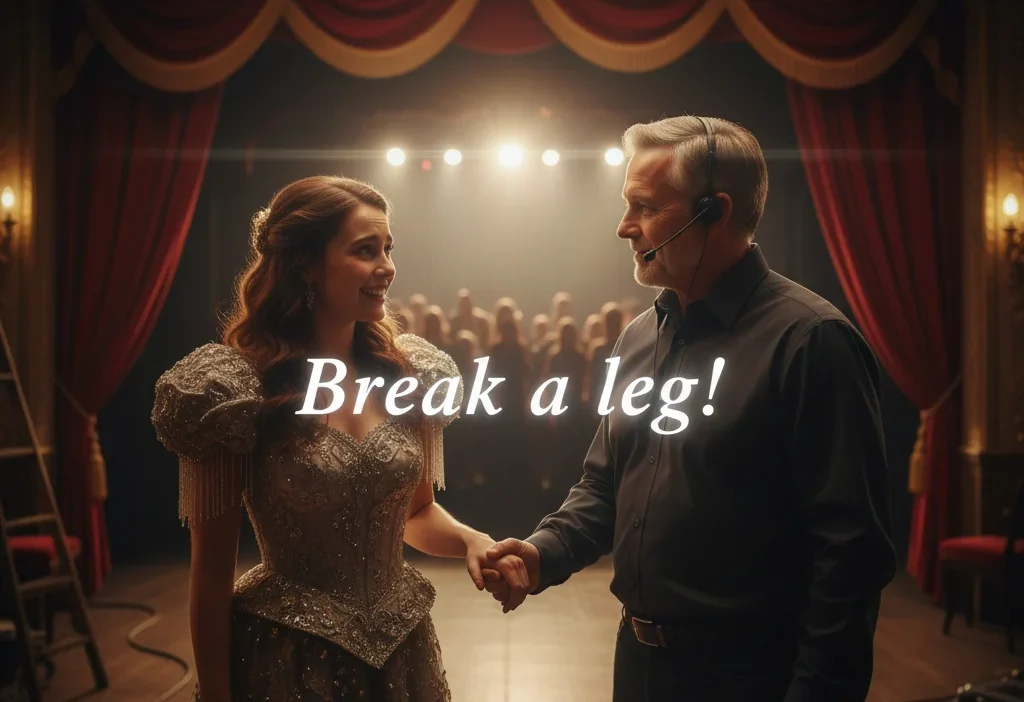
Ever heard someone say “Break a leg!” before a big performance or presentation and thought — “Wait, why are they wishing me harm?” Don’t worry, it’s not an insult!
“Break a leg” is a popular English idiom used to wish someone good luck, especially in theatre, entertainment, and public performances.
In this article, you’ll learn:
✅ The definition of “break a leg”
✅ Its interesting origin and theatre superstition
✅ How it’s used in different contexts
✅ Examples, related phrases, and FAQs to help you master it
🎬 What Does “Break a Leg” Mean?
“Break a leg” means “good luck” — but it’s used in a sarcastic or ironic way, mainly before performances or important events.
It’s not literal; the phrase is a theatrical idiom used to wish success without saying “good luck” (which some actors believe brings bad luck).
📜 Origin and Popularity
The phrase “break a leg” originated in theatre culture in the early 20th century. Actors were extremely superstitious and believed that saying “good luck” directly would jinx a performance.
Instead, they used “break a leg” as a playful way to wish success without tempting fate.
🕰️ Historical Timeline:
- 17th–18th centuries: Actors avoided saying “good luck.”
- 1920s–1930s: “Break a leg” appeared in theatre slang and stage performances.
- Today: Commonly used not just in theatre, but also in sports, interviews, exams, and presentations.
It’s now a universal idiom meaning “Do great!” or “Give it your all!”
🗣️ “Break a Leg” Meaning in Different Contexts
Although it started in the theatre world, “break a leg” is now used in many areas of life. Here’s how the meaning shifts depending on the context:
🎭 In Theatre and Acting
Used to wish an actor good luck before a performance.
Example: “You’ve rehearsed for weeks — break a leg tonight!”
💼 In Professional or Academic Settings
Used before presentations, exams, or interviews to show encouragement.
Example: “Good luck with your job interview tomorrow — break a leg!”
💬 In Casual Conversation
Sometimes used jokingly among friends when someone’s about to do something important or nerve-wracking.
Example: “Got your driving test today? Break a leg!”
| Context | Meaning | Tone |
| Theatre | Wish for a great performance | Encouraging |
| Work/School | Support before an event or exam | Friendly |
| Casual Talk | Playful good-luck wish | Lighthearted |
💡 Examples of “Break a Leg” in Conversations
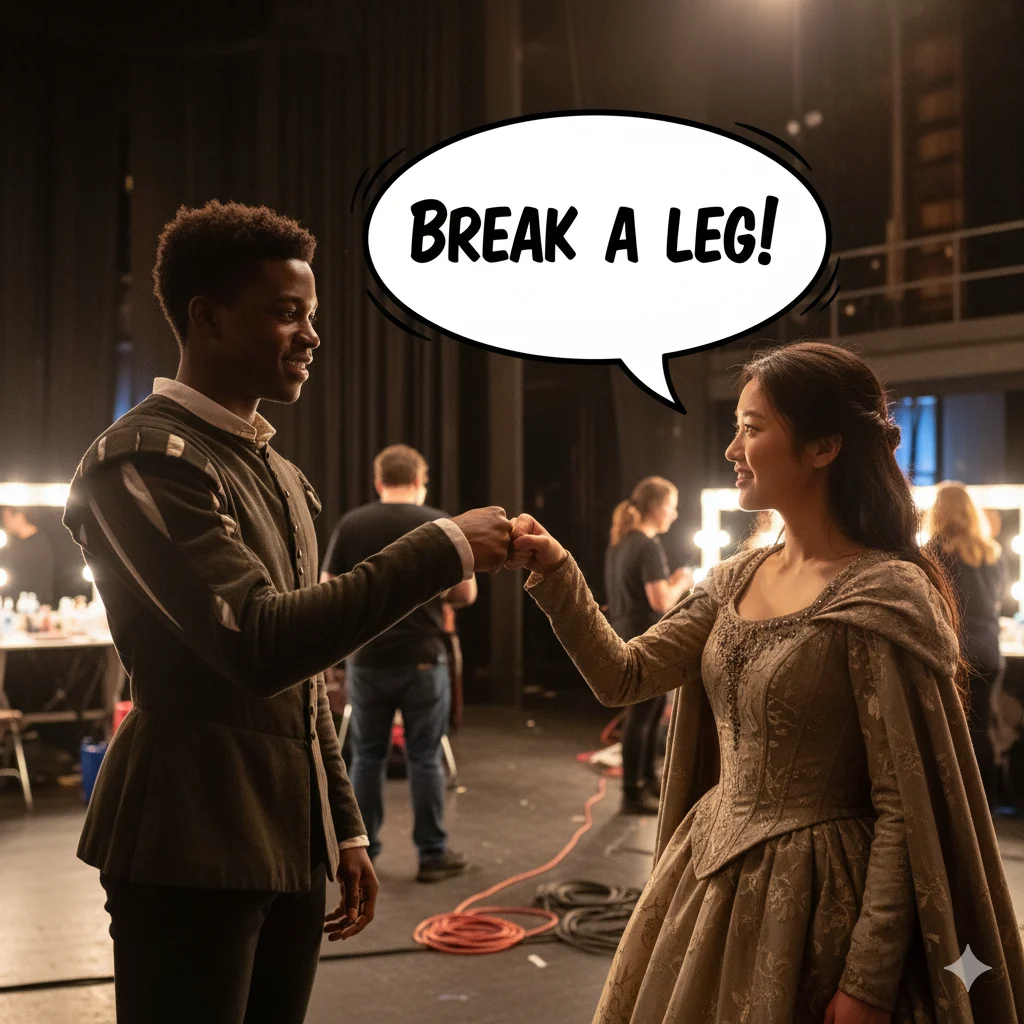
Example 1:
Actor 1: I’m nervous about my audition.
Actor 2: Don’t worry, you’ll do amazing — break a leg!
Example 2:
Friend 1: I have a big presentation today.
Friend 2: Break a leg! You’ve got this.
Example 3 (formal use):
“Before the conference began, the CEO told the keynote speaker, ‘Break a leg out there!’”
Example 4 (humorous tone):
“You’re cooking for your in-laws? Break a leg — you’ll need it!”
🔍 Similar or Related Terms
Here are some related idioms and phrases that also express encouragement or good luck:
| Phrase | Meaning | Usage Context |
| Knock ‘em dead | Do exceptionally well | Informal & motivational |
| You’ve got this | Expression of confidence | Common in all settings |
| Good luck | Traditional luck wish | Neutral and universal |
| Go crush it | Perform excellently | Modern, casual slang |
These expressions can be used interchangeably, though “break a leg” carries a unique theatrical charm.
🧠 How to Use “Break a Leg” Correctly
✅ Do’s:
- Use it before a performance, exam, or big event.
- Say it playfully and positively — it’s a compliment, not an insult.
- Ideal for friends, colleagues, and performers.
❌ Don’ts:
- Don’t use it after an event — it’s meant beforehand.
- Avoid using it literally or with people unfamiliar with English idioms.
- Don’t say it in somber or tragic situations.
⚠️ Common Mistakes or Misinterpretations
- Taking it literally:
→ “Break a leg” doesn’t mean to hurt someone — it’s just an idiom. - Thinking it’s only for actors:
→ Originally theatrical, but now used broadly across contexts. - Using it after success:
→ Incorrect — you say it before an event to wish good luck. - Mixing it up with negative sarcasm:
→ While the wording sounds harsh, the intention is positive.
❓ FAQ Section
1. What does “break a leg” mean in simple words?
It means “good luck” or “do your best.” People say it before performances or important moments.
2. Where did “break a leg” come from?
It originated in theatre culture as a superstitious way to wish success without saying “good luck.”
3. Is “break a leg” rude or negative?
No, it’s completely positive! It’s an encouraging idiom, not meant literally.
4. Can you say “break a leg” outside of theatre?
Yes. It’s now used for exams, interviews, speeches, and sports.
5. What can you say instead of “break a leg”?
You can say “knock ‘em dead,” “smash it,” “you’ve got this,” or simply “good luck.”
6. How do you reply when someone says “break a leg”?
You can respond with “Thanks!” or “I’ll do my best!” — it’s a sign of appreciation.
🏁 Conclusion
So, the next time someone says “Break a leg!”, remember — they’re actually wishing you success, not injury!
This quirky phrase from the theatre world has become a universal symbol of encouragement, perfect for any moment when someone needs a boost of confidence.
✨ Now that you know the true meaning and origin of “break a leg”, you’ll never be caught off guard again! Keep exploring our site for more fun idioms, expressions, and modern slang meanings.

Jon McGregor is a language and word-meaning expert at Meanovia.com. He specializes in explaining complex words, phrases, and modern language trends in a clear, approachable style. His mission is to help readers quickly grasp the true meaning behind every term, making language learning and understanding effortless and engaging.