
Ever found a car listing labeled “Branded Title” and wondered what it really means?
You’re not alone — many car buyers see this term and feel confused about whether it’s a dealbreaker or just a formality.
In this guide, you’ll learn:
The definition of a branded title
Its origin and legal background
Different types of branded titles
Examples and how they affect car value
Related terms and FAQs to help you buy wisely
🧾 What Does Branded Title Mean?
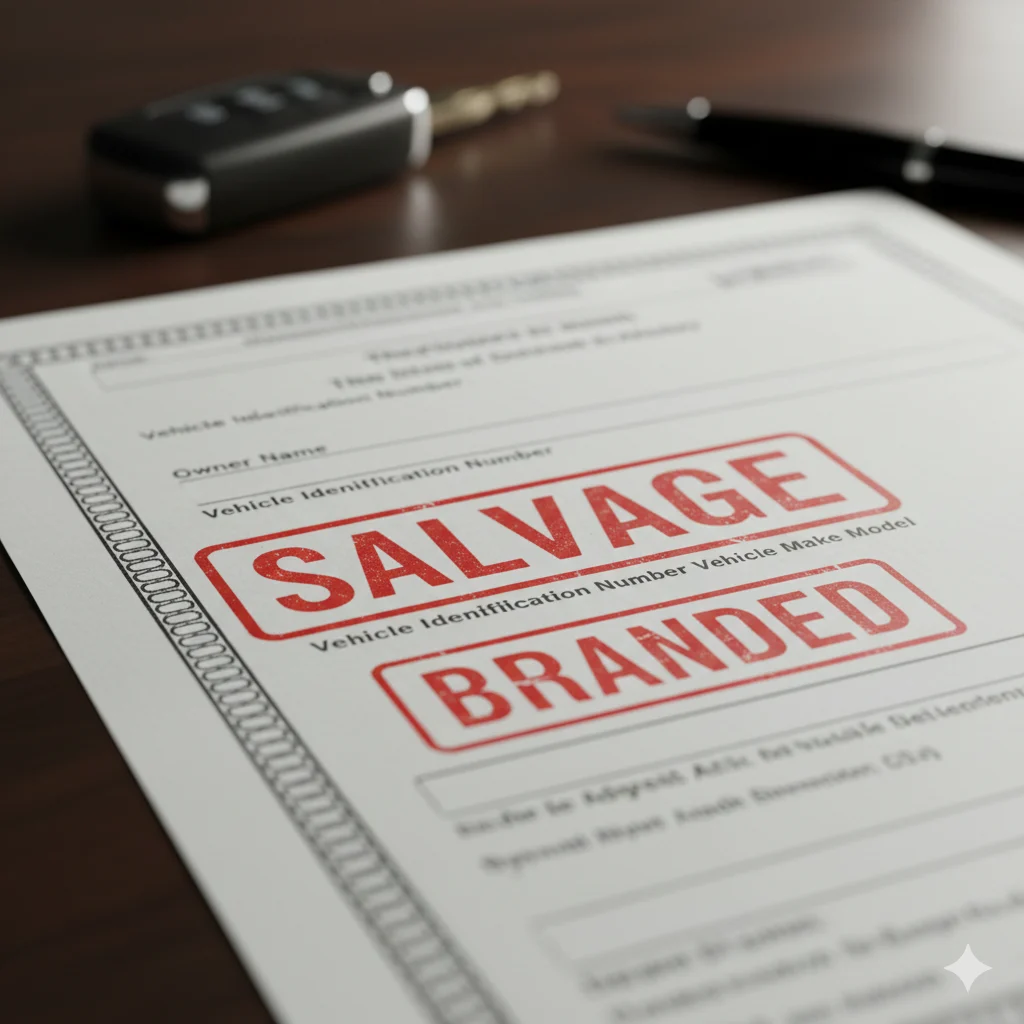
A branded title means a vehicle’s title document has been permanently marked by the Department of Motor Vehicles (DMV) to indicate it has significant damage, loss, or legal history, such as being rebuilt, salvaged, or flood-damaged.
It’s a formal classification, not slang — mostly used in automotive sales, insurance, and registration contexts.
📜 Origin and Popularity
The concept of branded titles originated from U.S. state motor vehicle agencies to protect consumers and track vehicle history.
When cars are involved in major accidents, floods, or thefts, insurance companies often declare them “total losses.” Once repaired or resold, these vehicles receive a “brand” on their title to warn future buyers.
🚘 Timeline Snapshot:
- 1970s–1980s: States began standardizing vehicle title branding to reduce fraud.
- 1990s: The National Motor Vehicle Title Information System (NMVTIS) was introduced to track branded titles nationwide.
- 2020s: Awareness grew thanks to online car marketplaces and VIN report tools like Carfax and AutoCheck.
⚙️ Branded Title Meaning in Different Contexts
Branded titles can appear in various categories, depending on what happened to the vehicle. Here’s how they differ:
| Type of Brand | Meaning | Typical Scenario |
| Salvage Title | Vehicle declared a total loss by an insurer due to major damage. | Car heavily damaged in an accident. |
| Rebuilt Title | A previously salvaged vehicle that has been repaired and inspected. | Repaired car resold after passing inspection. |
| Flood Title | Vehicle sustained water damage from flooding or storms. | Cars damaged in hurricanes or floods. |
| Lemon Title | Manufacturer buyback due to recurring defects. | Vehicle returned under lemon law. |
| Theft Recovery Title | Car was stolen and later recovered. | Vehicle missing for a time, possibly with damage. |
🧠 Examples of Branded Title Usage in Real Conversations
Example 1:
Buyer: Why is this car so cheap?
Dealer: It has a branded title — it was rebuilt after an accident.
Example 2:
Mechanic: The car runs fine, but check if the title’s branded before you buy.
Example 3 (formal listing):
“2019 Toyota Camry – Rebuilt Branded Title. Fully inspected and certified roadworthy.”
Example 4 (consumer warning):
“Avoid cars with flood-branded titles unless you’re certain of the repairs.”
🔍 Similar or Related Terms
Here are other vehicle title terms that relate to branded titles and often appear in listings:
| Term | Meaning |
| Clean Title | Vehicle has never been in a major accident or declared a total loss. |
| Salvage Title | Vehicle declared total loss but not yet rebuilt. |
| Rebuilt Title | Salvage vehicle repaired and approved for road use. |
| Bonded Title | Temporary title proving ownership when previous ownership is unclear. |
These terms often appear together in used-car markets, so understanding them helps you avoid costly mistakes.
🧭 How to Use “Branded Title” Correctly
✅ Do’s:
- Use the term when discussing vehicle history or insurance classification.
- Check a VIN report before buying a branded title car.
- Mention it honestly when selling a previously damaged or rebuilt car.
❌ Don’ts:
- Don’t assume a branded title car is unsafe — some are fully restored.
- Don’t confuse “branded” with “certified” — they’re opposite terms.
- Don’t buy one without inspection or documentation.
⚠️ Common Mistakes or Misinterpretations
- Myth: Branded title means the car can’t be driven.
→ Reality: Many branded title cars are legally roadworthy after inspection. - Myth: All branded cars are junk.
→ Reality: Some are well-repaired and sold at fair value. - Myth: A clean title guarantees a perfect car.
→ Reality: Even clean title cars can have hidden issues if they weren’t reported. - Myth: Title brands are the same nationwide.
→ Reality: Each U.S. state has slightly different branding laws and definitions.
❓ FAQ Section
1. What does “branded title” mean on a car?
A branded title indicates that the vehicle has a permanent history mark, such as salvage, rebuilt, or flood damage. It’s a legal warning for future buyers.
2. Is it bad to buy a car with a branded title?
Not always. If the car has been professionally repaired, inspected, and priced fairly, it can be a good deal. But resale value is typically 20–40% lower than a clean title car.
3. Can a branded title be cleared or removed?
No. Once a title is branded, it stays on the vehicle’s record permanently across all states.
4. What’s the difference between a branded and a clean title?
A clean title means no major damage or insurance loss history. A branded title means the car had serious issues at some point.
5. How can I check if a car has a branded title?
You can check through the National Motor Vehicle Title Information System (NMVTIS) or use a VIN check report from reputable sources before purchasing.
6. Do branded title cars have insurance or financing issues?
Yes. Some insurers offer limited coverage, and some lenders avoid financing branded title vehicles due to higher risk.
🏁 Conclusion
In short, a branded title means the car has a documented history of damage or loss, recorded permanently on its title by the DMV.
While branded title cars can sometimes be bargain buys, they require careful inspection and transparency from both buyers and sellers.
Now that you understand the branded title meaning, you’ll be better prepared to read car listings and make informed decisions. 🚘
Keep exploring our site for more easy-to-understand definitions of car terms and automotive phrases.

Evie Wyld is a word-meaning specialist at Meanovia.com. She simplifies complex words, phrases, and language trends, helping readers quickly grasp the exact meaning behind every term in a clear and approachable way.