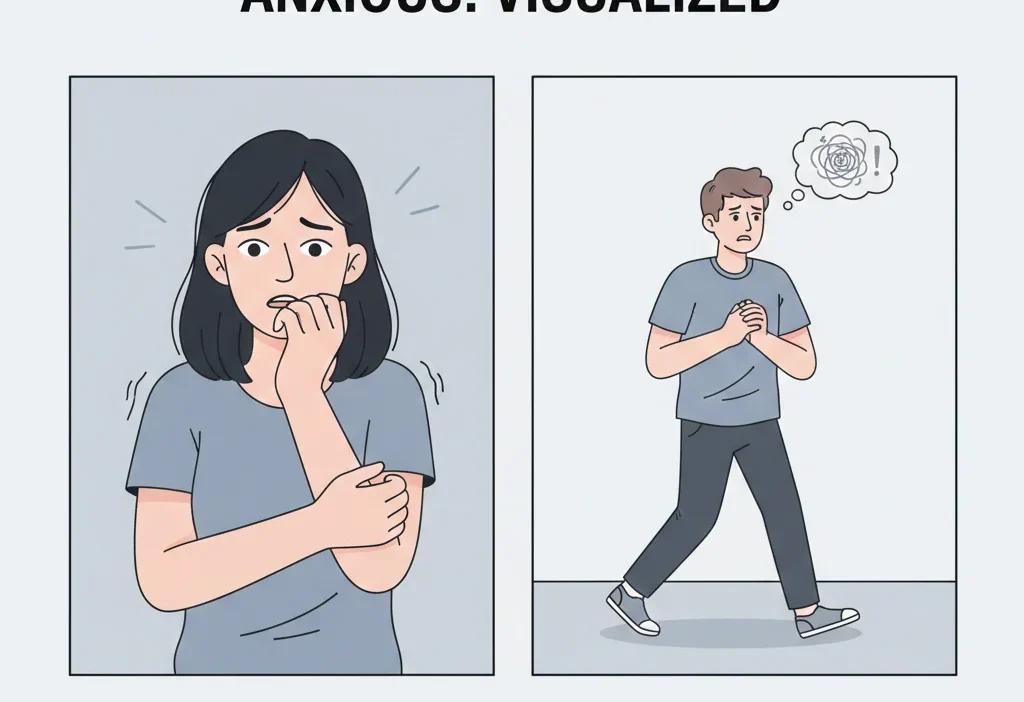
Ever said “I feel anxious” before a big presentation or meeting and wondered what that feeling really means? You’re not alone. The word “anxious” is one of the most commonly used emotional expressions in English — but it’s also one that people often misunderstand or misuse.
Anxious means feeling worried, nervous, or uneasy, often about something uncertain or expected to happen.
The word anxious is commonly used in daily conversations, mental health discussions, and written communication, which is why many people search for its meaning. It describes a state of unease, concern, or fear, usually linked to future events, responsibilities, or outcomes. Someone may feel anxious before an exam, important decision, or unfamiliar situation.
Understanding the meaning of anxious helps people identify emotions accurately, communicate feelings clearly, and recognize when stress or worry is affecting their well-being. The term can describe temporary nervousness or ongoing emotional tension, making it important for expressing inner feelings and understanding others’ emotional states.
What Does “Anxious” Mean?
“Anxious” means feeling nervous, worried, or uneasy about something that might happen.
It’s an adjective used to describe a state of tension or fear, often linked to uncertainty or anticipation. In simple terms, when you’re anxious, you’re uneasy because you’re expecting something bad or challenging to happen.
Origin and Popularity
The word “anxious” comes from the Latin term anxius, which means “troubled” or “worried.” It entered English in the early 1600s and has since evolved from describing mild concern to representing deep emotional unease or even clinical anxiety.
In modern times, the word gained broader recognition through mental health awareness movements, psychology, and everyday language — especially as discussions about anxiety disorders became more open on social media and in pop culture.
🕒 Quick Timeline:
- 1600s: Origin from Latin anxius → “troubled.”
- 1900s: Used in literature to describe emotional worry.
- 2000s–2020s: Popularized in mental health conversations, memes, and online discussions.
“Anxious” Meaning in Different Contexts
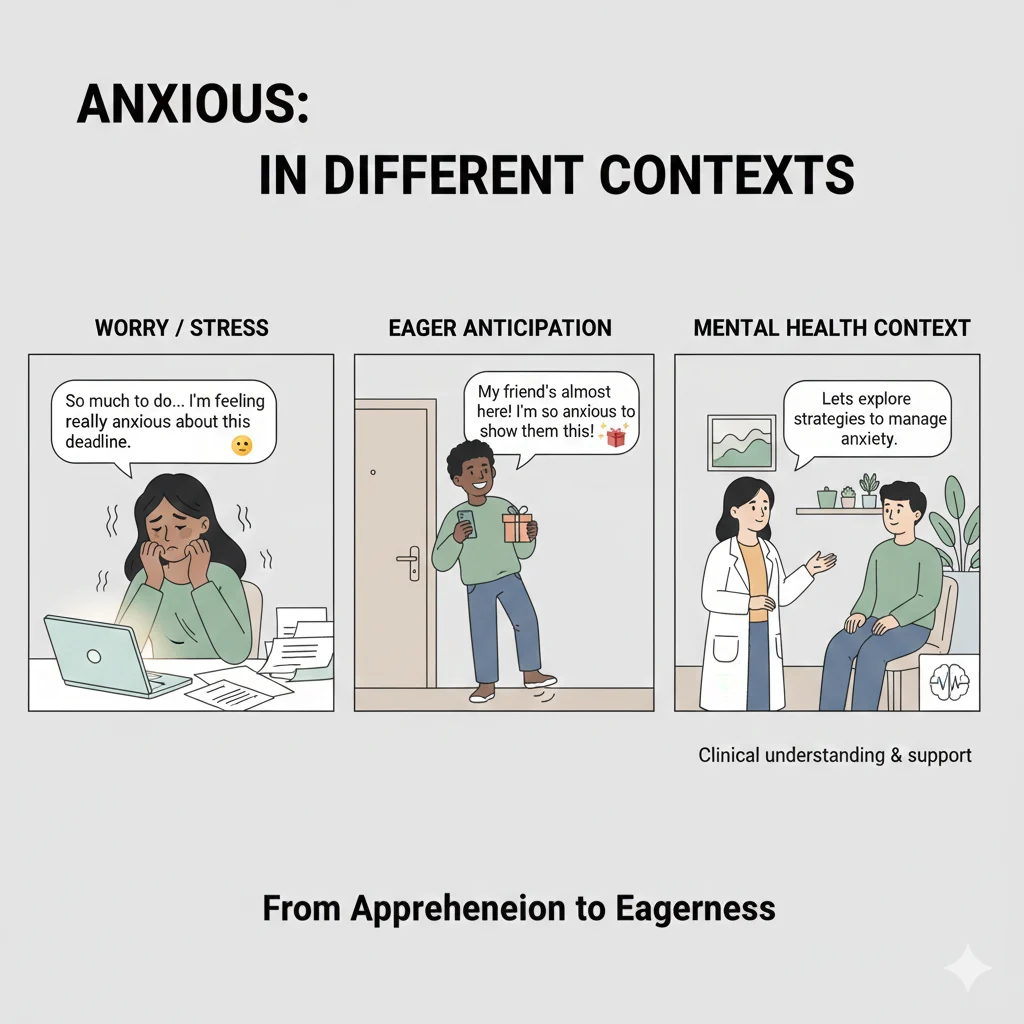
1. In Everyday Conversation
Used to express nervousness or unease.
“I’m anxious about my exam tomorrow.”
2. In Texting or Online Chats
Often used casually to describe worry, stress, or emotional discomfort.
“I’ve been so anxious lately 😩.”
3. In Psychology or Mental Health
Refers to anxiety disorders — a medical condition involving persistent, excessive worry that interferes with daily life.
“She’s been diagnosed with generalized anxiety disorder.”
4. In Positive Anticipation (Less Common)
Sometimes, “anxious” is used to mean “eager” or “excited,” though this can cause confusion.
“I’m anxious to see my results!” (Here, it means “eager,” not “worried.”)
| Context | Meaning | Example |
| Everyday | Nervous, worried | “I’m anxious before my job interview.” |
| Online/Text | Stressed or uneasy | “Feeling anxious all day 😟.” |
| Psychology | Clinical anxiety | “He has social anxiety.” |
| Positive | Eager/excited | “I’m anxious to get started!” |
Examples of “Anxious” in Conversations
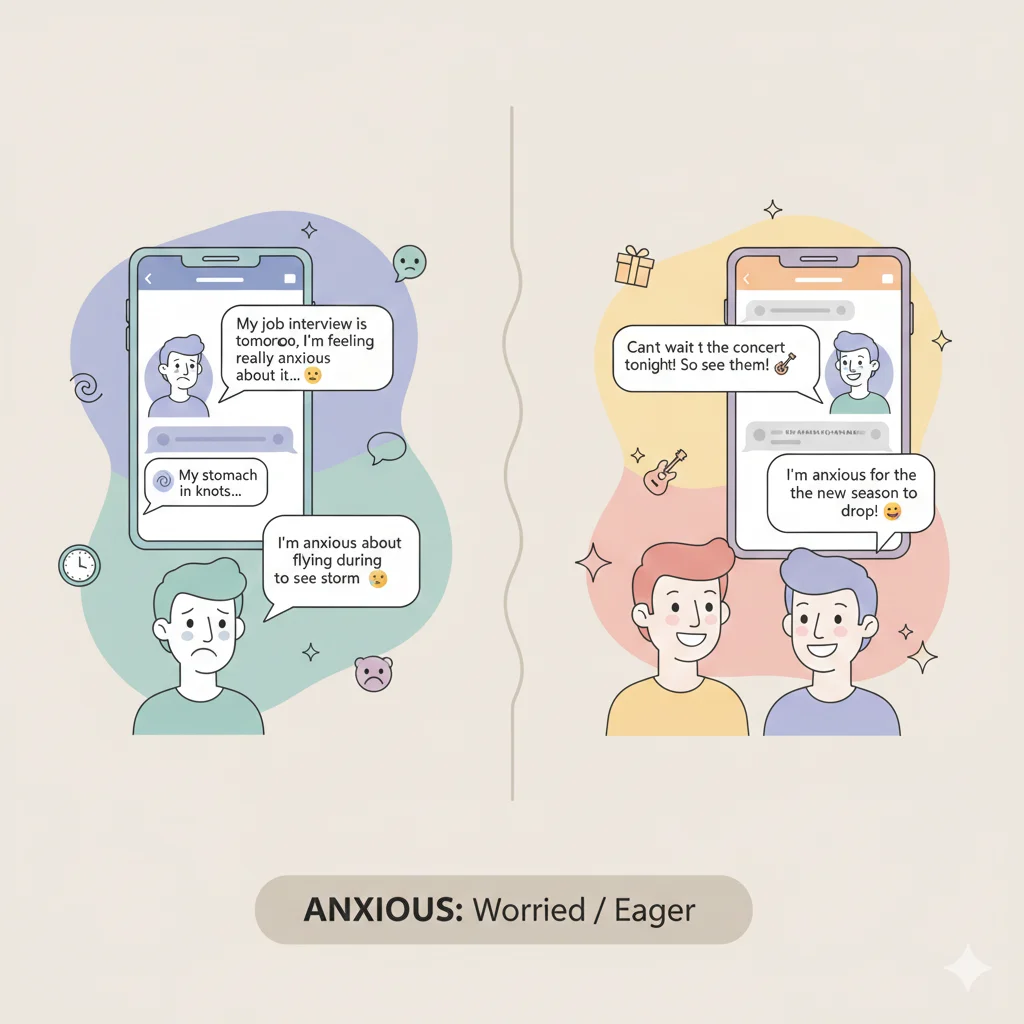
Example 1 – Daily Use
Person A: “How are you feeling about your presentation?”
Person B: “Honestly, I’m anxious, but I’ve prepared a lot.”
Example 2 – Online Chat
Friend 1: “Hey, are you okay? You seemed off today.”
Friend 2: “Yeah, just feeling anxious lately.”
Example 3 – Positive Anticipation
“I’m anxious to meet you!” (Meaning: eager or excited, not nervous.)
Example 4 – Formal Setting
“The manager was anxious about the company’s quarterly results.”
Similar or Related Terms
Here are some related emotional terms and their meanings:
| Term | Meaning | Usage Example |
| Nervous | Slightly worried or tense | “I’m nervous before public speaking.” |
| Worried | Concerned about a problem | “She’s worried about her exam.” |
| Stressed | Feeling pressure or mental strain | “Work deadlines make me stressed.” |
| Eager | Excited or keen to do something | “He’s eager to start his new job.” |
These words overlap but differ slightly in emotional intensity and context.
How to Use “Anxious” Correctly
✅ Do’s:
- Use “anxious” when describing worry or nervous anticipation.
- It’s suitable for both casual and formal contexts.
- Can describe both emotional states and medical conditions.
❌ Don’ts:
- Don’t use it interchangeably with “excited” unless the meaning is clearly “eager.”
- Avoid using it to dramatize minor concerns unnecessarily.
Example:
✅ “I’m anxious about the results.”
❌ “I’m anxious for dinner.” (Better: “I’m eager for dinner.”)
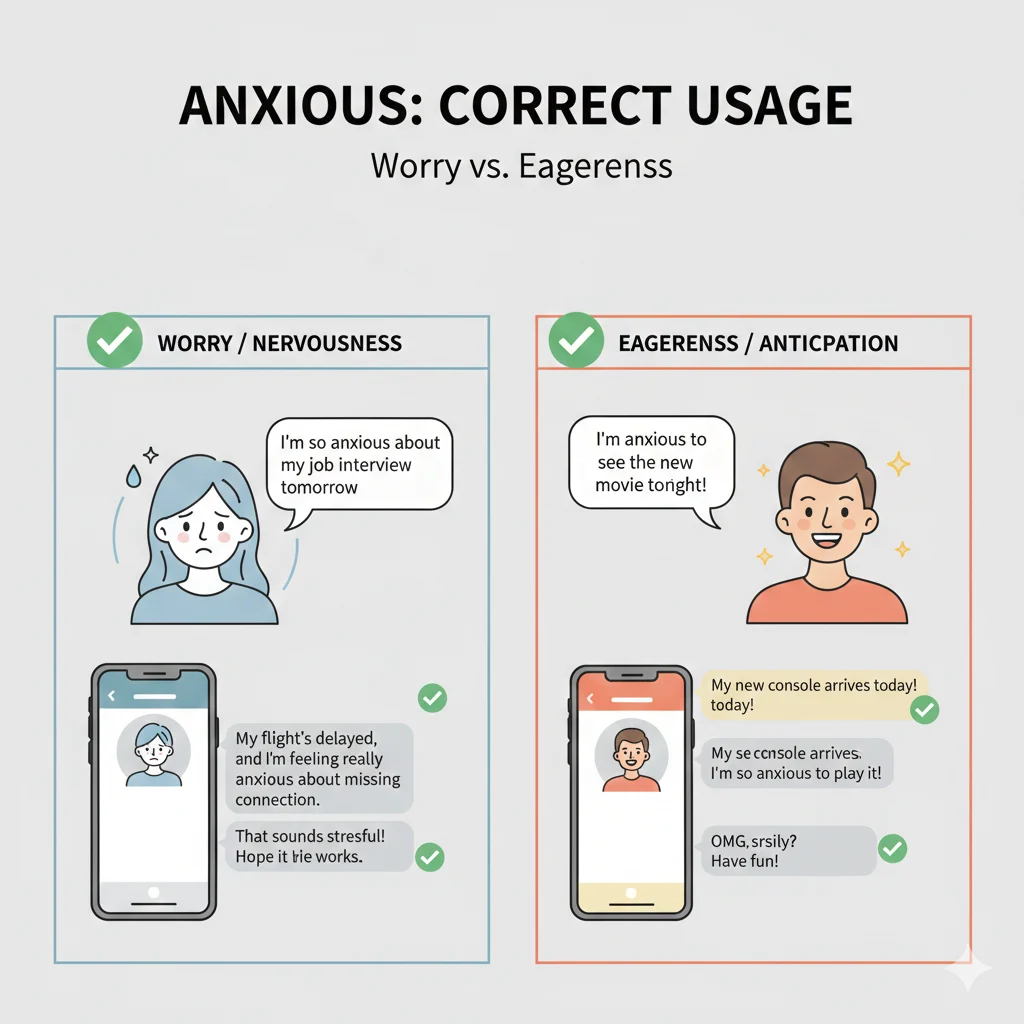
Common Mistakes or Misinterpretations
- Confusing “anxious” with “eager”:
“Anxious to go” can mean both “nervous” and “excited,” which may confuse readers or listeners. - Overusing in casual talk:
Many people say “I’m anxious” when they mean “I’m stressed” or “I’m nervous.” Each carries a slightly different tone. - Ignoring context:
In mental health discussions, “anxious” has a deeper, clinical meaning — not just temporary worry.
FAQ Section
1. What does “anxious” mean in simple words?
“Anxious” means feeling nervous, uneasy, or worried about something uncertain or upcoming.
2. Is “anxious” a positive or negative word?
Mostly negative — it expresses worry or nervousness. However, it can sometimes mean “eager” or “excited” in positive anticipation.
3. What’s the difference between “anxious” and “nervous”?
“Nervous” refers to short-term uneasiness, while “anxious” often implies deeper, longer-lasting worry or fear.
4. How do you use “anxious” in a sentence?
Example: “I’m anxious about meeting new people.”
5. Is “anxious” the same as “anxiety”?
No. “Anxious” is an adjective describing a feeling. “Anxiety” is a noun that refers to the state or disorder itself.
6. When should you not use “anxious”?
Avoid using it when you mean “excited,” especially in professional or formal writing, to prevent confusion.
Conclusion
The word “anxious” goes beyond simple nervousness — it reflects an emotional or mental state tied to anticipation, fear, or even eagerness. Understanding its true meaning helps you express emotions more clearly and avoid miscommunication.
Now that you know what “anxious” means, you’ll never second-guess its usage again! Keep exploring our site for more word meanings and modern language insights.