Ever heard someone call something an “anomaly” and wondered what it really means? Maybe you’ve seen it in science, business, or even social media captions and thought — is that a compliment or a critique?
The word “anomaly” might sound complex, but it’s used more often than you think — from data reports to everyday conversations.
In this guide, we’ll cover:
- What “anomaly” means
- Its origin and evolution
- How it’s used in different contexts (science, business, and casual talk)
- Real-life examples and related terms
- Common mistakes and FAQs
What Does “Anomaly” Mean?
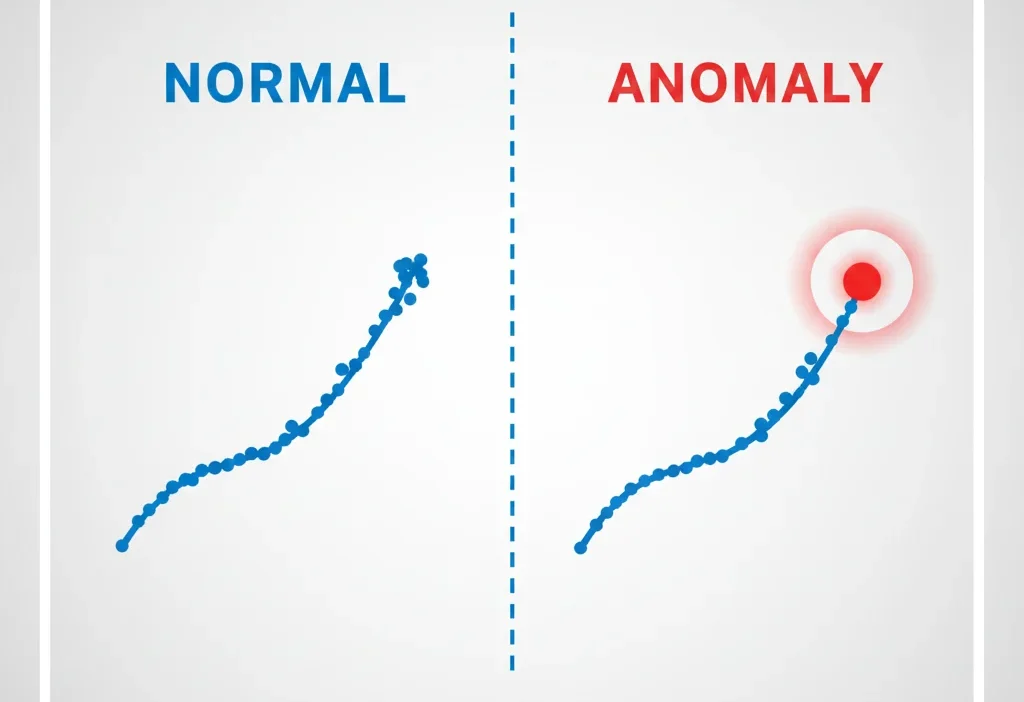
Anomaly means something that deviates from what is standard, normal, or expected.
It’s used to describe an unusual event, behavior, or data point that doesn’t fit the regular pattern.
It’s a noun and commonly appears in science, technology, business, and general communication.
Example:
“The sudden drop in temperature was an anomaly for this time of year.”
Origin and Popularity of “Anomaly”
The word “anomaly” comes from the Greek word “anōmalos,” meaning uneven or irregular. It entered English in the late 16th century, primarily used in astronomy to describe irregular planetary motion.
Over time, it broadened in meaning — now used in everything from data analytics (“anomaly detection”) to daily speech (“That’s an anomaly!”).
🕓 Quick Timeline
- 16th century: Used in astronomy
- 19th century: Adopted in science and mathematics
- 20th–21st century: Common in everyday English and pop culture
Today, “anomaly” is popular in tech, AI, and social discussions, often referring to anything that breaks the norm or stands out.
“Anomaly” Meaning in Different Contexts
Let’s see how the word changes slightly depending on where it’s used:
| Context | Meaning / Use | Example |
| In Science | Refers to an irregular measurement or unexpected result. | “The experiment showed an anomaly in the results.” |
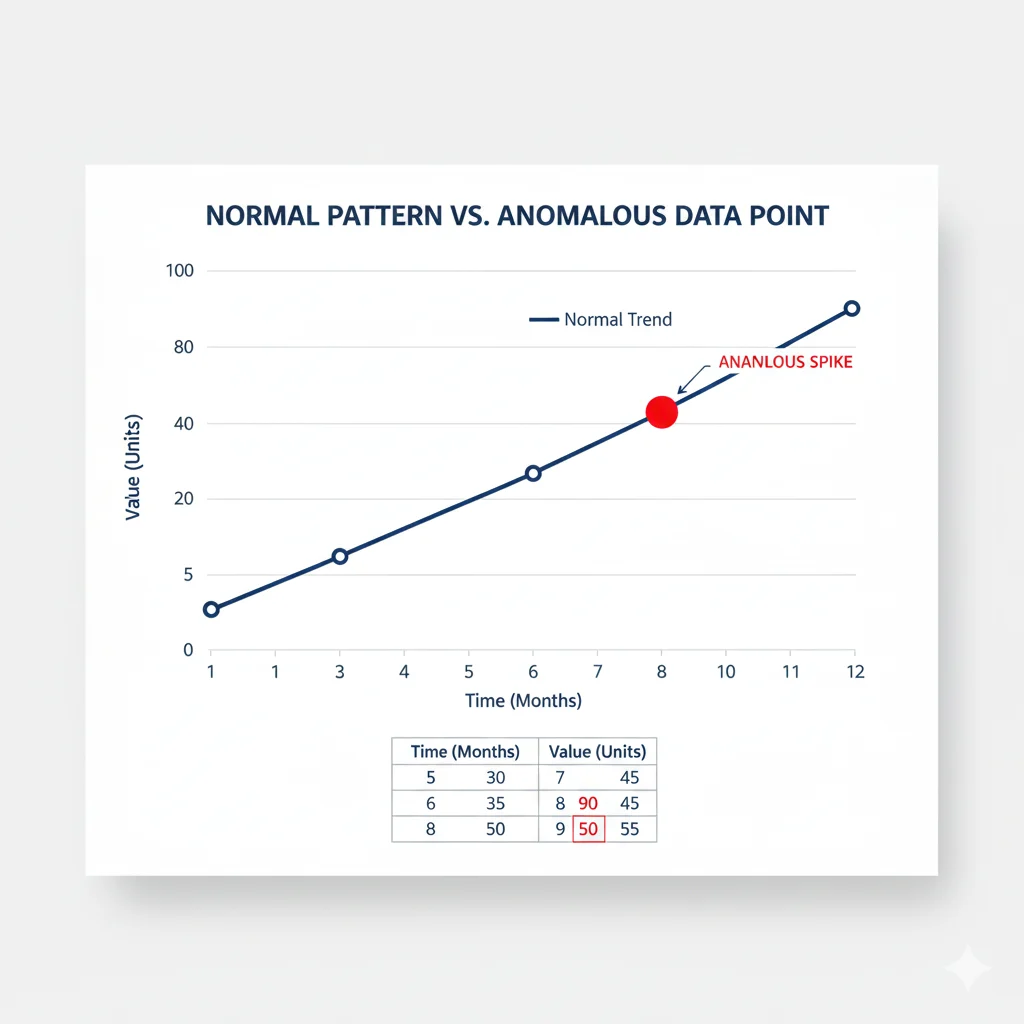
| In Data / Tech | Indicates an unusual data pattern or system behavior. | “Anomaly detection helps identify fraud in real-time.” |
| In Business | Highlights unusual trends or performance issues. | “This quarter’s sales drop is an anomaly.” |
| In Everyday Conversation | Describes something rare, different, or out of the ordinary. | “He’s an anomaly in his field — truly unique.” |
Examples of “Anomaly” in Sentences
Here are some real-life examples to make it clearer:
- Science: “The satellite data revealed an anomaly in Earth’s magnetic field.”
- Technology: “The AI detected an anomaly in the system logs.”
- Business: “Last month’s profit dip was just an anomaly — overall trends are strong.”
- Casual: “She’s an anomaly — calm even in chaos.”
- Education: “Students scoring 100% on every test are statistical anomalies.”
💬 Tip: Think of “anomaly” as “something that doesn’t fit the pattern.”
Similar or Related Terms
To understand “anomaly” better, here’s how it compares to similar words:
| Term | Meaning | Example Use |
| Abnormality | Something not normal or typical | “The doctor found an abnormality in the test results.” |
| Irregularity | Not following a rule or pattern | “They noticed an irregularity in the billing records.” |
| Outlier | A data point far from the rest | “That one score was an outlier.” |
| Deviation | Departure from a norm or standard | “A small deviation was noted in the model.” |
How to Use “Anomaly” Correctly
✅ Do use “anomaly” when referring to something unusual or unexpected.
❌ Don’t use it for ordinary mistakes or random differences — it implies a significant irregularity.
✅ Examples of Correct Usage:
- “This reading is an anomaly — let’s recheck the equipment.”
- “She’s an anomaly among her peers for her unique approach.”
❌ Incorrect Usage:
- “He was late — that’s an anomaly.” (Better: “That’s unusual.”)
Common Mistakes or Misinterpretations
Many people confuse “anomaly” with “error” or “problem.”
But not every anomaly is bad — it simply means different from the norm.
For example:
- A sales anomaly could be a sudden drop or a surprising increase.
- A weather anomaly could mean unusually warm or cold conditions.
So, while anomalies stand out, they don’t always indicate something negative.
FAQ: Common Questions About “Anomaly”
1. What does “anomaly” mean in simple terms?
It means something unusual or unexpected that doesn’t match what’s normal.
2. Is “anomaly” positive or negative?
It can be neutral — an anomaly can be good, bad, or just different, depending on the situation.
3. What’s the difference between “anomaly” and “abnormality”?
An anomaly is any deviation from the norm, while an abnormality usually suggests something wrong or undesirable.
4. How is “anomaly” used in data or AI?
It refers to an outlier or unusual data pattern, often used in fraud detection, cybersecurity, or machine learning.
5. Can you use “anomaly” in casual conversation?
Yes! For example:
“He’s an anomaly — always calm no matter what happens.”
6. Where is “anomaly” most commonly used?
It’s widely used in science, business, data analytics, and academic writing, but also appears in media and daily language.
Conclusion
To sum it up, “anomaly” means something that stands out from the usual — an exception to the rule.
Whether in science, data, or conversation, it signals something worth paying attention to — not necessarily a problem, but a pattern-breaker.
Now that you know what “anomaly” means, you’ll recognize it everywhere — from scientific reports to everyday talk.
💡 Keep exploring our site for more word meanings and trending language guides!

Patrick Gale is a word-meaning expert at Meanovia.com. He explains complex terms, definitions, and language trends with clarity and precision. His goal is to help readers understand the exact meaning behind every word they search.