
Ever heard someone say, “Smoking is my only vice,” and wondered what they meant by vice? 🤔
The word “vice” can describe a bad habit, moral weakness, or unethical behavior — but its meaning changes depending on the situation. From personal flaws to cultural slang, vice has evolved over centuries and is still widely used today.
In this guide, we’ll cover:
- What vice means (in plain English)
- Its origin and history
- How it’s used in different contexts (from lifestyle to pop culture)
- Real-life examples and related terms
- FAQs and pro tips to use it correctly
What Does “Vice” Mean?
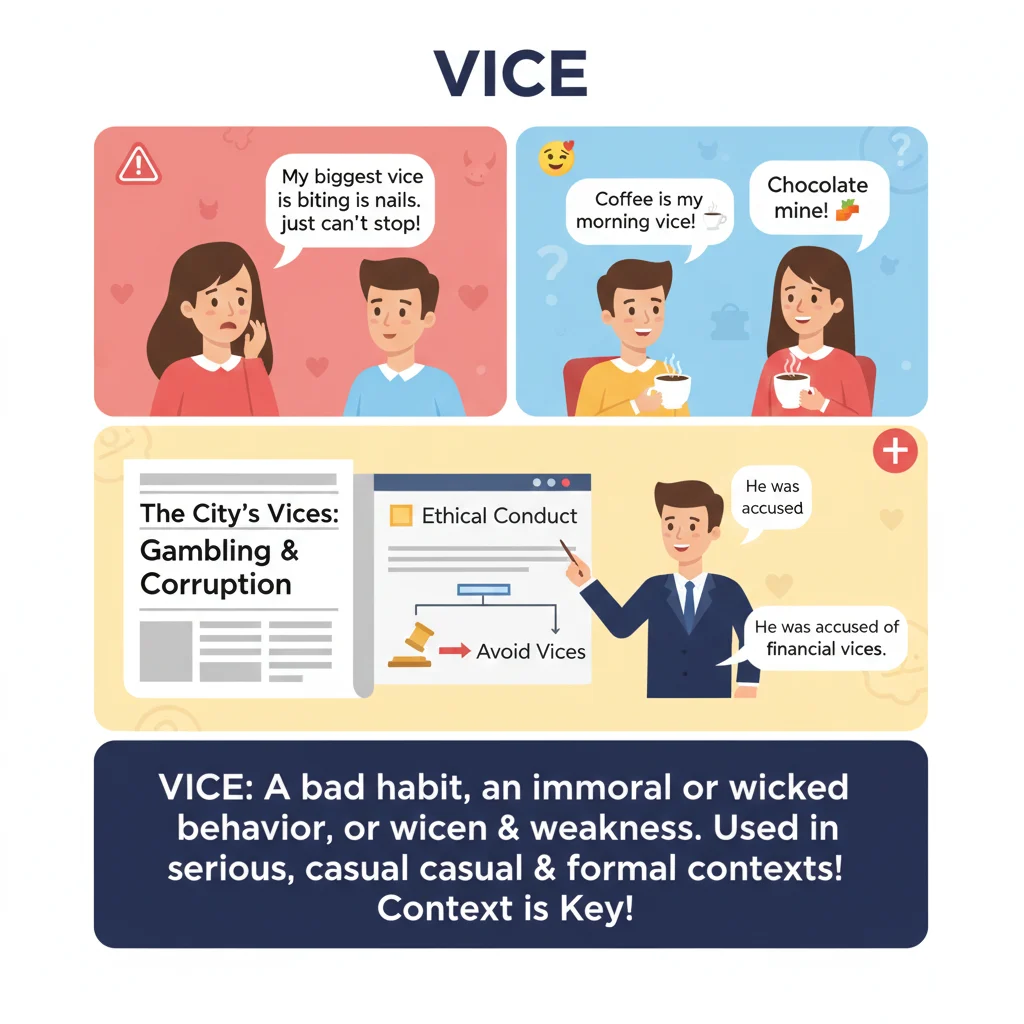
“Vice” means a bad habit, moral fault, or behavior considered immoral or harmful.
It’s often used to describe personal weaknesses such as addiction, dishonesty, or indulgence. You’ll see it used in both formal English and everyday conversation, especially when talking about habits or ethics.
Origin and Popularity
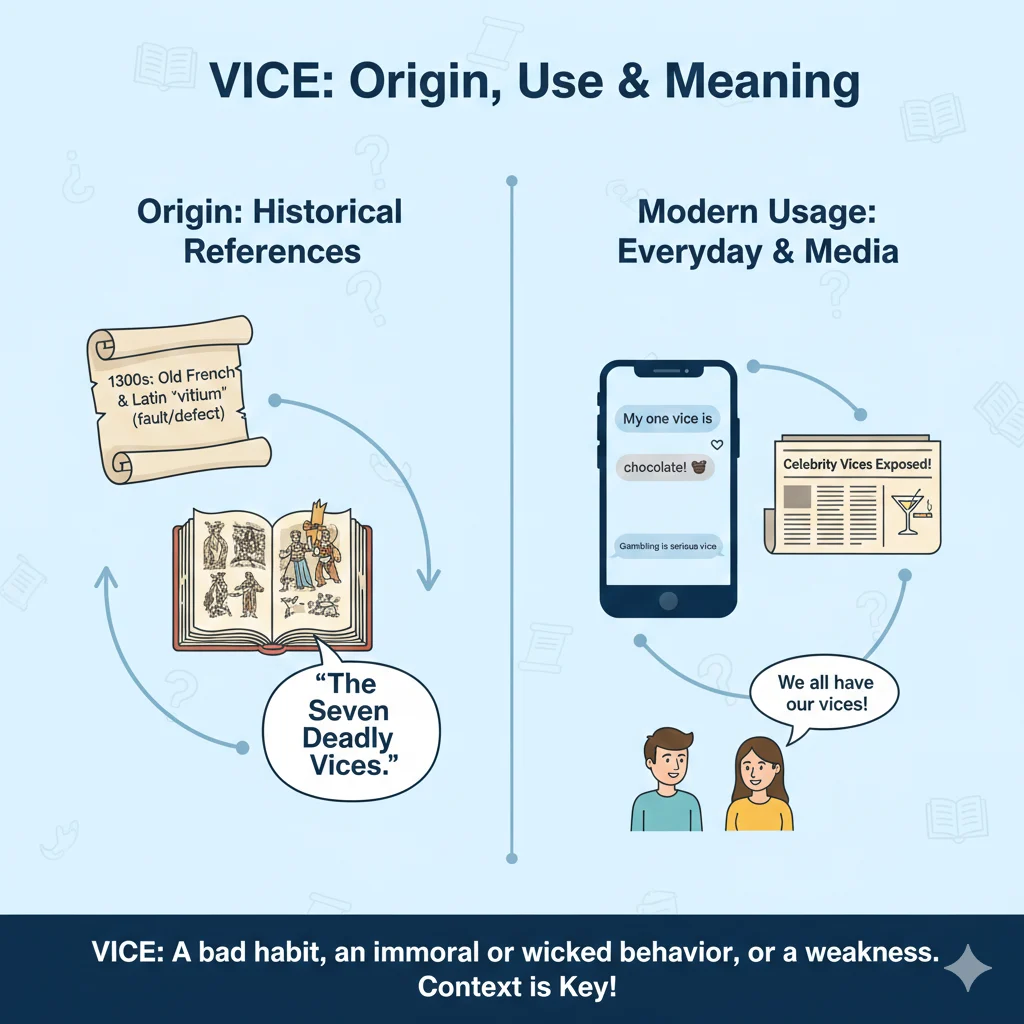
The term “vice” comes from the Latin word vitium, meaning “fault” or “defect.” It entered English through Old French (vice or vis), and has been part of the language since the 14th century.
Originally, it referred to moral corruption — the opposite of virtue. Over time, it became more casual, describing habits people struggle to quit, such as smoking or procrastination.
By the 20th century, the term expanded to include criminal or immoral activities, especially in law enforcement (e.g., “vice squad,” which handles crimes related to drugs or prostitution).
Timeline Snapshot:
- 1300s: “Vice” appears in Middle English, meaning “moral fault.”
- 1800s: Used in religious and moral literature.
- 1900s: Adopted by law enforcement (“vice crimes”).
- Today: Commonly used for bad habits and personal indulgences.
Vice Meaning in Different Contexts
1. In Everyday Language
In daily speech, vice refers to a bad habit or personal weakness.
Example:
“Chocolate is my biggest vice.” 🍫
It’s not always serious — sometimes it’s said jokingly or casually.
2. In Religion or Ethics
In religious or moral discussions, vice refers to immoral or sinful behavior, the opposite of virtue.
Example:
“Pride, greed, and envy are considered deadly vices.”
3. In Law Enforcement
In this context, vice means criminal activities related to moral misconduct.
Example:
“The city’s vice squad investigates illegal gambling operations.”
4. In Pop Culture
Modern media often uses vice to describe dark or guilty pleasures — behaviors that are flawed yet human.
Example:
“The TV show Miami Vice popularized the term in the 1980s.”
| Context | Meaning | Example |
| Everyday Use | Personal habit or indulgence | “My vice is binge-watching dramas.” |
| Religion | Moral sin or wrongdoing | “Jealousy is a vice.” |
| Law | Criminal activity | “Arrested by the vice squad.” |
| Pop Culture | Edgy or guilty pleasure | “Miami Vice was a hit show.” |
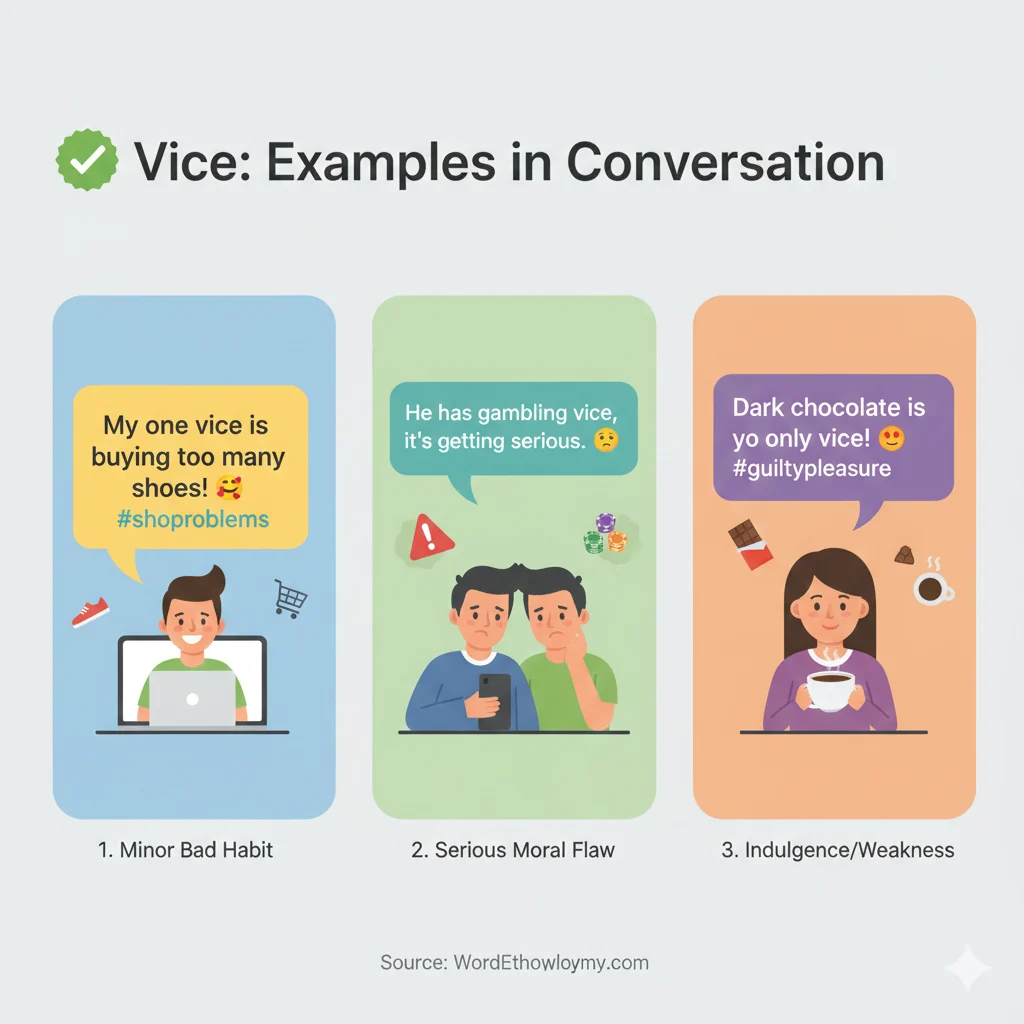
Examples of “Vice” in Conversations
Example 1 (Casual):
A: “I really need to stop eating so many fries.”
B: “We all have our vices, don’t worry.” 🍟
Example 2 (Formal):
“The mayor pledged to reduce vice-related crime in the city.”
Example 3 (Moral Context):
“Honesty is a virtue, while deceit is a vice.”
Similar or Related Terms
Here are some words closely related to vice — useful for understanding its shades of meaning:
| Term | Meaning | Example |
| Virtue | Opposite of vice; moral excellence | “Patience is a virtue.” |
| Habit | Regular behavior, good or bad | “Exercising daily is a healthy habit.” |
| Addiction | Strong compulsion toward something | “His addiction to caffeine is serious.” |
| Sin | Immoral act (religious context) | “Lying is considered a sin.” |
How to Use “Vice” Correctly
✅ Do:
- Use it to describe personal flaws or bad habits.
“Shopping is my only vice.” - Use it in moral discussions to contrast with “virtue.”
❌ Don’t:
- Use it casually in professional settings unless contextually appropriate.
- Confuse it with “device” — they’re completely different words.
Common Mistakes or Misinterpretations
- Mixing up “vice” with “device”:
Vice = bad habit.
Device = tool or gadget. - Thinking “vice” always means crime:
Not always! Sometimes it’s harmless, like “My vice is coffee.” ☕ - Using it too seriously:
In casual talk, it’s fine to say “My vice is chocolate,” even if it’s not truly immoral.
FAQ: Vice Meaning Explained
1. What does “vice” mean in simple terms?
“Vice” means a bad habit or behavior that’s morally wrong or unhealthy, like smoking, lying, or overeating.
2. Is “vice” slang or a formal word?
It’s not slang — “vice” is a standard English word used in both casual and formal contexts.
3. What’s the difference between “vice” and “virtue”?
A vice is a bad trait; a virtue is a good one. They’re moral opposites — like greed vs. generosity.
4. How do you use “vice” in a sentence?
“Everyone has a vice — mine is staying up too late watching shows.”
5. What are some examples of common vices?
Smoking, gambling, overeating, lying, and procrastination are classic examples of personal vices.
6. When should you not use the word “vice”?
Avoid it when you mean a literal object or tool (that’s “device”), or when joking about serious issues like addiction.
Conclusion
Now you know that “vice” means a bad habit or moral weakness — something we often struggle with as humans. From ancient moral philosophy to modern-day slang, it’s a word that connects behavior, ethics, and personality.
So the next time someone says, “Coffee is my vice,” you’ll know they’re just confessing a small indulgence, not a crime. ☕
Keep exploring our site for more clear, friendly explanations of everyday words and trending terms!

Patrick Gale is a word-meaning expert at Meanovia.com. He explains complex terms, definitions, and language trends with clarity and precision. His goal is to help readers understand the exact meaning behind every word they search.