
TLDR — you’ve seen it online, but what does it really mean? Maybe at the end of a long post, under a Reddit thread, or in a tweet you didn’t want to read fully. Don’t worry—you’re not alone.
TLDR stands for “Too Long; Didn’t Read.” It is used to give a short summary of long content so people can understand it fast.
Imagine scrolling late at night. You open a post. It’s huge. No time. Your eyes jump to the bottom—and there it is: TLDR. In one or two lines, you get the main point. Easy.
In 2026, TLDR is everywhere—social media, blogs, emails, forums, and chats. Knowing its meaning helps students, writers, bloggers, and daily internet users save time and communicate clearly. Next, let’s break down how to use TLDR correctly, with real examples and common mistakes to avoid.
What Is TLDR?
TLDR is a short form of “Too Long; Didn’t Read.”
It is used when a message or post is very long, and the writer gives a short summary so readers can understand it quickly.
People use TLDR on the internet to save time. Instead of reading everything, they can just read the TLDR line and get the main idea.
What does TL DR stand for?
TL DR stands for “Too Long; Didn’t Read.” It is used online to give a short summary of a long message, post, or article so readers can understand the main point quickly.
⚡ What Does TLDR Mean?
TLDR stands for “Too Long; Didn’t Read.”
It’s a slang abbreviation used to summarize long content in one short sentence.
People use TLDR mostly on social media, Reddit, emails, and comment sections to give a quick summary for those who don’t want to read the full text.
TLDR Meaning in Internet Slang
In internet slang, TLDR means “Too Long; Didn’t Read.”
Mostly people search this word as tldr meaning internet slang.
It is used online when a message, post, or article is very long, and the writer adds a short summary to save the reader’s time.
On the internet, TLDR is not rude or lazy. It is actually helpful. It tells readers the main point quickly without reading everything.
People commonly use TLDR on social media, Reddit, forums, blogs, emails, and comment sections. It has become part of everyday online language, especially in fast-scrolling digital spaces.
🕰️ TLDR Origin and Popularity of TLDR
The term TL;DR (sometimes written without the semicolon as TLDR) originated from internet forums in the early 2000s, particularly on Reddit and 4chan. It was a humorous way for users to acknowledge that their post was long — while also offering a summary.
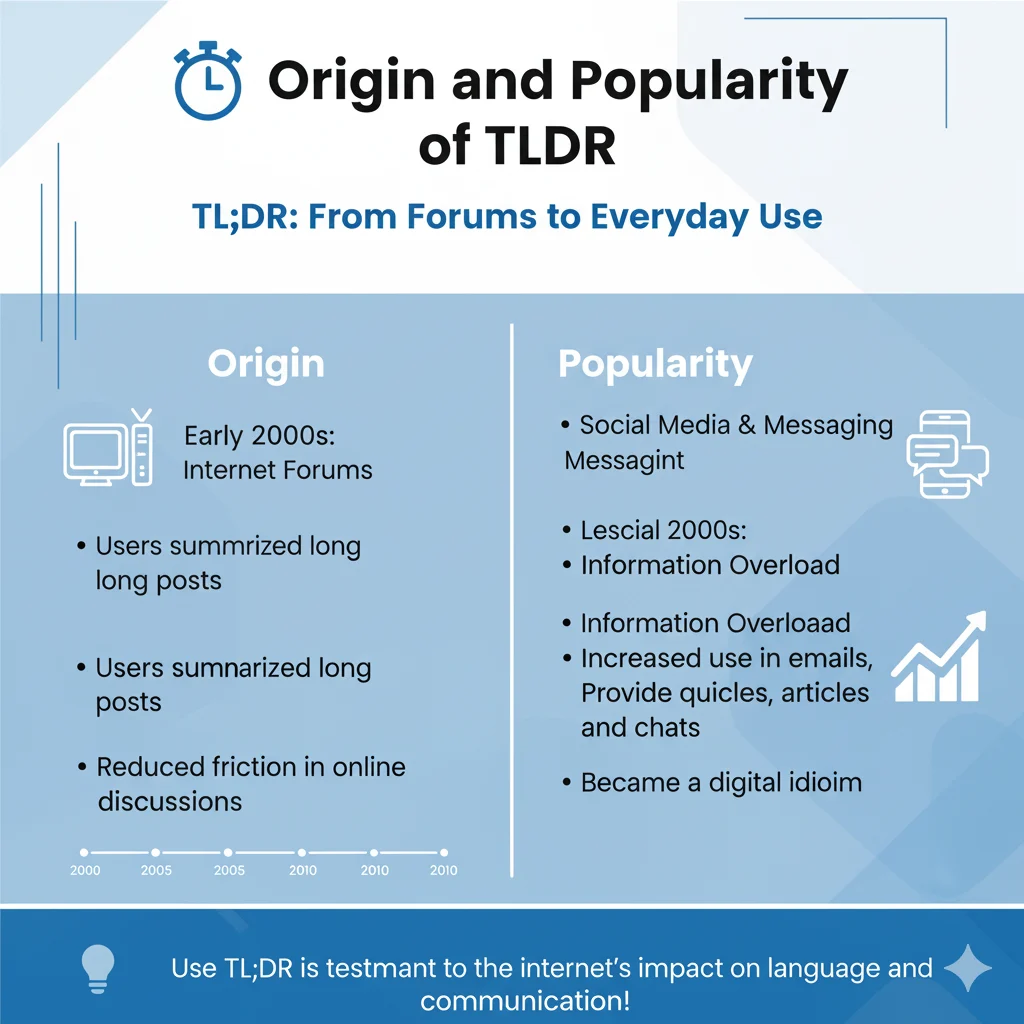
By the 2010s, TLDR became mainstream across blogs, Twitter, and workplace communication tools like Slack. It symbolized the fast-paced digital era — where attention spans are short and clarity matters.
Timeline snapshot:
- 2002: First recorded use on online forums.
- 2010–2015: Spread across Reddit and Twitter.
- 2020s: Widely used in professional and casual digital communication.
Today, TLDR isn’t just internet slang — it’s a recognized term in dictionaries like Merriam-Webster and Oxford Languages.
💬 TLDR Meaning in Different Contexts
Here’s how the meaning of TLDR changes slightly across platforms and situations:
| Platform/Context | How It’s Used | Example |
| Texting | To summarize a long message or joke. | “TLDR: Let’s just meet at 6.” |
| Reddit / Forums | Added at the end of a post to give a quick summary. | “TLDR: Cats > Dogs for small apartments.” |
| Emails / Business | Used to highlight the main point of a long email. | “TLDR: Approve the project budget before Friday.” |
| TikTok / Instagram | Caption shorthand for summarizing a story or rant. | “TLDR: Don’t date your coworker 😂” |
🏢 PMO Meaning: What It Stands For, Origin, and How It’s Used in Business 2025
TLDR Meaning in Chat
In chat, TLDR means “Too Long; Didn’t Read.”
People use TLDR in chats when a message is too long and they want a quick summary instead of reading everything.
It is commonly used in WhatsApp, Messenger, Discord, Slack, and other chat apps.
When someone types “TLDR?” in a chat, they are politely asking, “Can you explain this shortly?”
In most casual chats, TLDR is normal and not rude. It simply helps save time and keeps the conversation fast and clear.
What Does TLDR Mean in a Relationship?
In a relationship, TLDR still means “Too Long; Didn’t Read,” but the tone matters more than the word itself.
If your partner uses TLDR during a long emotional message, it may mean they want a shorter explanation, or they feel overwhelmed by too much information.
TLDR in relationships is not always rude, but it can feel dismissive if emotions are involved. Context is important.
In healthy communication, it’s better to explain briefly instead of just saying TLDR. For example:
“TLDR: I’m upset because I felt ignored today.”
Clear and kind summaries help avoid misunderstandings between partners.
Is TLDR Professional?
TLDR can be professional, but only when used correctly.
In workplaces, TLDR is often used at the top or end of long emails or reports to highlight the main point quickly.
Managers, teams, and clients use TLDR to save time and improve clarity. However, it should be written politely and clearly.
TLDR is not suitable for very formal documents like legal papers, contracts, or academic reports.
When used respectfully, TLDR is seen as helpful — not rude.
TLDR Meaning in Business
In business, TLDR means “Too Long; Didn’t Read,” and it is used to summarize important information quickly.
Business professionals use TLDR in emails, reports, and Slack messages to highlight decisions, deadlines, or key actions.
A business TLDR is usually short, clear, and placed at the beginning or end of a message.
Example:
TLDR: The client approved the budget. Start phase two on Monday.
In business communication, TLDR improves efficiency and reduces confusion when used appropriately.
💬 Examples of TLDR in Conversations
Here are some realistic examples to help you understand its usage better:
Example 1 – Texting:
Alex: I just watched the whole documentary about space exploration…
Jamie: TLDR?
Alex: Humans might go to Mars by 2035. 🚀
Example 2 – Reddit Post:
I wrote a detailed review of the new iPhone 16.
TLDR: Great camera, overpriced battery life.
Example 3 – Business Email:
TLDR: The client approved phase 2; kickoff is next Monday.
Example 4 – Instagram Caption:
Storytime: I tried 5 coffee brands this week.
TLDR: Local roasts always win ☕
🔍 Similar or Related Terms
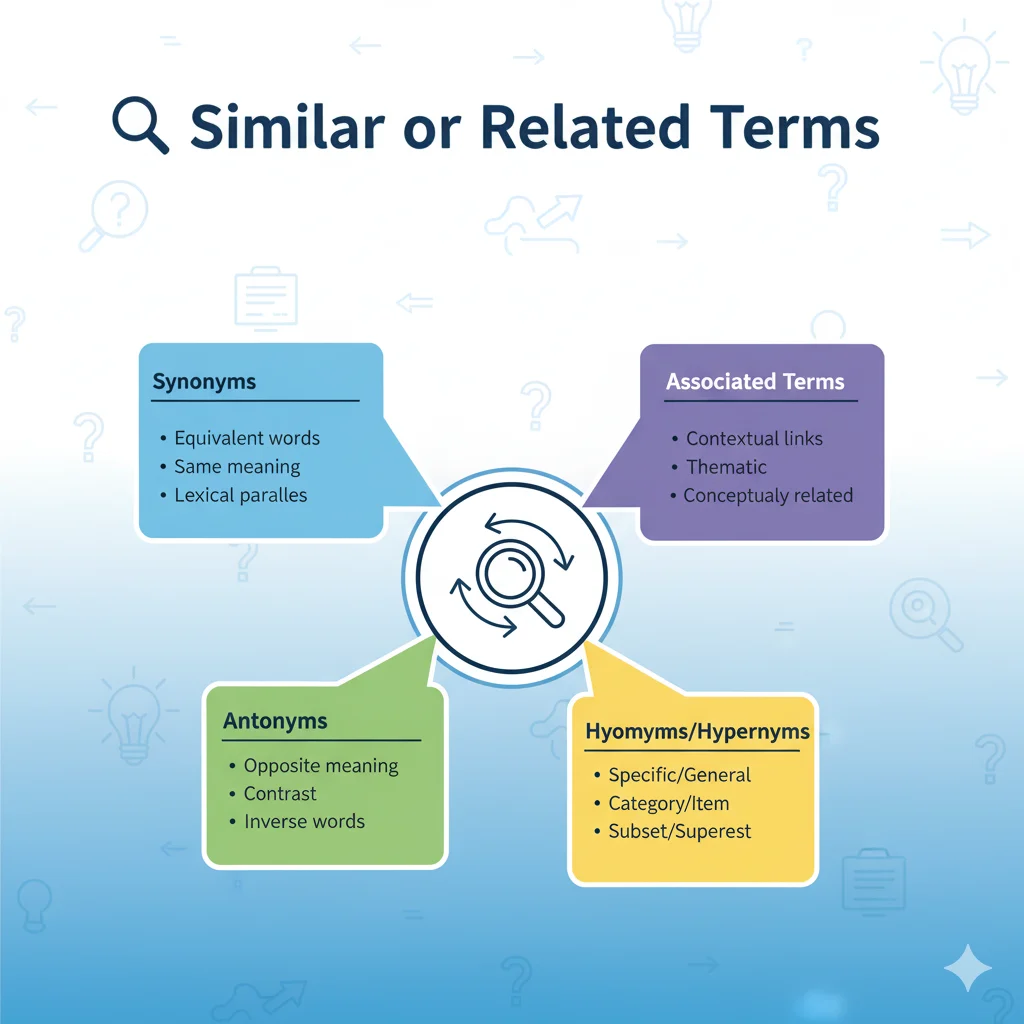
Here are a few related abbreviations and slang that people often use like TLDR:
| Term | Meaning | Usage Example |
| ICYMI | In Case You Missed It | “ICYMI: New update drops tonight.” |
| BTW | By The Way | “BTW, check your inbox.” |
| FYI | For Your Information | “FYI, meeting moved to 3 PM.” |
| IMO / IMHO | In My (Humble) Opinion | “TLDR: IMO, it’s not worth buying.” |
These abbreviations make communication quicker and more casual — perfect for today’s fast-scrolling culture.
🧠 How to Use TLDR Correctly
Using TLDR is simple, but context matters. Follow these do’s and don’ts:
✅ Do:
- Use TLDR at the end of a long message or post to summarize.
- Use it in casual chats, blogs, or social media captions.
- Add a short, clear summary after it.
❌ Don’t:
- Use it in formal letters or academic papers.
- Write “TLDR” without providing a summary — that defeats the purpose!
Example:
✅ “TLDR: We’re switching platforms next quarter.”
❌ “TLDR.” (without any summary)
⚠️ Common Mistakes or Misinterpretations
Many people misunderstand TLDR in a few ways:
- Confusing it with laziness: It doesn’t mean the writer was lazy — it’s meant to help readers save time.
- Thinking it’s rude: In professional settings, TLDR can actually improve clarity when used respectfully.
- Skipping the semicolon: Both “TL;DR” and “TLDR” are acceptable, though the former is technically correct.
❓ FAQ Section
1. What does TLDR mean in texting?
It means “Too Long; Didn’t Read.” It’s a quick way to summarize a long message or point for convenience.
2. Is TLDR considered slang or formal language?
TLDR is internet slang, but it’s also widely accepted in semi-formal settings like work emails or online articles.
3. What’s the difference between TLDR and summary?
A summary is a formal recap, while TLDR is a quick, casual shorthand version often used online.
4. How do you reply to TLDR?
You can respond with appreciation or further clarification — for example, “Got it, thanks for the TLDR!”
5. Where is TLDR most commonly used?
It’s popular on Reddit, Twitter, TikTok, and in emails to condense long text into a short takeaway.
6. When should you avoid using TLDR?
Avoid it in academic papers, official documents, or job applications — it’s too casual for those contexts.
🏁 Conclusion
Now that you know the meaning, origin, and usage of TLDR, you’ll recognize it instantly — and even use it confidently. It’s a perfect shorthand for our digital age, where quick summaries save everyone time.
Next time you see or write a long post, remember:
TLDR: Keep it short, smart, and clear.

Claire Fuller is a word-meaning specialist at Meanovia.com. She explains complex words, phrases, and language trends in a clear, relatable way, helping readers quickly understand the exact meaning behind every term.