Ever heard someone describe a country, music, or education system as “secular” and wondered what it truly means? You’re not alone. The word “secular” is often used in discussions about religion, politics, and society, but its meaning can vary slightly depending on context.
Secular means not connected to religion or spiritual matters, often referring to ideas, institutions, or practices that are worldly, non-religious, or neutral in faith.
The word secular is commonly used in discussions about government, education, culture, and daily life to describe things that are independent of religious influence. For example, secular schools, laws, or organizations operate without promoting religious beliefs. People search for its meaning to understand the difference between religious and non-religious contexts.
Understanding the meaning of secular helps readers interpret conversations, debates, and texts accurately. It highlights a focus on practical, worldly, or universal concerns rather than spiritual ones
What Does “Secular” Mean?
“Secular” means not connected to religion or independent of spiritual beliefs.
In simple terms, anything secular is worldly rather than religious — for example, secular education focuses on science and facts, not faith-based teachings.
Origin and Popularity
The word “secular” comes from the Latin term “saecularis,” meaning “worldly” or “of an age.” It was first used in English during the 14th century to describe things not related to the church or religious practices.
Over time, the concept of secularism gained prominence, especially in Enlightenment-era Europe (17th–18th centuries), when thinkers promoted reason and science over religious authority.
Today, “secular” is a key concept in discussions about government neutrality, education, and freedom of belief, shaping modern democracies worldwide.
Secular Meaning in Different Contexts
The meaning of “secular” slightly shifts depending on where it’s used. Let’s break it down:
1. In Education
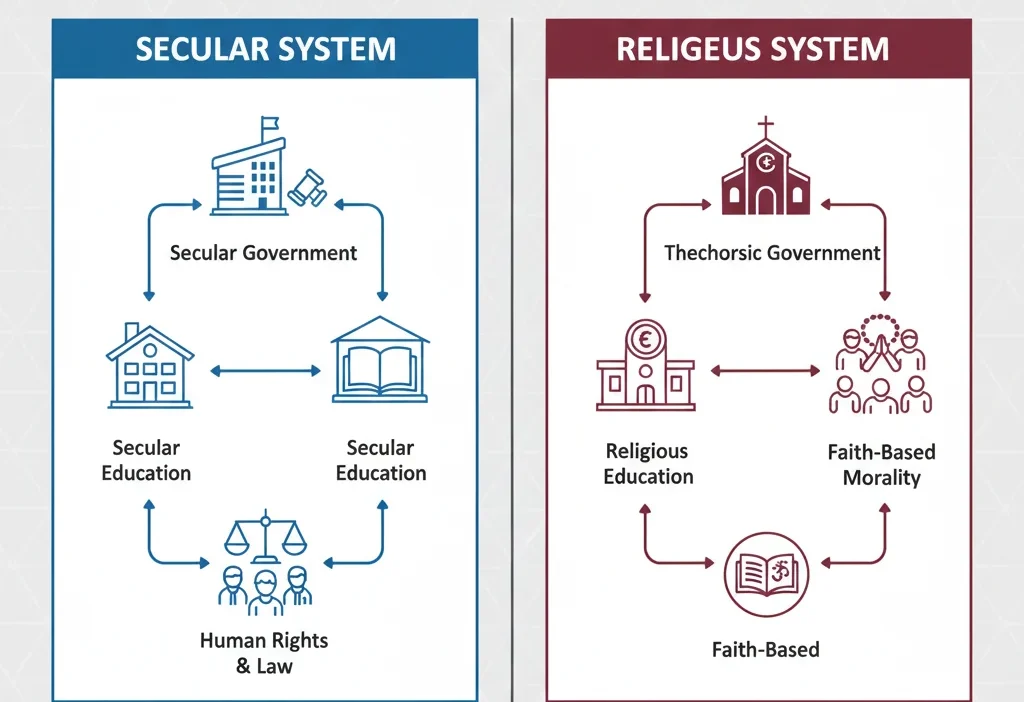
- Secular education means learning that’s not based on any religion.
Example: Public schools often provide secular instruction, focusing on subjects like math, history, and science instead of religious doctrine.
2. In Government
- A secular government keeps religion and state separate.
Example: In a secular state, laws are made independently of religious influence, ensuring equal rights for people of all beliefs.
3. In Culture and Society
- Secular culture refers to art, music, or activities unrelated to faith.
Example: Pop music is generally secular, while hymns are religious.
4. In Daily Conversation
- Sometimes, people use “secular” casually to mean “non-religious” or “neutral.”
Example: “He leads a secular lifestyle” — meaning he doesn’t follow any religion closely.

Examples of “Secular” in Sentences
Here are some real-world examples of how “secular” is used:
💬 In Education:
- “The university prides itself on being a secular institution.”
💬 In Government:
- “The constitution guarantees a secular state where religion and politics remain separate.”
💬 In Culture:
- “Her latest album explores secular themes of love and freedom.”
💬 In Everyday Talk:
- “I’m not very religious; I prefer a more secular approach to life.”
Similar or Related Terms
Here are a few terms closely related to “secular” — useful for understanding its nuances:
| Term | Meaning |
| Religious | Related to faith, worship, or spiritual belief |
| Atheist | Someone who doesn’t believe in the existence of God |
| Agnostic | Someone uncertain about the existence of a higher power |
| Humanist | Belief system focusing on human values rather than divine authority |
| Secularism | The principle of keeping religion separate from government and education |
How to Use “Secular” Correctly
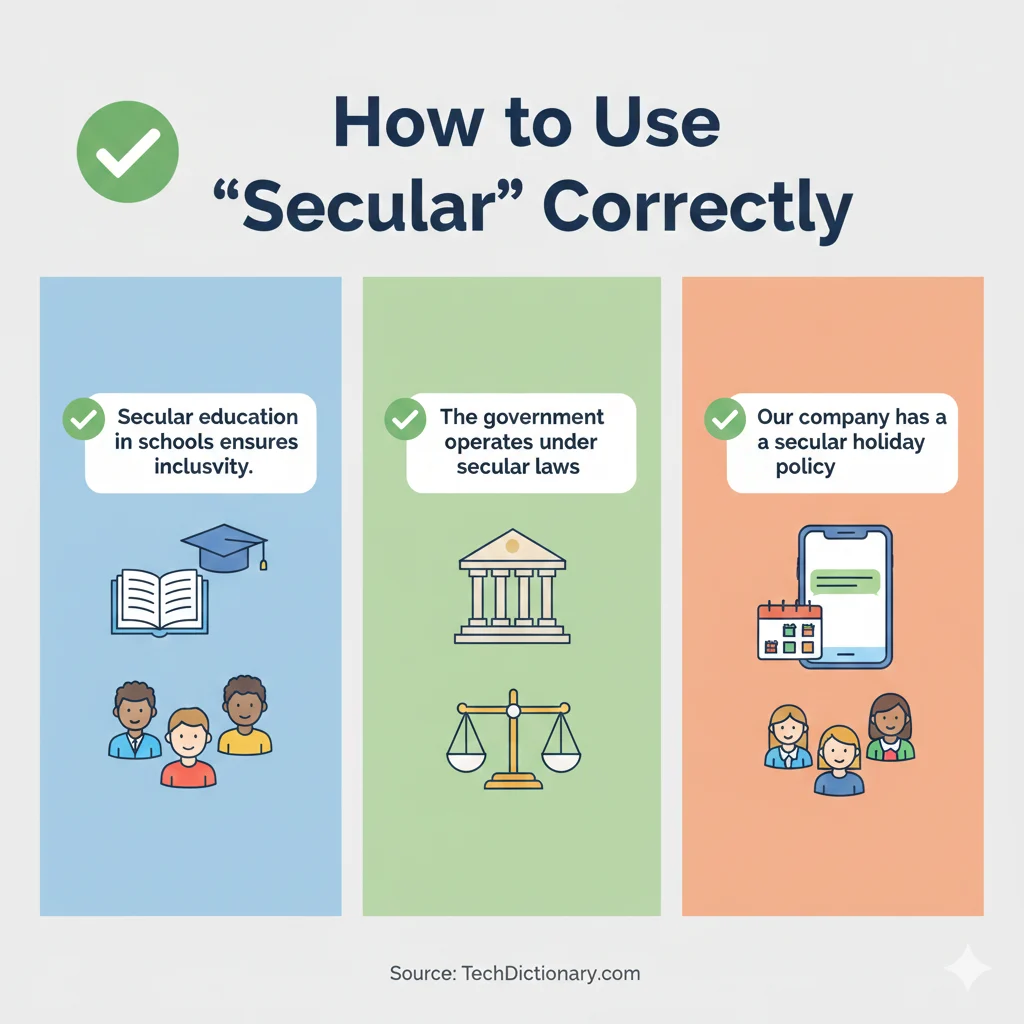
Here are some quick do’s and don’ts when using the word “secular”:
✅ Do use “secular” to describe:
- Non-religious institutions (e.g., secular schools)
- Neutral policies or spaces (e.g., secular government)
- Everyday, worldly matters (e.g., secular life)
❌ Don’t use “secular” to mean “anti-religious.”
It simply means neutral or separate from religion, not opposed to it.
Common Mistakes or Misinterpretations
Many people confuse “secular” with being anti-religious, but that’s incorrect.
- “Secular” ≠ “Against religion”
It means independent or neutral regarding religion. - “Secular” ≠ “Atheist”
A person can be religious but support a secular state — one that treats all religions equally.
FAQ: Secular Meaning Explained
1. What does “secular” mean in simple words?
“Secular” means not related to religion. It describes things focused on the world, not faith — like secular music, secular education, or secular government.
2. Is secular the same as atheist?
No. Atheism is the belief that there is no God, while secular simply means not religious. A secular person or government can still respect all religions equally.
3. What is a secular state?
A secular state keeps religion separate from politics and lawmaking. It treats all citizens equally regardless of faith, promoting freedom of belief.
4. What does secular mean in education?
Secular education focuses on knowledge, facts, and science instead of religious teachings. Public schools in most countries offer secular education.
5. Can a person be secular and religious?
Yes. Someone can follow a religion personally but still support secular principles — like freedom of religion and government neutrality.
6. Why is secularism important?
Secularism helps maintain equality, peace, and freedom by ensuring that no religion dominates public life or influences government decisions.
Conclusion
Now you know what “secular” truly means — neutral, non-religious, and worldly. From education systems to government policies, secularism plays a vital role in ensuring fairness and inclusivity for everyone, regardless of belief.
So next time you hear the term “secular,” you’ll know it’s not anti-religious — it’s simply independent of religion, promoting balance and equality in society.
💡 Now that you understand the secular meaning, explore more definitions and cultural terms to stay informed and confident in every conversation!

Claire Fuller is a word-meaning specialist at Meanovia.com. She explains complex words, phrases, and language trends in a clear, relatable way, helping readers quickly understand the exact meaning behind every term.