
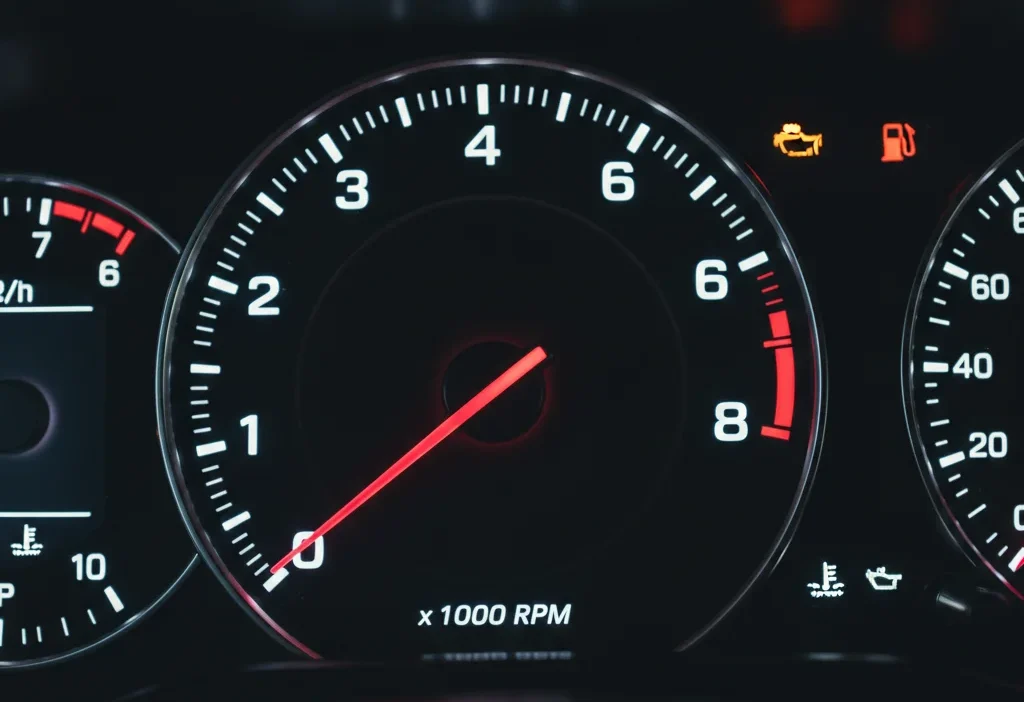
Ever noticed “RPM” on your car dashboard or in a YouTube tech video and wondered what it actually means? You’re not alone! This common abbreviation pops up everywhere — from car engines to computer drives and even marketing analytics.
RPM stands for “Revolutions Per Minute,” a measurement of how many times an object spins or rotates in one minute, commonly used for engines, machines, and devices.
The abbreviation RPM is widely used in mechanics, automotive, and technology contexts, which is why people often search for its meaning. It measures the speed of rotation, such as the engine speed in cars, turbines, or computer hard drives. For example, a car engine spinning at 3,000 RPM completes 3,000 full rotations per minute.
Understanding RPM helps users monitor performance, ensure safety, and maintain efficiency in vehicles or machinery. It is also essential for engineers, technicians, and hobbyists to calculate mechanical output, energy consumption, or operational limits, making it a key metric in both professional and everyday technical applications.
What Does RPM Mean?
RPM stands for “Revolutions Per Minute.”
It measures how many full rotations an object (like an engine shaft or disk) completes in one minute. The term is widely used in automotive, mechanical, and digital contexts to indicate speed or performance.
For example, in cars, RPM shows how fast the engine is spinning — higher RPM usually means higher power but also more fuel consumption.
Origin and Popularity of RPM
The term “Revolutions Per Minute” dates back to the late 19th century, during the early era of mechanical engineering and industrial machines. Engineers needed a way to measure rotational speed, and RPM became the universal unit.
With the rise of automobiles in the early 1900s, RPM meters (tachometers) became standard in cars. Later, the term expanded to fields like computing (hard drives) and digital marketing (Revenue Per Mille).
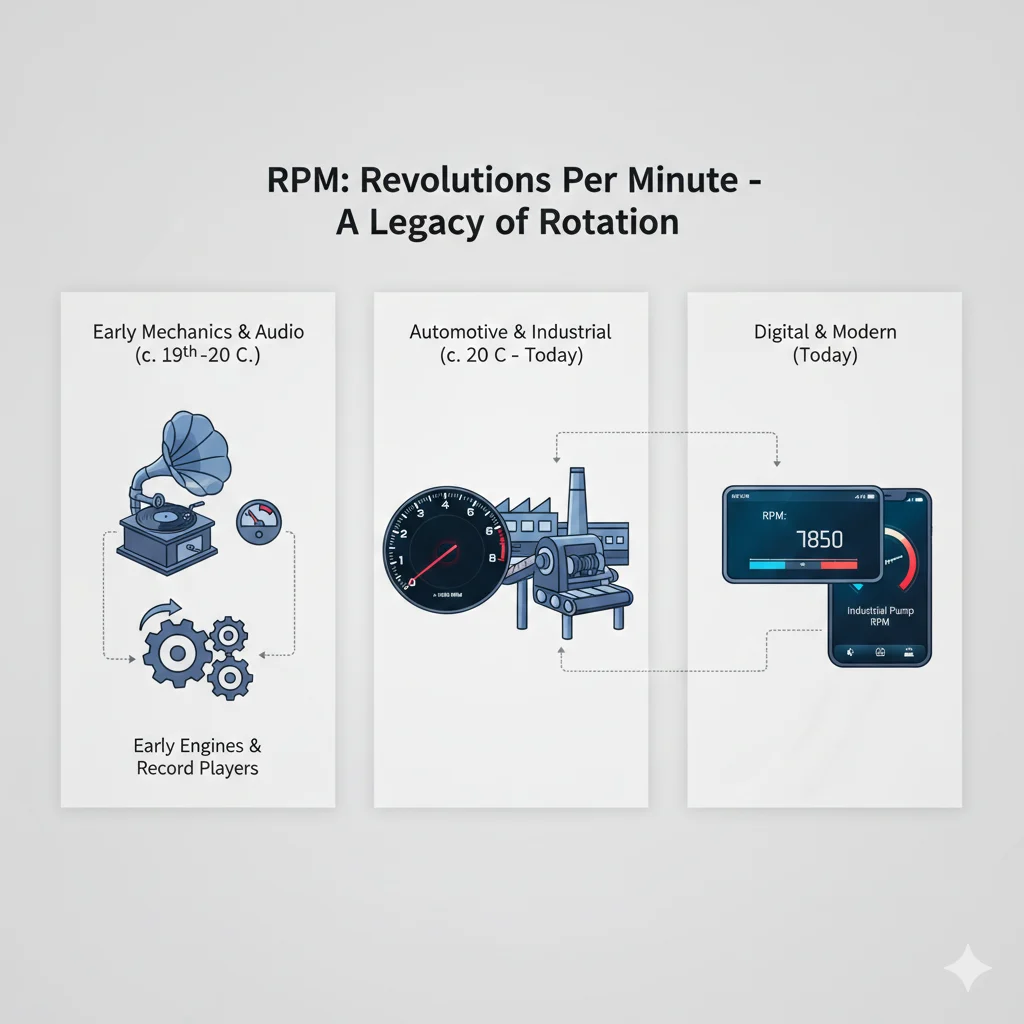
Today, “RPM” is one of the most recognized technical abbreviations globally — used by mechanics, marketers, and machine operators alike.
RPM Meaning in Different Contexts
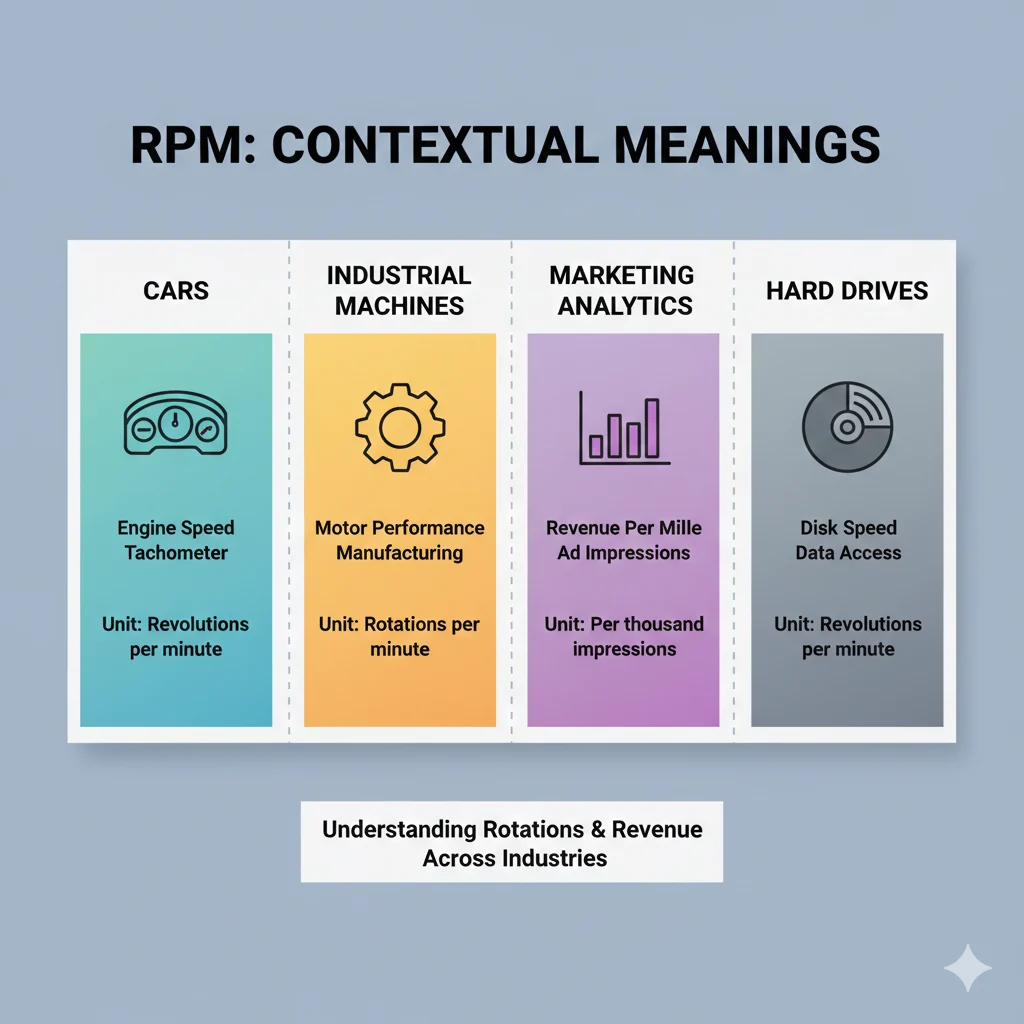
Let’s look at how “RPM” is used across various fields:
1. In Cars and Automobiles
- Meaning: Measures engine speed — how many times the engine’s crankshaft makes a full rotation per minute.
- Use: Helps drivers shift gears efficiently and monitor engine performance.
- Example: “Keep your RPM below 3,000 for better fuel economy.”
2. In Machines and Engineering
- Meaning: Measures rotation speed of motors, turbines, or fans.
- Example: “The fan operates at 1,200 RPM for optimal cooling.”
3. In Computers (Hard Drives)
- Meaning: Indicates how fast a hard disk spins.
- Common Values: 5,400 RPM (standard) and 7,200 RPM (faster performance).
- Example: “A 7,200 RPM drive reads and writes data faster than a 5,400 RPM one.”
4. In Marketing and Online Monetization
- Alternate Meaning: “Revenue Per Mille” — mille means thousand in Latin.
- Definition: Earnings per 1,000 ad impressions or views.
- Example: “A YouTuber’s RPM shows how much they earn for every 1,000 views.”
Examples of RPM in Conversations
Everyday Use (Automotive):
Driver 1: “Why’s your RPM so high?”
Driver 2: “I forgot to shift up — it’s redlining!”
Tech Context (Computers):
User: “Should I buy a 5,400 RPM or 7,200 RPM drive?”
Tech Expert: “Go for 7,200 RPM — it’s faster for gaming.”
Business Context (Marketing):
Creator 1: “My RPM dropped this month.”
Creator 2: “Mine too! Ad rates must’ve changed.”
Similar or Related Terms
| Term | Full Form | Meaning / Use |
| BHP | Brake Horsepower | Measures engine power output |
| Torque | — | Measures engine twisting force |
| CPM | Cost Per Mille | Marketing metric: cost per 1,000 impressions |
| CTR | Click-Through Rate | Measures engagement in ads |
These related terms often appear alongside RPM, especially in automotive and marketing discussions.
How to Use “RPM” Correctly
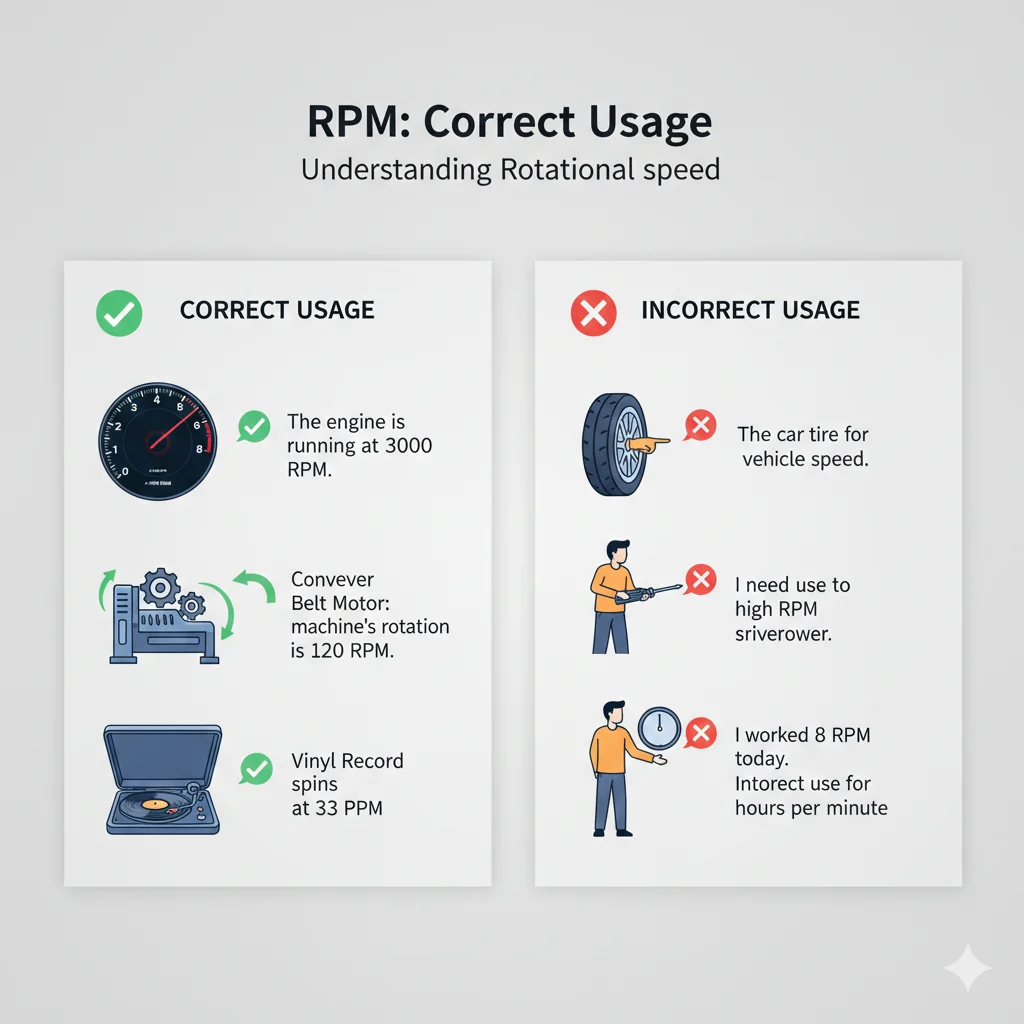
✅ Do’s:
- Use it when discussing engine speed, machine rotations, or data performance.
- Use in technical writing, reports, and mechanical explanations.
- Example: “The generator runs at 3,600 RPM.”
❌ Don’ts:
- Don’t confuse RPM (Revolutions Per Minute) with Revenue Per Mille unless in a marketing context.
- Don’t use it as slang or in casual texting — it’s a technical abbreviation.
Common Mistakes or Misinterpretations
- Mistake 1: Thinking RPM means “speed.”
➤ Correction: It measures engine rotation speed, not vehicle speed. - Mistake 2: Confusing RPM (Revolutions Per Minute) with RPM (Revenue Per Mille).
➤ Context matters — cars vs. content creation. - Mistake 3: Believing higher RPM always means better performance.
➤ Not true — too high RPM can damage engines or reduce efficiency.
FAQ Section
1. What does RPM mean in cars?
RPM in cars stands for Revolutions Per Minute, showing how many times the engine’s crankshaft spins each minute. It helps monitor performance and gear shifts.
2. What does RPM mean in marketing?
In digital marketing, RPM means Revenue Per Mille, which measures how much money you earn per 1,000 ad impressions or video views.
3. Is higher RPM better for engines?
Not always. While higher RPM can mean more power, it also increases fuel consumption and wear. Ideal RPM depends on the car and driving conditions.
4. What’s a normal RPM for a car engine?
Most cars idle between 600–1,000 RPM, while highway cruising usually stays under 3,000 RPM for fuel efficiency.
5. How is RPM different from torque?
RPM measures how fast an engine spins, while torque measures the twisting force that turns the wheels. Both work together to determine performance.
6. What does 7,200 RPM mean on a hard drive?
It means the disk spins 7,200 times per minute, allowing faster read/write speeds compared to a 5,400 RPM drive.
Conclusion
Now you know that RPM isn’t just a random gauge number — it’s a universal unit that measures rotational speed, used in cars, machines, computers, and even marketing analytics.
Understanding RPM helps you make smarter choices — whether tuning your car, buying a faster hard drive, or analyzing YouTube earnings.
So next time someone mentions “RPM,” you’ll know exactly what they’re talking about!

Patrick Gale is a word-meaning expert at Meanovia.com. He explains complex terms, definitions, and language trends with clarity and precision. His goal is to help readers understand the exact meaning behind every word they search.