

Ever heard someone say, “She’s the quintessential leader,” and wondered what that actually means? 🤔
Quintessential means the most perfect or typical example of something, representing its true and essential qualities.
People search for “quintessential meaning” when they see the word used to describe something as a perfect example and want a clear explanation. Quintessential is often used in literature, reviews, and everyday speech to highlight what best represents a person, place, or idea.
For example, calling someone the “quintessential leader” means they show all the qualities people expect in a leader. The word comes from the idea of capturing the essence of something. Understanding this meaning helps you use the term confidently in writing and conversation. Whether describing culture, personality, or style, quintessential emphasizes authenticity, clarity, and excellence.
💡 What Does “Quintessential” Mean?
“Quintessential” means the perfect or most typical example of something.
It’s an adjective used to describe someone or something that represents the best, purest, or defining qualities of a category.
👉 In simple terms, if something is quintessential, it’s the ideal representation of its kind.
Example:
“Leonardo da Vinci is the quintessential Renaissance man.”
🕰️ Origin and Popularity
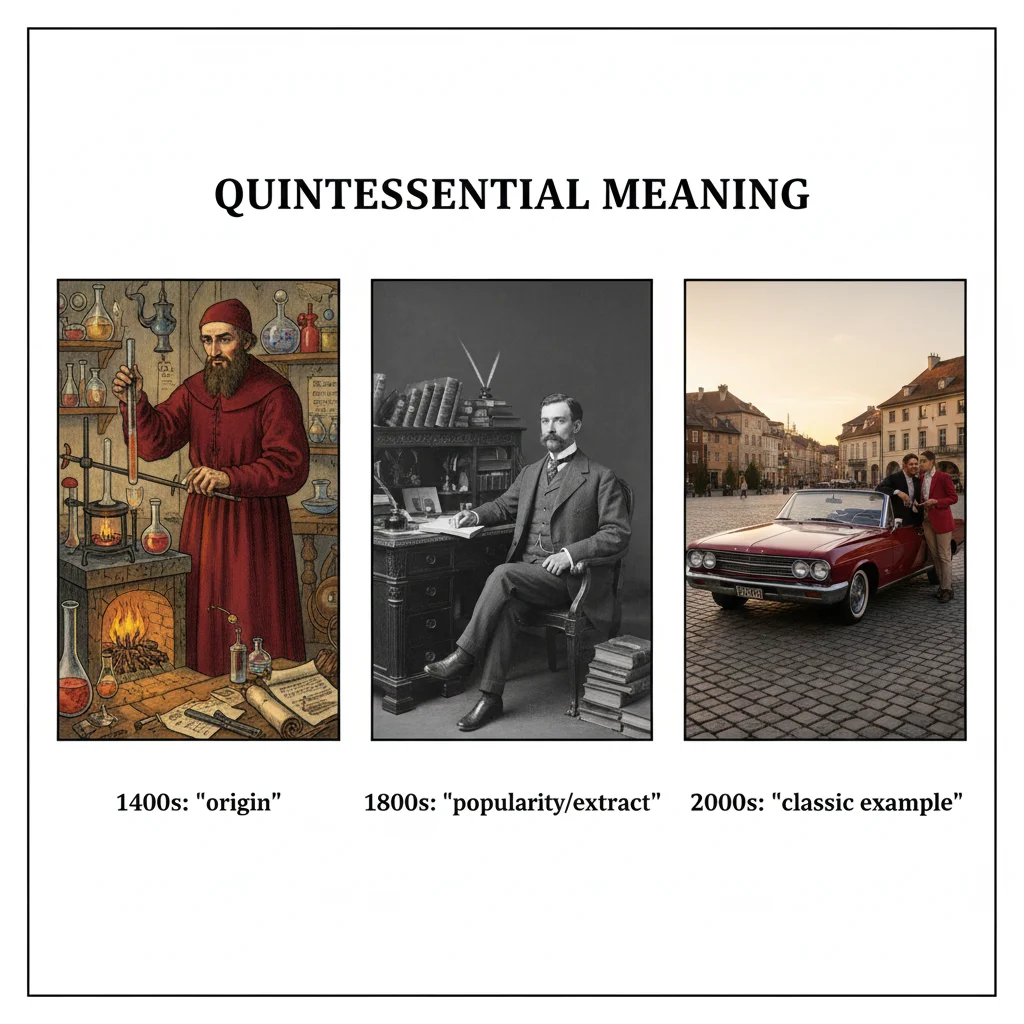
The term “quintessential” originates from the Latin phrase “quinta essentia,” meaning “fifth essence.”
In medieval philosophy, people believed everything in the universe was made from four elements — earth, air, fire, and water — plus a fifth essence that was purer and more perfect. This fifth element became known as the “quintessence.”
Over time, “quintessential” evolved in English (around the 15th century) to describe something that perfectly embodies a quality or type.
It’s commonly found in:
- Academic writing
- Business and marketing contexts
- Everyday compliments (e.g., “the quintessential mom”)
📈 The word continues to be widely used in speeches, literature, and branding because it conveys perfection and essence in a single, elegant word.
🌐 “Quintessential” Meaning in Different Contexts
Here’s how “quintessential” is used across various settings 👇
| Context | Meaning / Usage | Example |
| In Everyday Language | Describes the perfect example of something. | “Paris is the quintessential romantic city.” |
| In Business or Marketing | Highlights excellence or leadership. | “Apple is the quintessential innovation brand.” |
| In Literature / Academia | Defines the purest or ideal form. | “Hamlet is the quintessential tragic hero.” |
| In Pop Culture | Used to describe icons or trends. | “Taylor Swift is the quintessential pop star of her era.” |
🗣️ Examples of “Quintessential” in Conversations
Here are some real-life ways to use “quintessential” naturally:
Example 1:
A: “Who’s your favorite actor?”
B: “Tom Hanks — he’s the quintessential American actor.” 🎬
Example 2:
“That café is the quintessential brunch spot — cozy, stylish, and full of energy.” ☕
Example 3 (Formal):
“The CEO delivered a quintessential example of visionary leadership.” 💼
🔤 Similar or Related Terms
Here are some related or semantically similar words that carry comparable meanings:
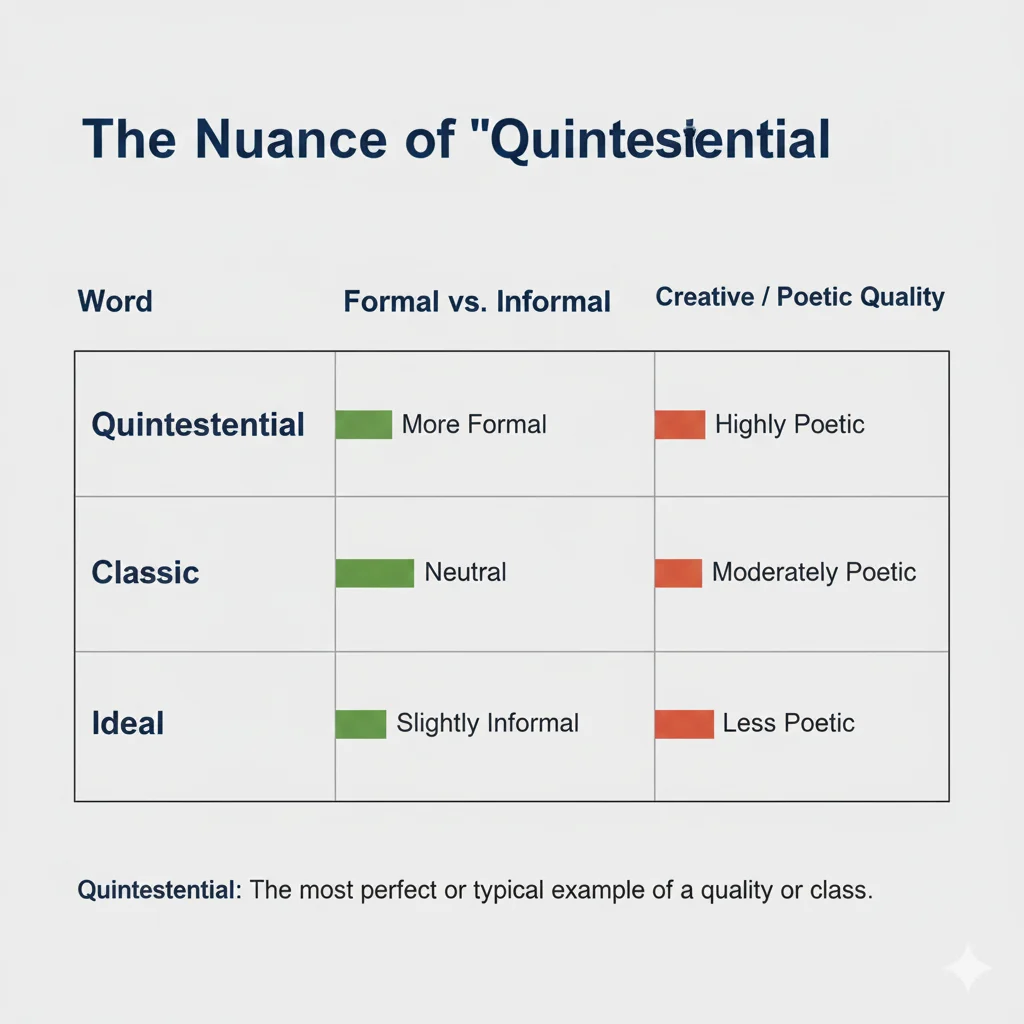
| Word / Phrase | Meaning |
| Archetypal | The original or model example of something. |
| Classic | A timeless or perfect standard. |
| Epitome | A person or thing that perfectly represents a quality. |
| Ideal | The best or most suitable example. |
| Model | A pattern or standard to follow. |
🧭 How to Use “Quintessential” Correctly
Here are some quick do’s and don’ts for using the term right ✅❌
✅ Do:
- Use it to highlight something that defines perfection.
“Her speech was the quintessential example of grace and intelligence.” - Use it in essays, reviews, or formal writing.
❌ Don’t:
- Use it casually in slang or text messages.
- Confuse it with “essential” — “essential” means necessary, not perfect example.
⚠️ Common Mistakes or Misinterpretations
Many people mix up “quintessential” with similar-sounding words. Let’s clarify:
- Not the same as “essential”:
“Essential” means needed or required.
“Quintessential” means the best representation of something. - Not just “typical”:
Something typical can be average, but quintessential implies excellence. - Example:
“Pizza is a typical Italian food.” 🍕
“Pizza from Naples is the quintessential Italian dish.” 🇮🇹
❓ FAQ Section
1. What does “quintessential” mean in simple words?
It means the perfect example of something — the best representation of a quality or type.
2. Is “quintessential” a positive word?
Yes! It’s often used to compliment people or things that embody perfection or excellence.
3. What’s the difference between “essential” and “quintessential”?
“Essential” means something necessary or required. “Quintessential” means the ideal or purest example.
4. Can I use “quintessential” in daily conversation?
Absolutely — though it’s a bit formal. It fits well in speeches, essays, or when you want to sound polished.
5. How do you pronounce “quintessential”?
It’s pronounced as /kwin-tuh-SEN-shuhl/.
6. What’s another word for “quintessential”?
Synonyms include epitome, archetypal, classic, and ideal.
🏁 Conclusion
Now you know — “quintessential” means the perfect, most defining example of something.
It originated from Latin roots meaning “fifth essence” and has evolved to represent purity, excellence, and perfection in modern English.
Whether you’re describing a quintessential leader, a quintessential movie, or a quintessential experience, this word instantly adds sophistication to your language. ✨
So next time you hear it, you’ll know — it’s all about being the best version of a type or idea. 💬