
Ever wondered what “per capita” means when reading economic reports or population studies? 🤔
The term per capita often appears in discussions about income, GDP, or resource distribution, but not everyone knows exactly what it signifies.
In this article, you’ll learn:
- The definition of per capita
- Its origin and history
- How it’s used in economics, business, and demographics
- Real-world examples
- Common mistakes and FAQs
💬 What Does “Per Capita” Mean?
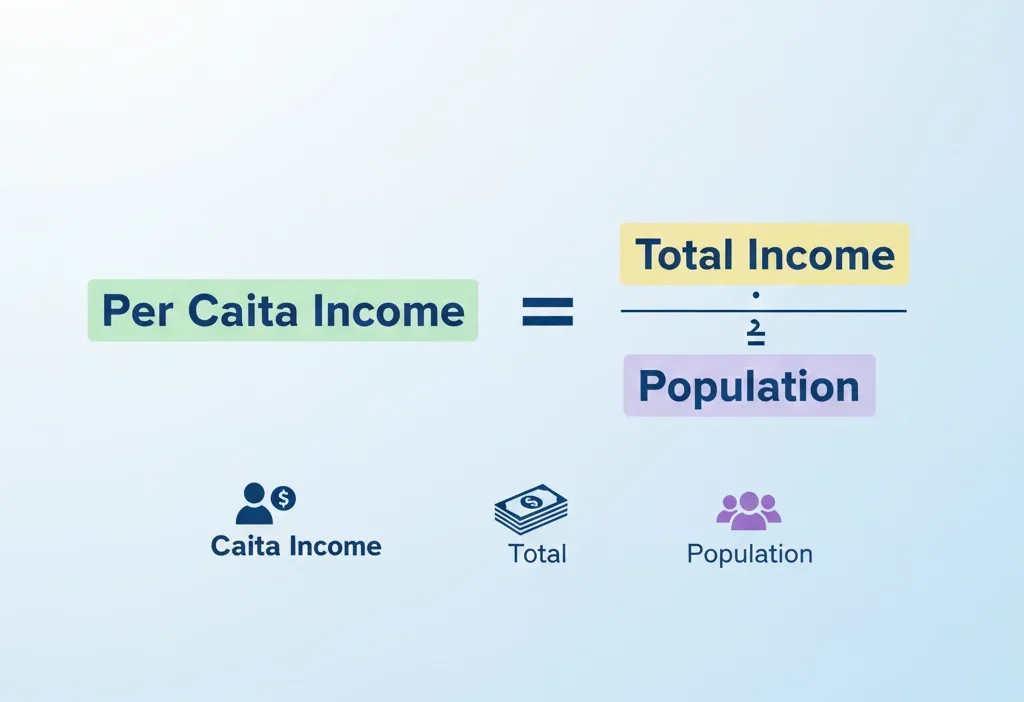
Per capita means “per person” in Latin. It’s used to describe an average amount for each individual within a group — often in economics, finance, or population statistics.
👉 In simple terms:
Per capita = Total amount ÷ Number of people
Example:
If a country’s total income is $1 trillion and the population is 100 million, the per capita income is $10,000.
🏛️ Origin and Popularity
The phrase “per capita” originates from Latin, meaning “by heads” or “for each head.”
Historically, it was used in Roman censuses to count citizens individually. Over time, it evolved into a statistical and economic term used worldwide to measure average values per person.
By the 20th century, “per capita” became standard in economics, sociology, and public policy, especially in indicators like:
- GDP per capita
- Energy use per capita
- Income per capita
Its popularity continues to grow as global organizations (like the UN and World Bank) use it to compare living standards across nations. 🌍
📊 Per Capita Meaning in Different Contexts
| Context | Meaning of Per Capita | Example |
| Economics | Average value per person (e.g., GDP per capita) | “The GDP per capita rose by 3% last year.” |
| Business | Measure of productivity or revenue per employee | “Revenue per capita increased after automation.” |
| Population Studies | Used to describe per-person rates (e.g., energy use, crime rates) | “Water consumption per capita has declined.” |
| Health & Policy | Indicates per-person spending or cases | “Health expenditure per capita is higher in developed countries.” |
💡 Examples of “Per Capita” in Real Life
Here are some examples showing how “per capita” appears in daily use:
- Economic Report:
“The GDP per capita of Country A reached $45,000 in 2025.” - Business Analysis:
“The company’s revenue per capita improved due to better staff efficiency.” - Public Policy:
“The government increased education spending per capita to boost literacy rates.” - Health Study:
“Carbon emissions per capita decreased as renewable energy use rose.” - Demographics:
“The per capita income varies greatly between urban and rural regions.”
🔍 Similar or Related Terms
| Term | Meaning | Example |
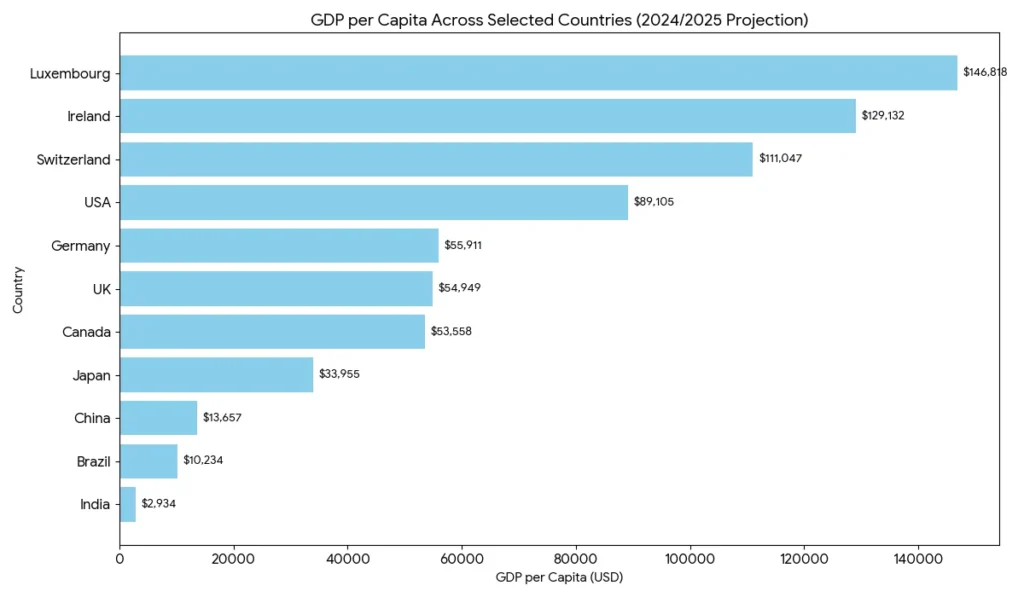
| GDP per capita | Economic output per person | “GDP per capita is a measure of national prosperity.” |
| Per annum | Per year | “The interest rate is 5% per annum.” |
| Per household | Based on each household | “Average energy use per household decreased.” |
| Median income | The middle value in income distribution | “Median income gives a clearer view of inequality.” |
These related terms often appear in reports and help understand different statistical perspectives.
🧭 How to Use “Per Capita” Correctly
✅ Do’s:
- Use it when discussing averages or distributions.
- Ideal for formal, academic, or professional contexts.
- Use numerically: GDP per capita = Total GDP ÷ Population.
❌ Don’ts:
- Don’t use it for total figures (it refers to per-person values).
- Avoid using it informally (it’s not slang).
- Don’t confuse it with “percent” or “per annum.”
⚠️ Common Mistakes or Misinterpretations
Many people mix up “per capita” with percentage or per household.
- Wrong: “10% per capita growth” — ❌ (per capita isn’t a percentage)
- Correct: “GDP per capita increased by 10%” — ✅
Remember:
“Per capita” always refers to the average per person, not a proportion or growth rate.
❓ FAQ: Per Capita Meaning Explained
1. What does “per capita” mean in simple terms?
It means “per person.” It shows the average amount for each individual in a group, such as income, spending, or resource use.
2. Is “per capita” the same as “average”?
Almost — but not exactly. “Per capita” always means “average per person,” while “average” can refer to other units (like per household or per company).
3. What is GDP per capita?
It’s the total value of goods and services produced in a country divided by its population — a key indicator of economic well-being.
4. How do you calculate per capita?
Use the formula:
Per capita = Total amount ÷ Total population.
5. Where is “per capita” most commonly used?
It’s mainly used in economics, statistics, business reports, and government data to show per-person averages.
6. What’s the difference between “per capita” and “per household”?
“Per capita” divides data by the number of people; “per household” divides it by the number of homes or families.
🧩 Conclusion
Now you know that “per capita” means “per person”, a crucial term in economics and statistics that helps measure averages fairly across populations.
Whether it’s GDP per capita, income per capita, or resource use per capita, understanding this term helps you interpret data more accurately and make smarter comparisons. 📈
Now that you know what per capita means, you’ll never be confused by those reports again! Keep exploring our site for more clear explanations of economic and social terms. 💡

Jon McGregor is a language and word-meaning expert at Meanovia.com. He specializes in explaining complex words, phrases, and modern language trends in a clear, approachable style. His mission is to help readers quickly grasp the true meaning behind every term, making language learning and understanding effortless and engaging.