
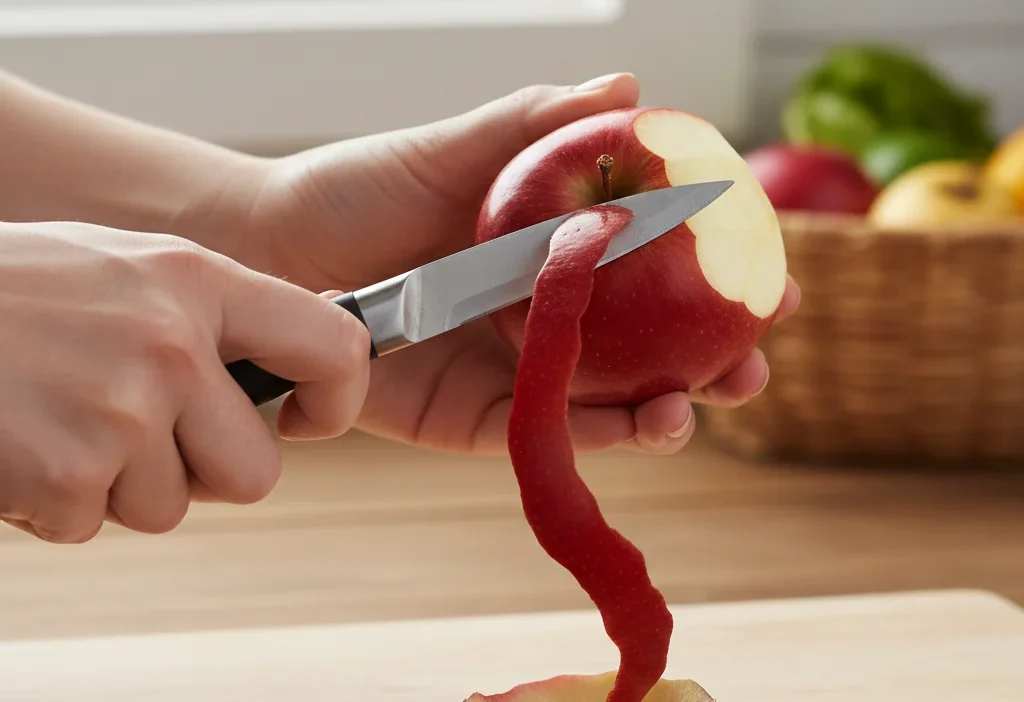
Ever come across the word “parer” while reading a recipe or kitchen guide and wondered what it really means? You’re not alone. This simple yet uncommon word pops up often in cooking instructions, especially when using tools like a parer knife or describing paring fruits and vegetables.
In this article, we’ll break down everything you need to know about the meaning of “parer” — including its definition, origin, real-life usage, examples, and related terms. Whether you’re a cooking enthusiast, a language learner, or just curious about English vocabulary, you’ll find this guide helpful and easy to follow.
What Does “Parer” Mean?
The word “parer” means a person or tool that trims, peels, or removes the outer layer of something, especially fruit or vegetables.
It’s a noun derived from the verb “to pare”, which means to cut away or peel off the surface.
👉 In short: A parer is something (or someone) that pares.
Origin and Popularity
The term “parer” comes from the Middle English word “paren,” which itself traces back to the Latin word “parare”, meaning to prepare or make ready.
Historically, “parer” entered the English language around the 15th century, mainly used in reference to knives or people who peel fruits and vegetables.
By the 19th and 20th centuries, the term “paring knife” became standard in culinary vocabulary, and “parer” was naturally associated with this small kitchen tool.
📜 Timeline Example:
- 1400s – “Pare” used in English to mean “trim or peel.”
- 1500s – “Parer” emerges as a noun meaning “one who pares.”
- Modern day – “Parer knife” or “fruit parer” commonly used in kitchens worldwide.
Parer Meaning in Different Contexts
The meaning of “parer” can slightly change depending on the context. Here’s how it’s used across different situations:
1. In Cooking
- A parer refers to a paring knife — a small, sharp knife used for trimming, peeling, or detailed cutting of fruits and vegetables.
Example: “Use a parer to remove the skin from the apple.”
2. As a Person
- Historically, a parer could also mean a person who pares or trims something.
Example: “The fruit parer prepared dozens of apples for the pie.”
3. In Crafts or Tools
- In some crafts or technical fields, a parer may refer to a tool used to shave, trim, or cut thin layers of material, like leather or wood.
Example: “A leather parer is essential for fine bookbinding.”
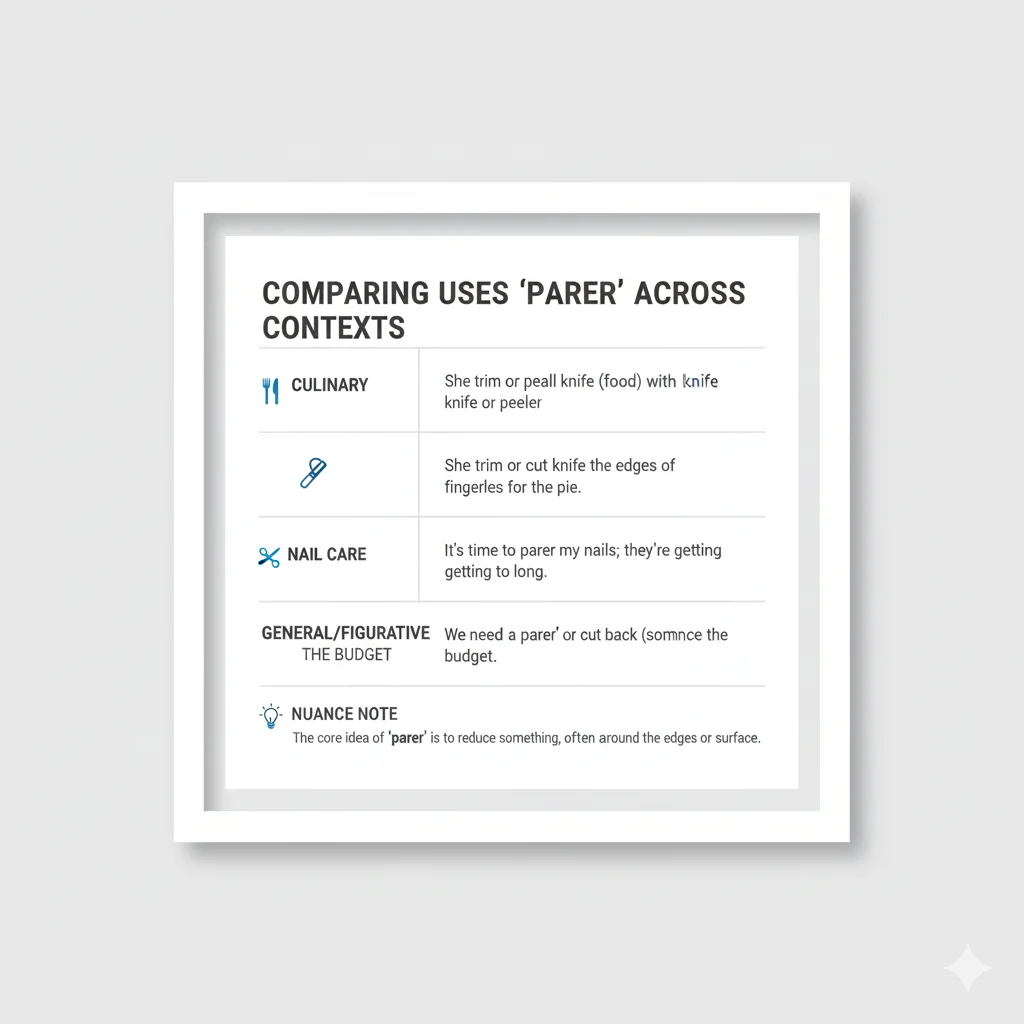
| Context | Meaning | Example |
| Cooking | A small knife used for peeling | “She grabbed the parer to peel the mango.” |
| Occupation | A person who trims or peels | “The parer worked quickly in the kitchen.” |
| Crafting | A trimming tool | “A leather parer thins the edges before gluing.” |
Examples of “Parer” in Conversations
Here are some real-life examples to make it clearer:
👩🍳 In a Kitchen Chat:
Chef: Hand me the parer, please.
Assistant: Here you go — the small knife for peeling?
🧑🏫 In a Language Class:
Student: What’s a parer?
Teacher: It’s a small knife or person used for peeling fruits or vegetables.
👩🎨 In Crafting:
Artist: I’ll use my leather parer to smooth this corner.
Similar or Related Terms
Here are some related terms often used with or instead of “parer”:
| Term | Meaning | Common Use |
| Paring knife | A small, sharp knife for peeling | Kitchen |
| Peeler | A tool that removes skin from fruits/veggies | Cooking |
| Trimmer | A device or tool that cuts or trims | Various crafts |
| Peel | To remove outer skin | General action |
| Pare | To cut away the outer layer | Verb form of parer |
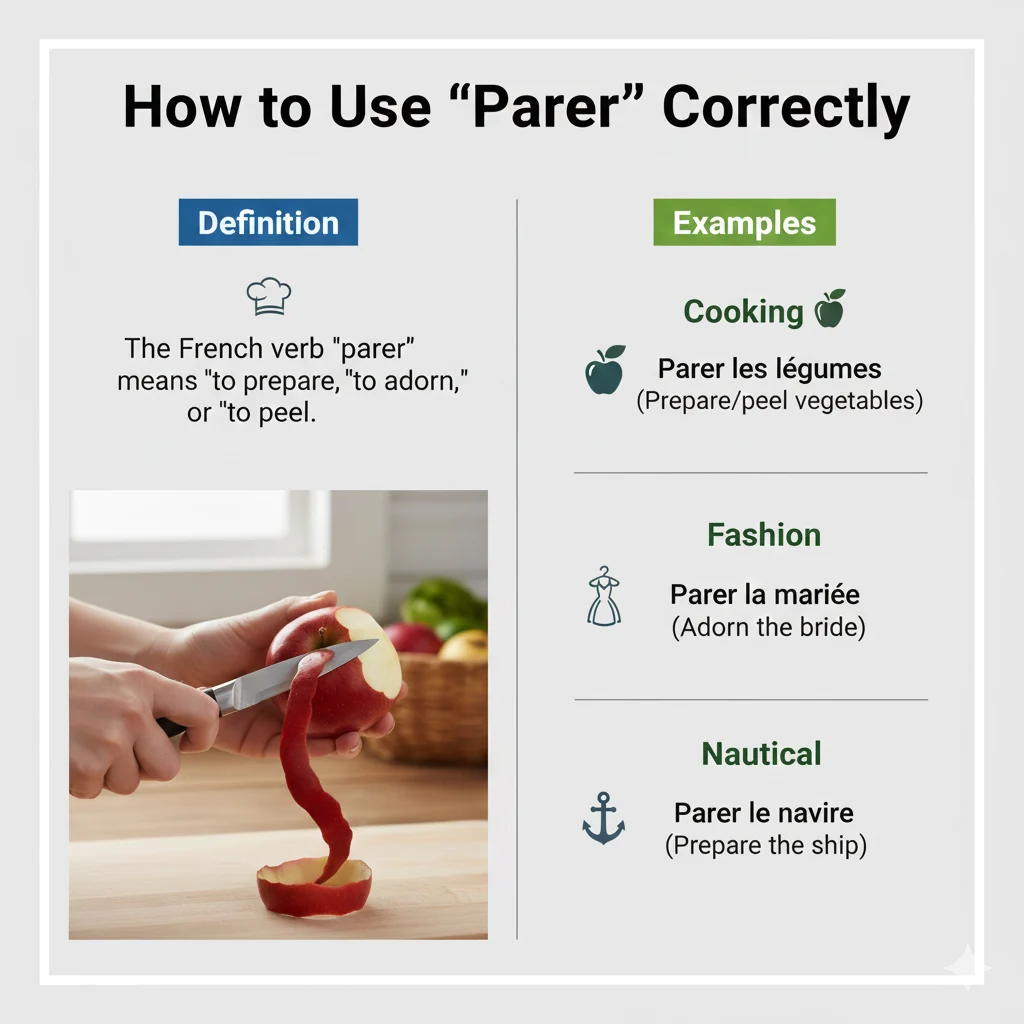
How to Use “Parer” Correctly
Here are a few do’s and don’ts to make sure you’re using the term “parer” right:
✅ Do use it when talking about small knives or trimming tools.
✅ Do use it in formal writing or recipes.
❌ Don’t use it as slang — it’s a proper noun with a specific meaning.
❌ Don’t confuse it with “pairer” (someone who pairs or matches things).
Example Sentence:
“Every kitchen should have a good parer for precise cutting and peeling.”
Common Mistakes or Misinterpretations
- Confusing “parer” with “peeler” – A peeler usually has a handle and blade specifically for removing thin skin, while a parer is a knife used for more detailed trimming.
- Spelling it as “pairer” – This completely changes the meaning; “pairer” means someone who pairs things together.
- Using it as a verb – Remember, “parer” is a noun; the verb is “pare.”
FAQ Section
1. What does “parer” mean in English?
“Parer” means a tool or person that trims, peels, or removes the outer layer of something, especially fruits and vegetables.
2. Is “parer” the same as “peeler”?
Not exactly. A peeler is a specific tool for removing thin skins, while a parer (or paring knife) can be used for a wider range of cutting and trimming tasks.
3. What’s a parer knife used for?
A parer knife is used for precise cutting, peeling, and shaping fruits or vegetables in the kitchen.
4. Can “parer” refer to a person?
Yes, though it’s rare today. Historically, a parer referred to someone who trimmed or peeled fruits, vegetables, or materials.
5. Is “parer” formal or slang?
“Parer” is a formal English noun, not slang. It’s used mainly in cooking and crafts contexts.
6. How do you pronounce “parer”?
It’s pronounced /ˈperər/ — sounds like “PAIR-er.”
Conclusion
To sum it up, “parer” is a noun meaning a tool or person that peels, trims, or cuts away thin layers, most commonly referring to a paring knife used in kitchens. The term has roots in Latin and has evolved through centuries of use in cooking and crafts.
Now that you know the true meaning of “parer,” you’ll never mistake it again! Whether you’re reading a recipe or shopping for kitchen tools, you’ll instantly recognize when someone says, “Pass me the parer!”
✨ Keep exploring our site for more simple explanations of everyday words and trending terms.

Deborah Levy is a word-meaning expert at Meanovia.com. She explains complex terms, phrases, and language trends in a clear, relatable way, helping readers quickly understand the exact meaning behind every word.