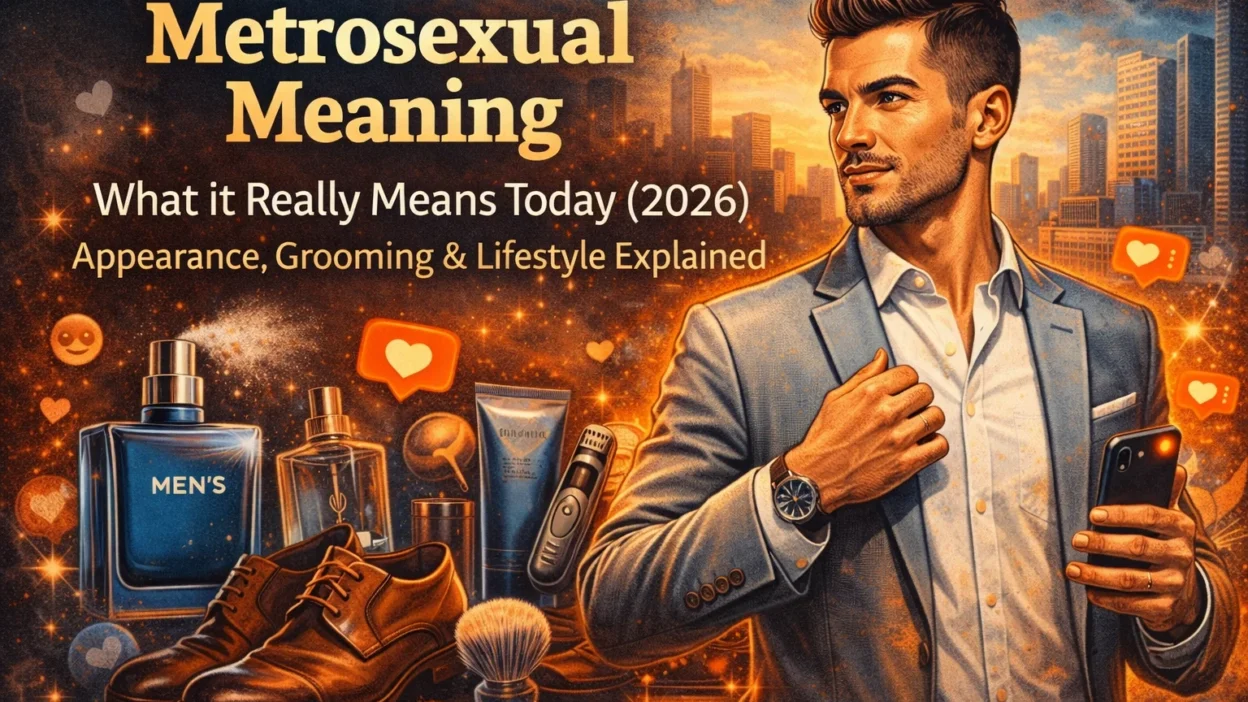
The word metrosexual still pops up online—but many people aren’t sure what it really means today. Is it about fashion? Lifestyle? Or something else entirely? In 2026, the meaning feels different from when the term first appeared.
Quick answer: Metrosexual describes a man who takes great care of his appearance, grooming, and style—no matter his sexual orientation.
Imagine a guy who enjoys skincare, dresses well, chooses perfumes carefully, and follows fashion trends. Years ago, this surprised people. Today, it feels normal.
The meaning of metrosexual has evolved with social media, influencer culture, and modern ideas of self-care. Students, bloggers, and everyday English users often search this term to understand identity, culture, or online discussions.
In this guide, we’ll explain what metrosexual means in 2026, where the word came from, how it’s used now, and whether it’s still relevant—or outdated.
💡 What Does Metrosexual Mean?
“Metrosexual” refers to a man who is meticulous about his grooming, fashion, and appearance, often living in or influenced by urban culture.
In simple terms, metrosexual means a man who consciously invests in grooming, fashion, and personal style.
It’s a descriptive term, not slang or an acronym. The word combines “metropolitan” (city-dwelling) and “sexual,” implying a man who invests time and care into how he looks — without it defining his sexuality.
Example:
“He’s totally metrosexual — always well-dressed, skincare routine on point, and stylish.” 👕✨
Metro Sexuality Meaning
Metro sexuality meaning is often misunderstood. It does not refer to sexual orientation. Instead, it describes a lifestyle focused on grooming, fashion, and self-care, usually influenced by urban culture.
🕰️ Origin and Popularity
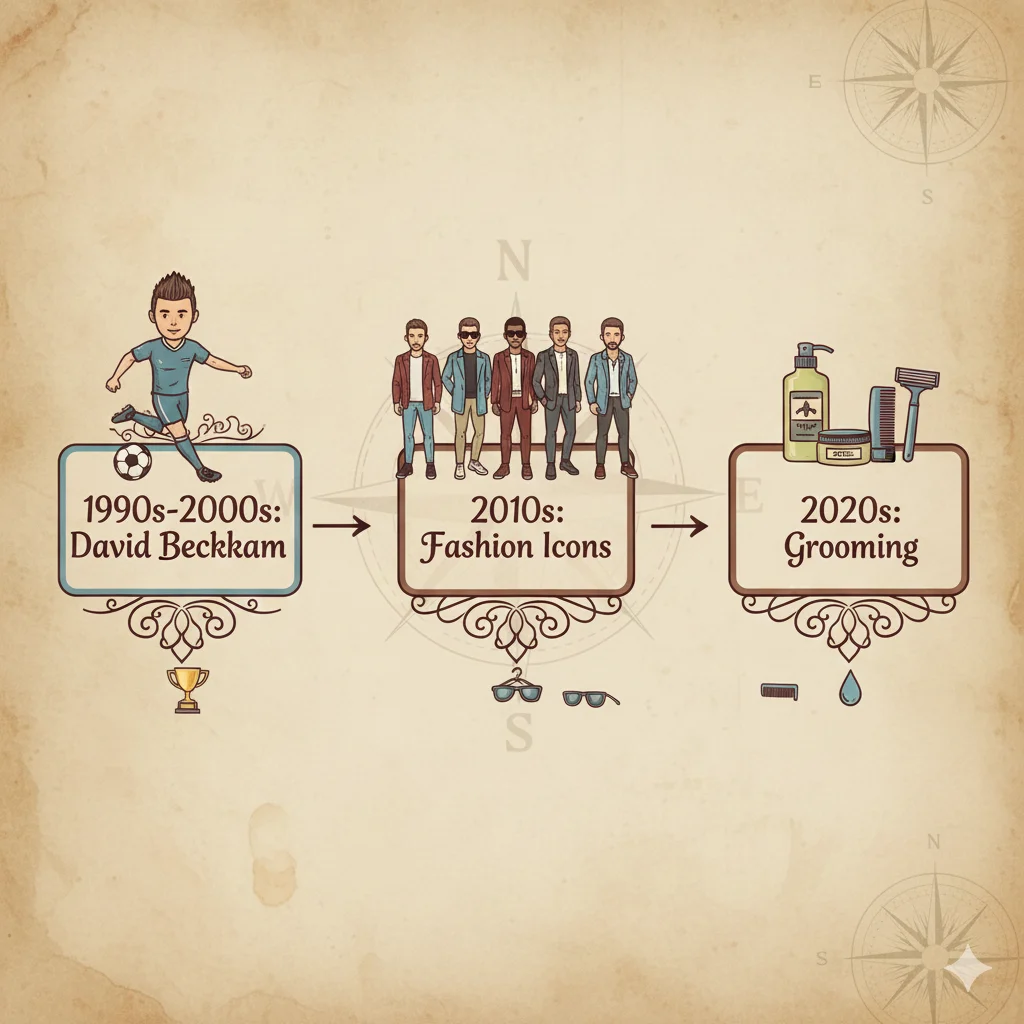
The word metrosexual was first coined in 1994 by British journalist Mark Simpson, who used it to describe urban men who were increasingly conscious of fashion and self-care — a shift from traditional masculine stereotypes.
However, the term didn’t explode in popularity until the early 2000s, when celebrities like David Beckham epitomized the look: stylish, confident, and perfectly groomed.
Timeline of Popularity:
📍 1994: Term “metrosexual” first used in print.
📍 2002–2005: Becomes a global buzzword thanks to media and pop culture.
📍 2010s–2020s: Widely accepted as a normal expression of modern masculinity.
🌍 Metrosexual Meaning in Different Contexts
👔 In Fashion and Lifestyle
In fashion, a metrosexual man is someone who follows trends, invests in stylish clothes, and pays attention to details like fragrance, skincare, and grooming.
“He spends more time choosing shoes than his girlfriend — total metrosexual vibes.” 👞💅
💬 In Pop Culture
In pop culture, the term often represents the modern man — confident, expressive, and aware of his image. TV shows and ads often portray metrosexuals as urban professionals who balance confidence with care for their looks.
🏢 In Business or Social Contexts
In workplaces or formal settings, being metrosexual isn’t seen as unusual — it often signifies professional polish and self-awareness.
“He’s metrosexual, but that attention to detail makes him stand out in client meetings.”
| Context | Description | Tone |
| Fashion | Stylish and well-groomed | Positive |
| Pop Culture | Trendy and expressive | Neutral to Positive |
| Workplace | Polished and professional | Positive |
Metrosexual Meaning in Other Languages
Metrosexual meaning in Hindi: ऐसा पुरुष जो अपने पहनावे, ग्रूमिंग और स्टाइल का खास ध्यान रखता है।
Metrosexual meaning in Urdu: ایسا مرد جو اپنی شکل، صفائی اور فیشن پر خاص توجہ دیتا ہے۔
Metrosexual meaning in Tagalog: Isang lalaki na maingat sa itsura, pananamit, at personal grooming.
💬 Examples of Metrosexual in Conversations
Example 1:
Friend 1: He just spent $200 on skincare!
Friend 2: Sounds like a metrosexual to me. 😄
Example 2:
Colleague: You’re always so put-together, even on casual Fridays.
Response: Guess I’m a bit metrosexual.
Example 3 (Formal):
“His metrosexual style has redefined modern male professionalism.”

🧍♂️ Similar or Related Terms
| Term | Meaning | How It Differs from ‘Metrosexual’ |
| Manscaping | Grooming or shaving body hair | Part of metrosexual grooming habits |
| Dapper | Stylish and neat in appearance | Focuses more on clothing than lifestyle |
| Fashion-forward | Ahead of current fashion trends | Can apply to any gender |
| Well-groomed | Clean, neat, and polished look | Broader; not tied to city or culture |
Metro Meaning in Slang
In slang, metro often refers to a city-based, modern, or urban lifestyle. When people say metro vibes, they usually mean something stylish, trendy, or influenced by city culture. This slang use of metro is related to—but not the same as—metrosexual.
🧠 How to Use ‘Metrosexual’ Correctly
✅ Do’s:
- Use metrosexual to describe men who care about their looks in a positive or neutral way.
- Use it to emphasize style, grooming, and urban lifestyle.
Metrosexuals are men who share similar interests in grooming, fashion, and modern lifestyle choices.
❌ Don’ts:
- Don’t use it to question someone’s sexuality — it has no relation to sexual orientation.
- Avoid using it as an insult; it’s about personal style, not identity.
Example:
✅ “He’s a metrosexual — loves skincare and designer suits.”
❌ “He’s metrosexual, so he must be gay.” (Incorrect and offensive.)
⚠️ Common Mistakes or Misinterpretations
Metro sexaul is a common misspelling of metrosexual and has no separate meaning.
- Confusing it with sexual identity.
→ Being metrosexual has nothing to do with who someone is attracted to; it’s purely about grooming and style. - Using it as an insult.
→ The term was once used mockingly, but today it’s largely neutral or positive. - Assuming it means vanity.
→ Metrosexuals often value self-expression and confidence, not just looks.
Metrosexual Meaning and LGBT
Metrosexual meaning LGBT is often misunderstood. Metrosexuality is not a sexual orientation and is not exclusive to the LGBT community. It simply describes grooming and lifestyle preferences.
❓ FAQ Section
1. What does ‘metrosexual’ mean in simple words?
A metrosexual is a man who takes great care of his appearance, fashion, and grooming, often living in or influenced by urban culture.
2. Is metrosexual a compliment?
Yes — it usually is! It describes men who are stylish, polished, and self-aware. However, tone matters depending on context.
3. Is metrosexual related to being gay?
No. Metrosexuality is about personal care and lifestyle, not sexual orientation. Anyone can be metrosexual.
4. When did ‘metrosexual’ become popular?
The term gained global popularity in the early 2000s, especially with fashion icons like David Beckham and media coverage.
5. Is metrosexual still used today?
Yes, though it’s less trendy as men’s grooming and fashion have become mainstream — what was “metrosexual” in 2005 is now just “normal.”
6. What’s the female version of metrosexual?
Some use terms like “ubersexual” or simply “fashion-conscious woman,” though there’s no direct equivalent.
7. What is metrosexual meaning?
Metrosexual meaning refers to a man who pays close attention to grooming, fashion, and personal style, regardless of sexual orientation.
8. What does metrosexual mean?
It means a man who values self-care, appearance, and modern lifestyle choices.
9. Is metrosexual offensive?
No. Metrosexual is generally neutral or positive today, but tone and context always matter.
🏁 Conclusion
To wrap it up, metrosexual describes a modern man who embraces fashion, grooming, and self-expression without compromising masculinity. Originating in the 1990s, it helped redefine what it means to be stylish and self-confident.
Today, being metrosexual simply means caring about your appearance — and there’s nothing wrong with that. After all, confidence and style never go out of fashion. 💅👔
Now that you know the real metrosexual meaning, you’ll never misuse it again! Keep exploring our site for more cultural and lifestyle terms explained simply. 🌍

Jon McGregor is a language and word-meaning expert at Meanovia.com. He specializes in explaining complex words, phrases, and modern language trends in a clear, approachable style. His mission is to help readers quickly grasp the true meaning behind every term, making language learning and understanding effortless and engaging.