Ever watched a movie or TV show that felt a little too emotional — where every scene seemed exaggerated and overly dramatic? That’s melodrama in actio
.Melodrama refers to a dramatic work or behavior that exaggerates emotions, conflicts, or situations, often to create strong emotional reactions.
The term melodrama is commonly used in literature, theater, film, and everyday conversation, prompting people to search for its meaning. It describes exaggerated or over-the-top emotions, situations, or actions, where characters and events are depicted in a highly emotional or sensational manner. People also use the term to describe real-life behavior that seems overly dramatic or attention-seeking.
Understanding the meaning of melodrama helps readers analyze stories, performances, and human behavior, distinguishing between genuine emotion and exaggeration.
Using the term correctly allows you to comment on dramatic situations or artistic works with clarity, highlighting intense emotional expression without misrepresenting the context.
💬 What Does Melodrama Mean?
Melodrama refers to a story, performance, or behavior that’s exaggeratedly emotional or sensational.
It’s often used to describe movies, plays, or reactions that emphasize feelings over realism.
👉 In short: Melodrama means exaggerated drama meant to stir emotions rather than reflect real life.
🕰️ Origin and Popularity of “Melodrama”
The word melodrama comes from the Greek “melos” (music) and “drama” (action). It originally referred to plays with music in the late 18th century.
A brief timeline:
- 1700s: Melodramas were musical plays with dialogue spoken over background music.
- 1800s: The term evolved to mean sensational theater full of villains, heroes, and emotional climaxes.
- 1900s–Present: Used broadly to describe overly emotional art or behavior — from soap operas to social media posts.
Today, “melodrama” is both a literary genre and a common word for anything too dramatic or exaggerated.
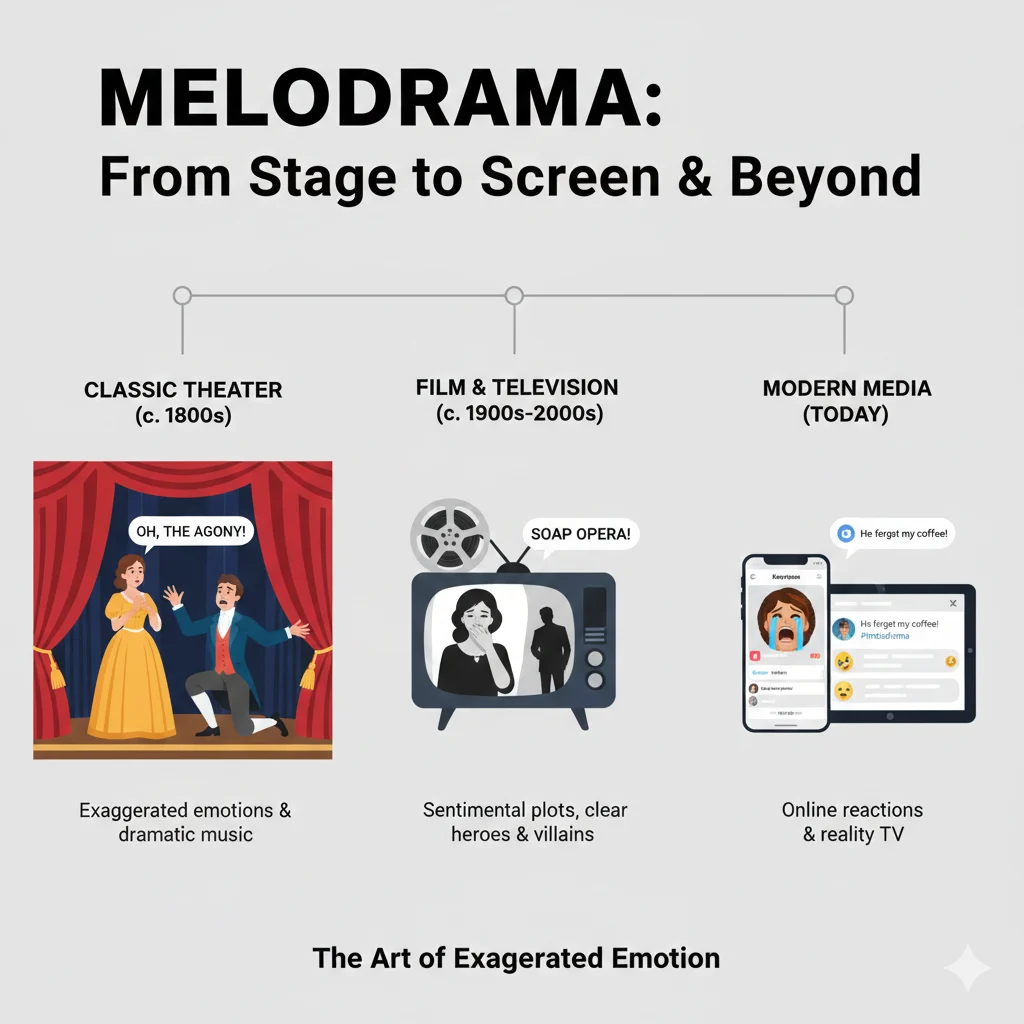
🌐 Melodrama Meaning in Different Contexts
🎬 In Film & TV
Melodrama describes stories that focus heavily on emotion, conflict, and morality — often with clear heroes and villains.
Examples include classic soap operas, telenovelas, or emotional family dramas.
Example:
“The show was pure melodrama — full of tears, secrets, and shocking twists.”
📖 In Literature
In novels or plays, a melodramatic tone exaggerates emotions and plot twists to engage readers.
Think of Victorian novels or romantic tragedies filled with betrayal and sacrifice.
🗣️ In Everyday Speech
People use melodrama to describe someone who’s overreacting or being overly emotional in real life.
Example:
“Stop the melodrama — it’s not that serious!”
📱 On Social Media
On platforms like TikTok, Instagram, or Twitter, “melodramatic” posts often use humor, irony, or exaggerated reactions for entertainment.
Example caption:
“Me after my coffee machine broke ☕💔 — total melodrama.”
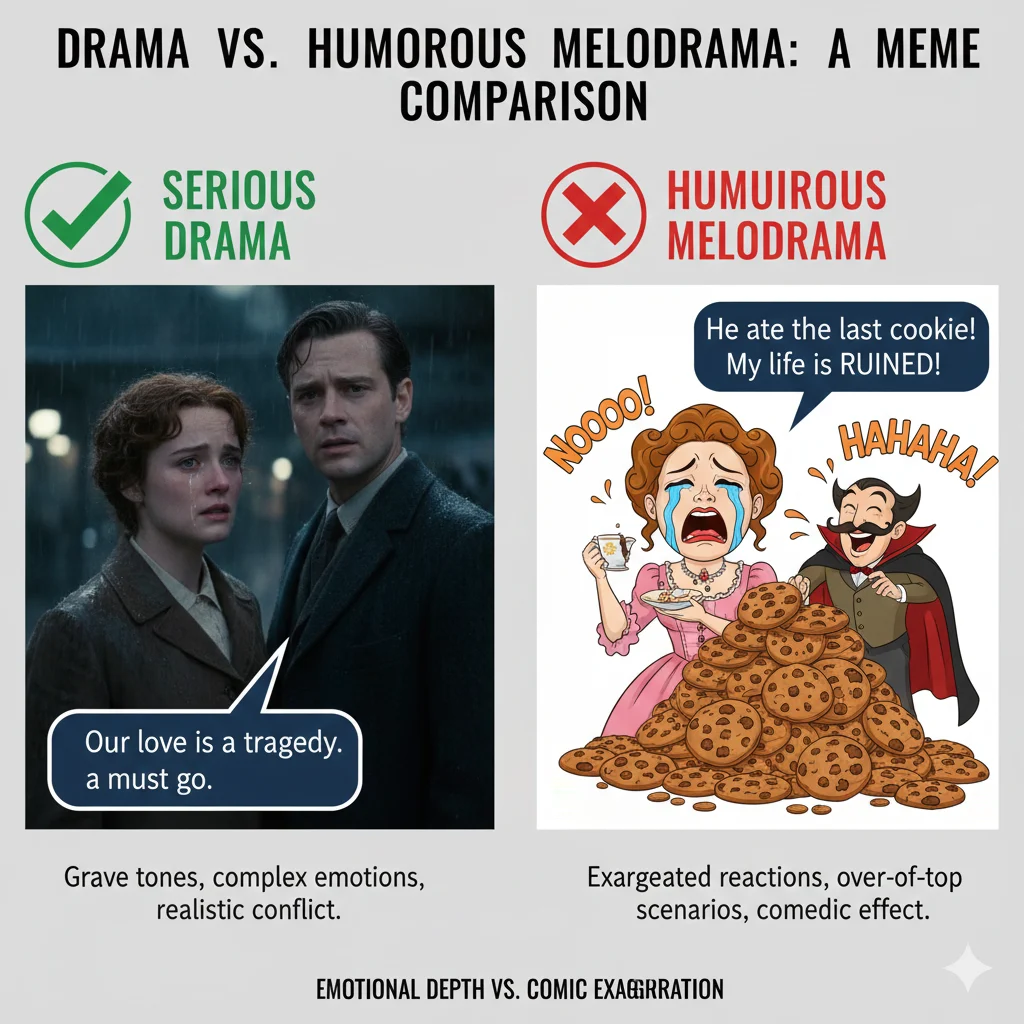
💡 Examples of Melodrama in Conversations
Example 1:
Friend 1: “I missed the bus and my life is over!”
Friend 2: “That’s a bit melodramatic, don’t you think?”
Example 2:
“The movie was a beautiful melodrama — emotional but captivating.”
Example 3:
Colleague: “She burst into tears over a typo. Classic office melodrama.”
🔍 Similar or Related Terms
| Term | Meaning | Common Use |
| Drama | Serious story or emotional conflict | Movies, plays |
| Overacting | Exaggerated performance | Acting, theater |
| Soap Opera | Serialized melodramatic TV show | Television |
| Sentimentalism | Excessive emotion or nostalgia | Literature, art |
| Exaggeration | Making something seem bigger or worse | Everyday talk |
These terms often overlap, but melodrama specifically focuses on emotional excess and heightened conflict.
✅ How to Use “Melodrama” Correctly
Do’s:
- ✅ Use it to describe emotional or exaggerated storytelling.
- ✅ Use it humorously when referring to someone being overly dramatic.
- ✅ Use it in discussions about film, literature, or theater.
Don’ts:
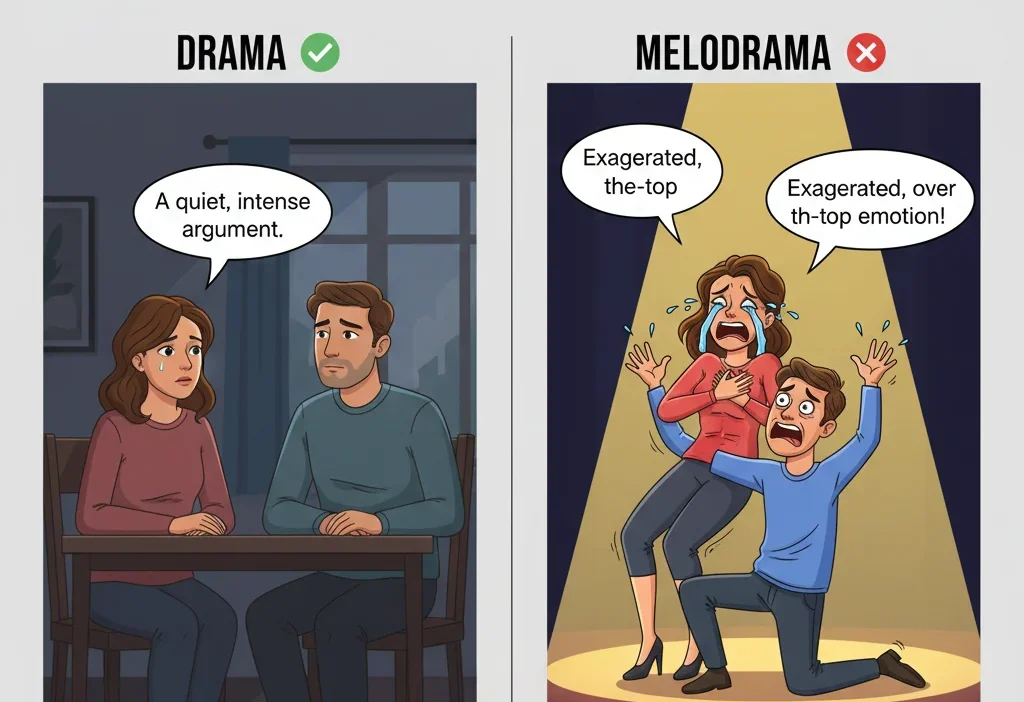
- ❌ Don’t confuse it with simple “drama” — melodrama implies excess.
- ❌ Avoid using it insultingly in formal settings.
- ❌ Don’t label genuine emotions as “melodrama” insensitively.
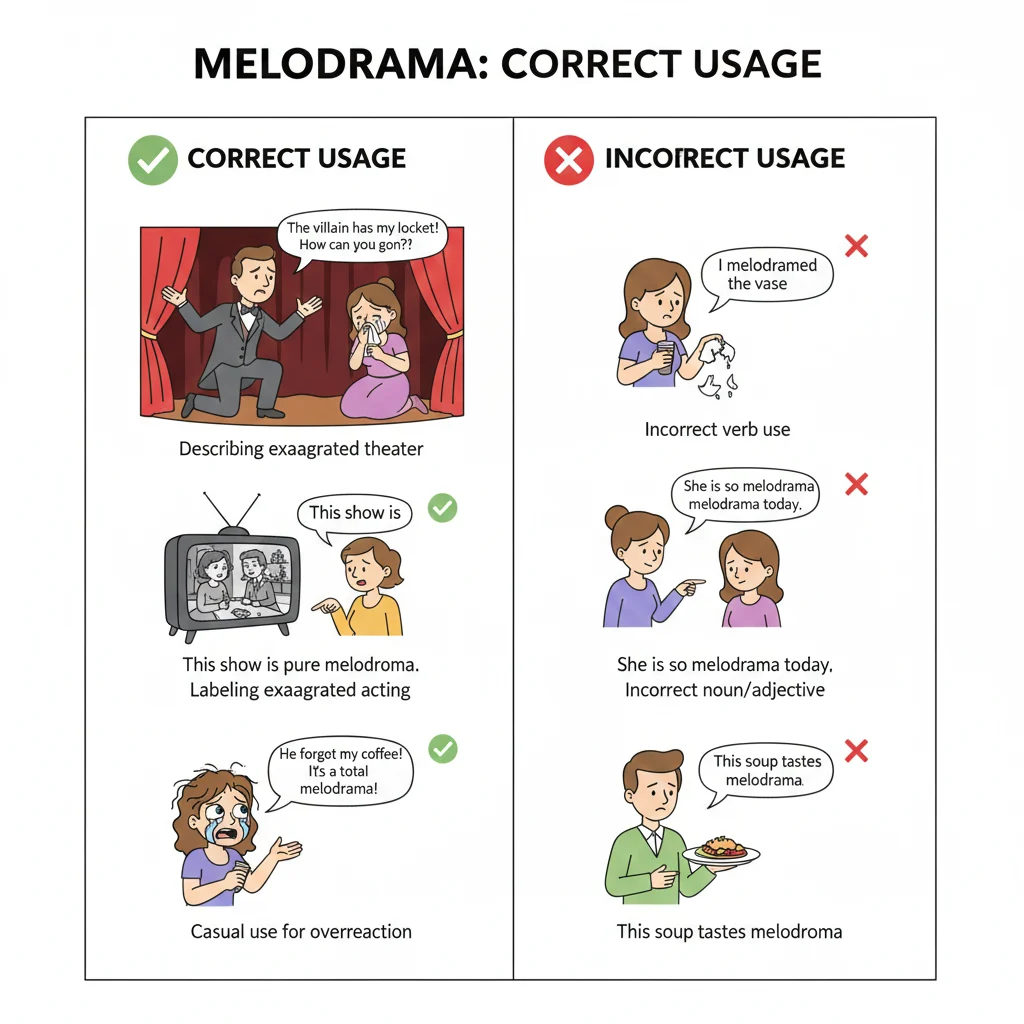
⚠️ Common Mistakes or Misinterpretations
- Mistake 1: Thinking melodrama means fake drama.
→ Not necessarily. Melodrama is exaggerated, not always insincere. - Mistake 2: Using it as an insult for all emotional expression.
→ It’s okay to be emotional — melodrama means excessive, not wrong. - Mistake 3: Confusing it with “drama.”
→ Drama can be serious and realistic; melodrama heightens emotions for effect.
❓FAQ
1. What does melodrama mean in simple words?
Melodrama means a story or reaction that’s overly emotional or exaggerated, often used to entertain or evoke strong feelings.
2. Is melodrama the same as drama?
No. Drama deals with realistic emotional conflicts, while melodrama exaggerates them for heightened effect.
3. What’s an example of melodrama in film?
Movies like Titanic, The Notebook, or Gone with the Wind often include melodramatic elements — intense love, tragedy, and moral tension.
4. Can a person be melodramatic?
Yes. If someone reacts too emotionally to a small issue — crying, shouting, or making a big deal — they’re being melodramatic.
5. Is melodrama good or bad?
It depends on context. In art, it’s a powerful storytelling tool. In real life, it might seem over the top. It’s all about balance and intent.
6. Where is melodrama most used?
Melodrama appears in films, literature, theater, and even social media reactions — anywhere emotions take center stage.
🏁 Conclusion
So, what does melodrama mean?
It’s all about heightened emotion, exaggerated storytelling, and dramatic tension — whether on screen or in everyday life.
From 18th-century theaters to modern TikTok memes, melodrama continues to capture audiences by amplifying human emotions.
Now that you know what melodrama means, you’ll never confuse it with ordinary drama again! Keep exploring our site for more definitions and pop-culture insights that make language come alive.

Patrick Gale is a word-meaning expert at Meanovia.com. He explains complex terms, definitions, and language trends with clarity and precision. His goal is to help readers understand the exact meaning behind every word they search.