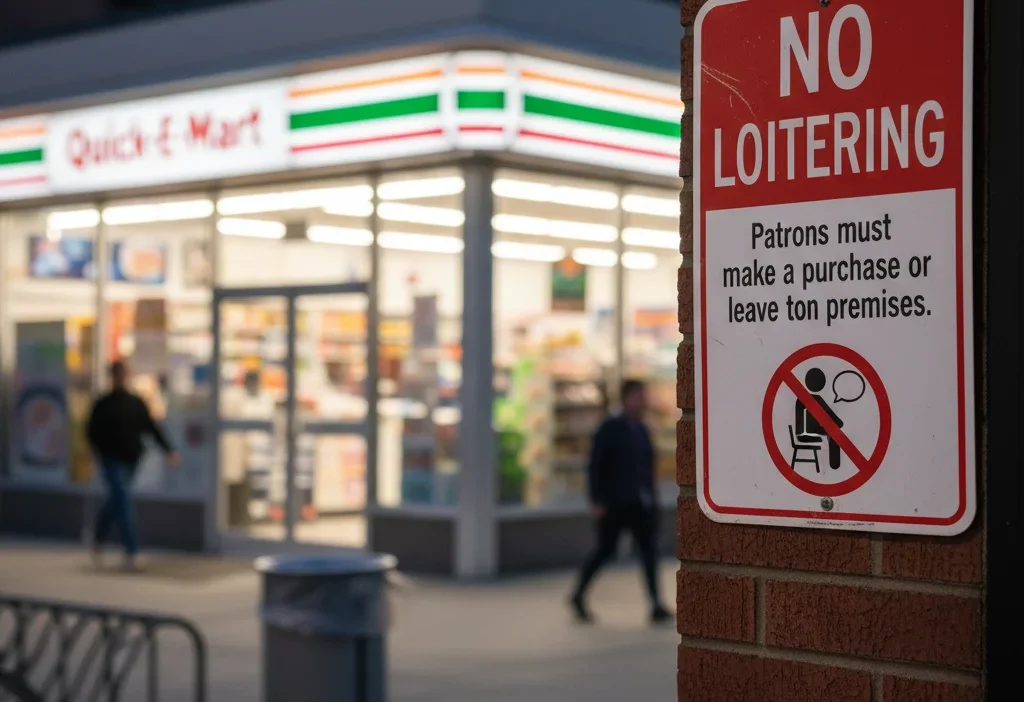
Ever seen a “No Loitering” sign outside a store and wondered what it really means? Whether you’ve spotted it in parking lots, malls, or parks, loitering is a term that pops up often — but its meaning goes beyond simply “standing around.”
In this article, we’ll break down what “loitering” means, its origin, how it’s used in legal and everyday contexts, and some real-life examples that make the concept clear.
We’ll also explore related terms, common misconceptions, and how to use the term correctly — so you’ll understand exactly what’s meant the next time you see a “No Loitering” sign.
What Does Loitering Mean?
Loitering means to stand, sit, or linger in a public place without a clear purpose or intent.
It’s most commonly used in legal and law enforcement contexts, where it refers to remaining in an area without a lawful reason, often implying potential disturbance or unwanted activity.
✅ In simple terms:
Loitering means hanging around somewhere aimlessly — especially when you’re not supposed to.
Origin and Popularity
The word “loitering” originates from the Middle Dutch word “loteren,” which means to wag about, idle, or dawdle.
It entered English in the 15th century and was often used to describe someone idling their time away or lingering lazily. Over time, it gained a more legal connotation, referring to unauthorized lingering in public areas.
By the 20th century, the term became standard in public signage and municipal laws, particularly in Western countries. You’ll often see it today in urban settings, malls, stations, and parks, where property owners aim to prevent disturbances.
🕰️ Timeline Snapshot:
- 1400s: Originates from Dutch “loteren” (to idle).
- 1800s: Used in English for “idling aimlessly.”
- 1900s–present: Adopted into laws and public ordinances (e.g., “anti-loitering laws”).
Loitering Meaning in Different Contexts
1. In Everyday Language
In casual speech, loitering simply means hanging around with no real purpose.
Example:
“The kids were loitering outside the shop after school.”
2. In Legal Terms
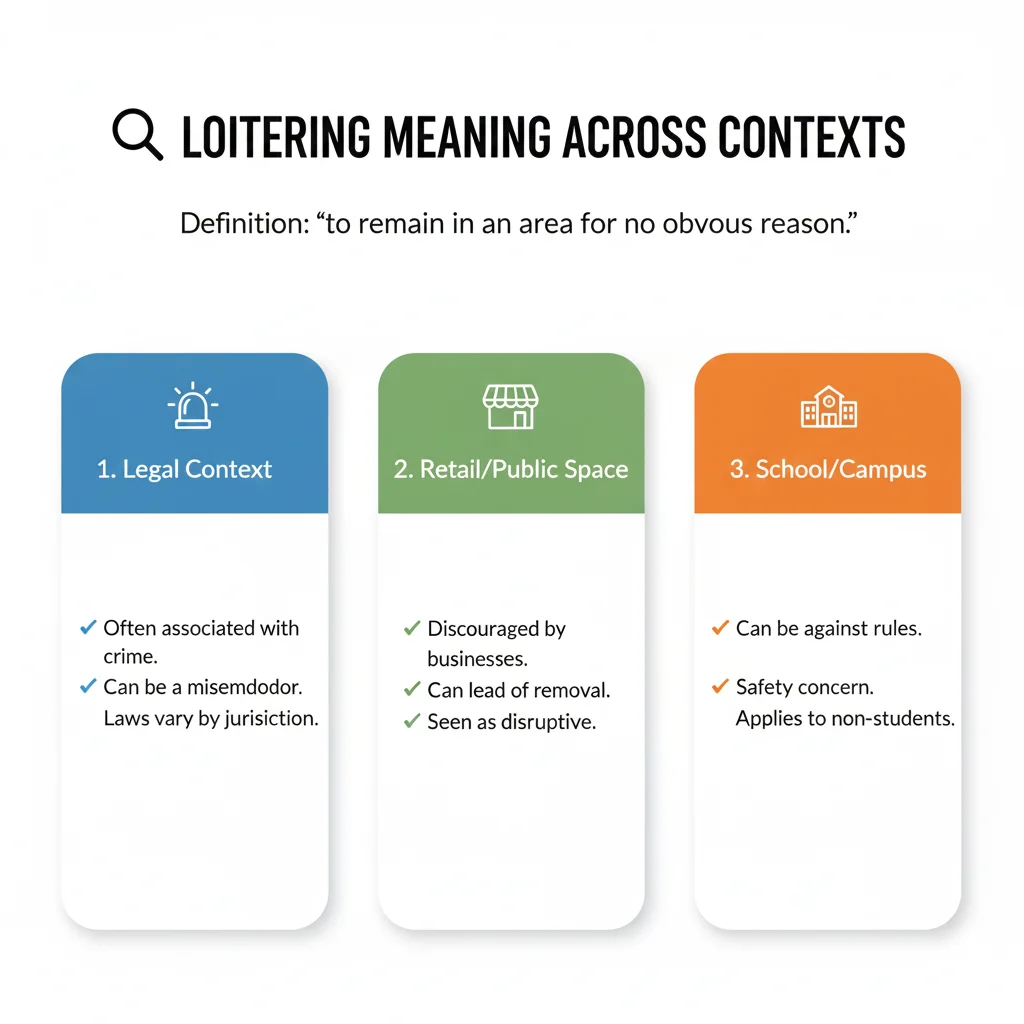
Legally, loitering means remaining in a public place without a legitimate reason, and in some areas, it’s considered a minor offense if it disrupts peace or business.
Example:
“Police warned the group for loitering near the subway entrance.”
3. In Business or Property Management
Businesses often post “No Loitering” signs to discourage people from idling near entrances or blocking access.
Example:
“Security installed ‘No Loitering’ signs to keep the area clear for customers.”
📊 Loitering Meaning Across Contexts
| Context | Meaning | Example |
| Everyday | Standing around without purpose | “They were loitering near the park.” |
| Legal | Remaining in public without lawful reason | “He was fined for loitering outside the store.” |
| Business | Staying near premises without buying or leaving | “The shop put up a ‘No Loitering’ sign.” |
Examples of Loitering in Conversations
💬 Example 1 (Casual):
Person A: Why are you still outside the café?
Person B: Just loitering — waiting for my friend to show up.
💬 Example 2 (Police/Legal Context):
Officer: You can’t stay here without a reason, sir.
Individual: I understand — I wasn’t aware loitering wasn’t allowed.
💬 Example 3 (Business Setting):
“The store manager asked the teens not to loiter near the entrance.”
💬 Example 4 (Humorous Use):
“Stop loitering in the kitchen and make yourself useful!”
Similar or Related Terms
Here are a few related words and phrases often confused with or used in place of loitering:
| Term | Meaning |
| Lingering | Staying longer than necessary. |
| Idling | Doing nothing, wasting time. |
| Trespassing | Entering someone’s property without permission. |
| Prowling | Moving stealthily, often implying suspicious intent. |
| Hanging around | Informal version of loitering, often harmless. |
How to Use “Loitering” Correctly
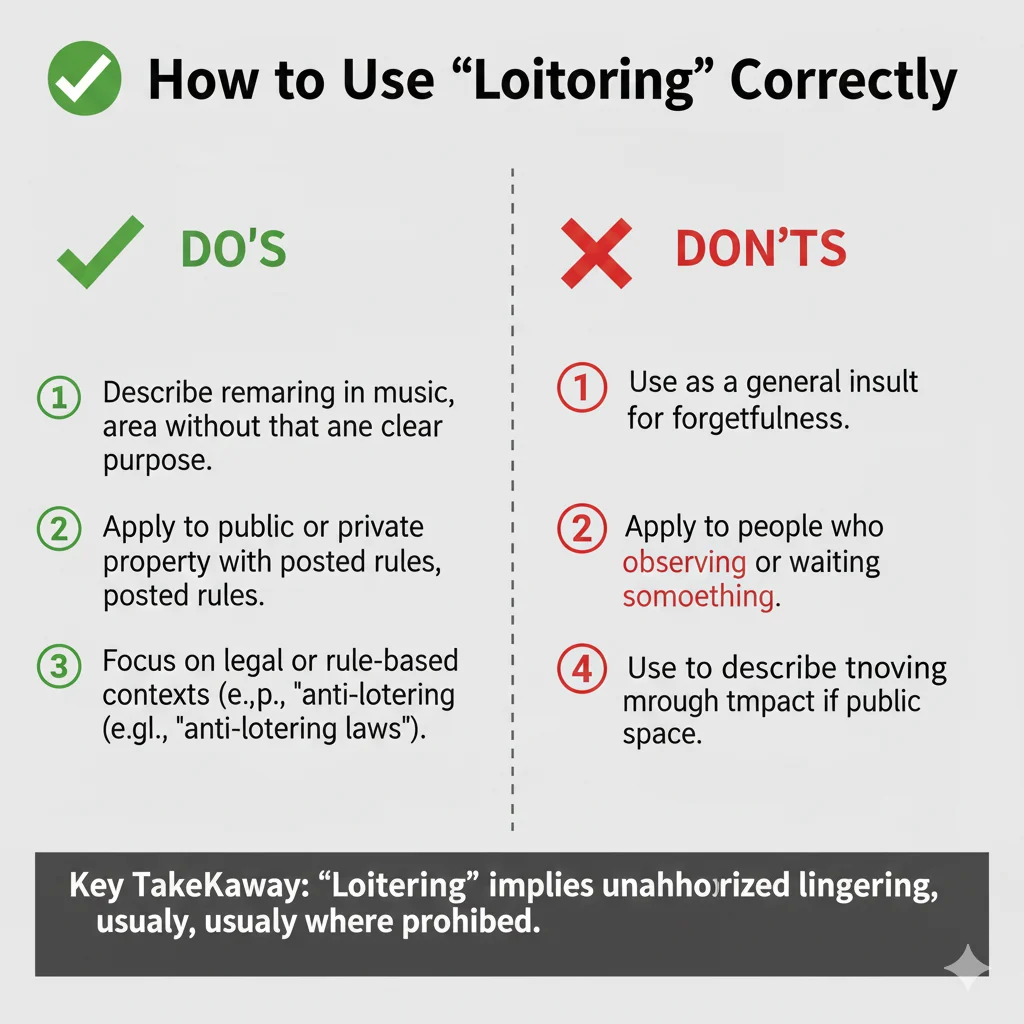
✅ Do’s:
- Use it when describing someone staying in a place without purpose.
- Appropriate in formal, legal, or everyday contexts.
❌ Don’ts:
- Don’t use it to describe normal waiting (e.g., “waiting for a bus” isn’t loitering).
- Avoid using it casually about someone if it sounds accusatory.
Example:
✅ “The group was loitering in the hallway after class.”
❌ “He was loitering at the bus stop” (if he was clearly waiting for the bus).
Common Mistakes or Misinterpretations
- ❌ Mistake 1: Thinking “loitering” always means “illegal.”
→ Not always! It’s only illegal if it breaks a local law or causes disturbance. - ❌ Mistake 2: Confusing “loitering” with “waiting.”
→ Waiting implies a purpose; loitering doesn’t. - ❌ Mistake 3: Assuming “No Loitering” signs apply everywhere.
→ These rules only apply to private or restricted property.
FAQ: Loitering Meaning Explained
1. What does “loitering” mean in simple terms?
It means staying somewhere aimlessly or without a clear purpose, especially in a public area.
2. Is loitering illegal?
Not always. Loitering becomes illegal only when local laws prohibit it or when it interferes with businesses, safety, or public order.
3. What’s the difference between loitering and trespassing?
Loitering means staying in a place without purpose, while trespassing means entering private property without permission.
4. Why do stores put up “No Loitering” signs?
To discourage people from idling near entrances, blocking pathways, or making customers uncomfortable.
5. Can waiting for someone be considered loitering?
Usually not — if you have a valid reason to be there, like waiting for a ride or a friend, it’s not loitering.
6. What happens if you violate a loitering law?
Consequences vary. You might get a warning, fine, or citation depending on local laws and circumstances.
Conclusion
To sum it up, loitering means remaining in a place without a clear reason or purpose, often seen as idle or suspicious behavior in public spaces.
From its medieval roots to modern legal use, the term continues to play a role in maintaining public order and property safety.
Now that you know what loitering really means, you’ll recognize why those “No Loitering” signs exist — and how to use the word correctly in everyday speech!
🗨️ Next time you see someone “just hanging around,” you’ll know whether they’re waiting — or loitering.

Patrick Gale is a word-meaning expert at Meanovia.com. He explains complex terms, definitions, and language trends with clarity and precision. His goal is to help readers understand the exact meaning behind every word they search.