
Ever heard someone talk about “protecting our heritage” or visiting a “heritage site” and wondered — what exactly does heritage mean?
The term heritage carries deep emotional, cultural, and historical significance. It’s more than just old buildings or traditions — it’s about the legacy passed from one generation to another.
In this guide, you’ll learn:
- The clear definition of “heritage”
- Its origin and evolution over time
- How it’s used in different contexts — from culture to education
- Examples and related terms to deepen your understanding
🧭 What Does Heritage Mean?
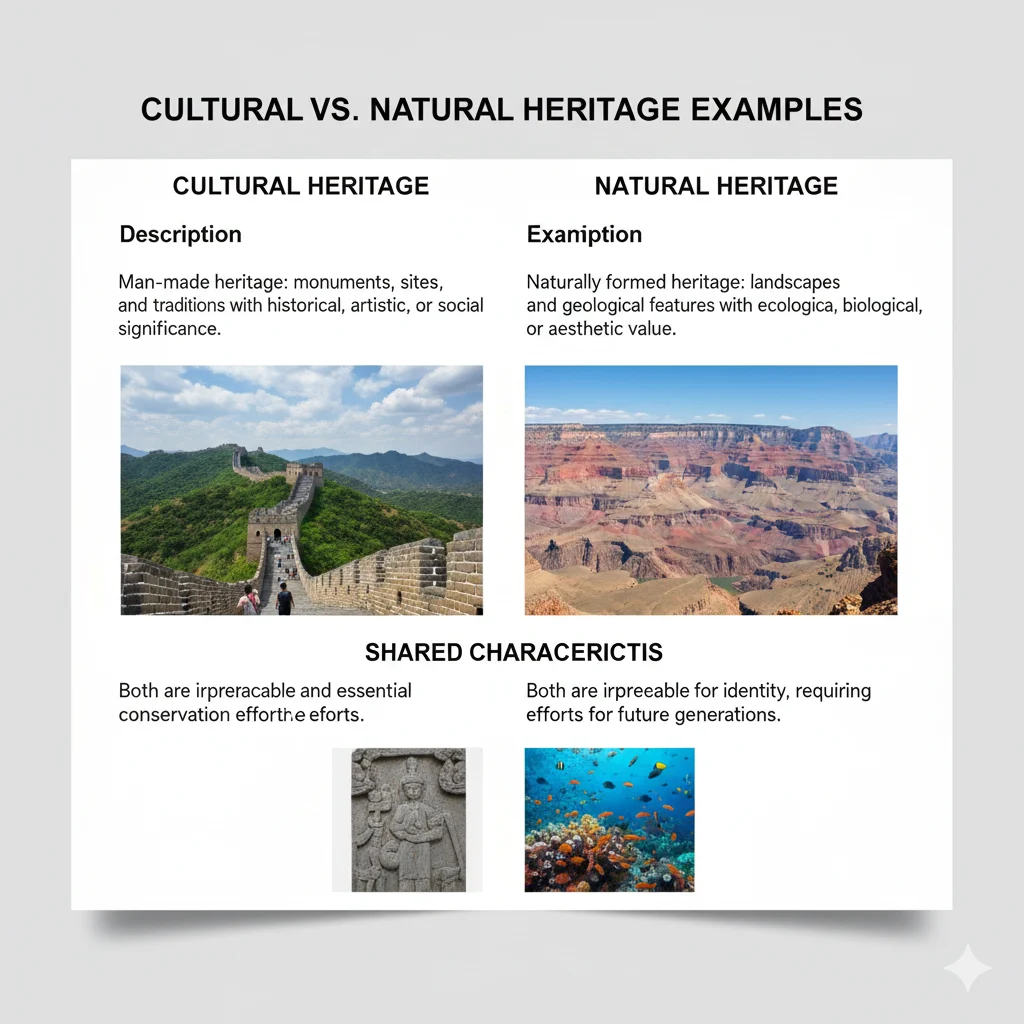
Heritage means the values, traditions, buildings, artifacts, and cultural practices that are inherited from past generations and preserved for the future.
It can refer to personal, cultural, or natural heritage, symbolizing identity, history, and belonging.
🕰️ Origin and Popularity of the Word “Heritage”
The word heritage originates from the Old French term “eritage” and the Latin “hereditare,” meaning to inherit.
Historically, it referred to property or wealth passed down through family lines. Over centuries, its meaning broadened — now including cultural identity, traditions, language, and natural wonders.
By the 20th century, “heritage” became a key concept in preserving culture and history, supported by organizations like UNESCO, which protects World Heritage Sites worldwide.
🌍 Heritage Meaning in Different Contexts
Heritage has multiple meanings depending on where it’s used. Let’s break it down:
| Context | Meaning of Heritage | Examples |
| Cultural Context | Traditions, arts, and customs passed through generations. | “Folk music is an important part of our heritage.” |
| Historical Context | Monuments, sites, or artifacts preserved from history. | “The Great Wall of China is a World Heritage Site.” |
| Family or Personal Context | Family traditions or values inherited from ancestors. | “She’s proud of her African heritage.” |
| Corporate/Institutional Context | The legacy, values, or founding principles of an organization. | “This brand values its heritage of craftsmanship.” |
| Natural Context | Landscapes and ecosystems preserved for their beauty and importance. | “The Amazon rainforest is part of global natural heritage.” |
💬 Examples of “Heritage” in Sentences
Here are a few real-world examples to understand its tone and use:
Example 1 (Cultural):
“Traditional dance is a vital part of our cultural heritage.”
Example 2 (Personal):
“He proudly celebrates his family’s Irish heritage every year.”
Example 3 (Historical):
“Preserving heritage sites ensures that future generations can learn from history.”
Example 4 (Corporate):
“The company’s heritage of quality sets it apart from competitors.”
🔍 Similar or Related Terms
Here are some related or semantically similar words to “heritage”:
| Term | Meaning |
| Legacy | Something handed down from the past, often symbolic or influential. |
| Tradition | Customs or beliefs passed within a group or society. |
| Inheritance | Assets, traits, or rights received from ancestors. |
| Culture | Shared beliefs, arts, and social behavior of a group. |
| Patrimony | Property or heritage inherited from one’s father or ancestors. |
✅ How to Use “Heritage” Correctly
Here are some do’s and don’ts for using the word heritage properly:
✅ Do:
- Use it when referring to cultural or ancestral identity.
Example: “The festival celebrates our shared heritage.” - Use it in formal, educational, or historical contexts.
❌ Don’t:
- Use it casually or in unrelated slang contexts.
- Say “heritage” when you just mean “property” or “wealth” — that’s “inheritance.”
⚠️ Common Mistakes or Misinterpretations
Many people confuse heritage with inheritance or legacy. Here’s the difference:
- Heritage refers to cultural or natural inheritance, often collective and non-material.
- Inheritance is usually personal and financial, like money or property.
- Legacy can be both tangible and intangible, representing someone’s lasting impact.
❓ FAQ: Heritage Meaning Explained
1. What does heritage mean in simple words?
Heritage means the things, values, or traditions passed from past generations that shape who we are today.
2. What is cultural heritage?
Cultural heritage includes language, art, monuments, food, and traditions shared by a community or nation.
3. What is the difference between heritage and inheritance?
Heritage is collective and cultural; inheritance is personal and financial.
4. What is a World Heritage Site?
A World Heritage Site is a landmark recognized by UNESCO for its outstanding cultural, historical, or natural significance.
5. Can a person have personal heritage?
Yes! A person’s heritage reflects their ancestry, customs, and family traditions.
6. Why is heritage important?
Heritage helps preserve identity, history, and values, connecting people to their roots and community.
🧩 Conclusion
To sum it up, heritage means the collective inheritance of culture, values, traditions, and natural treasures that define a community or nation. From ancient monuments to family traditions, heritage connects the past to the present — and keeps it alive for the future.
Now that you know what heritage truly means, you’ll see it everywhere — in culture, history, and even your own family roots. Keep exploring more meanings and origins of common words and phrases on our site!

Jon McGregor is a language and word-meaning expert at Meanovia.com. He specializes in explaining complex words, phrases, and modern language trends in a clear, approachable style. His mission is to help readers quickly grasp the true meaning behind every term, making language learning and understanding effortless and engaging.