You may hear the word gypsy in movies, songs, or books. But what does gypsy mean?
Quick answer: Gypsy usually means a member of the Romani people, an ethnic group from South Asia who later moved to Europe. Today many people think the word can be rude, so Romani or Roma is often the better and respectful term.
From helping students learn English words, I often explain that gypsy was once used to describe Romani people or travelers. But now, many prefer the name Romani or Roma, because it is more respectful.
Sometimes people also use gypsy to mean a person who travels a lot, but this use can still be sensitive.
People search for “gypsy meaning” after hearing the word in songs, history lessons, or conversations and wanting to know what it really means and whether it is polite to say.
Below, you will find simple examples, pronunciation help, and tips to use the word respectfully.
✳️ What Does “Gypsy” Mean?
Gypsy traditionally refers to a member of the Romani people, a nomadic ethnic group originating from northern India and later spreading across Europe.
However, in modern English, the term is also used (sometimes inaccurately) to describe someone who lives a free-spirited or traveling lifestyle.
👉 Note: The word can be considered offensive in some contexts because it has been historically used in a stereotypical or discriminatory way.
🔊 Gypsy Pronunciation
Gypsy = JIP-see
Say slowly: JIP – see.
🕰️ Origin and Popularity
The term “Gypsy” originated in the 16th century, when Europeans mistakenly believed that the Romani people came from Egypt — hence the word “Egyptian” → “Gyptian” → “Gypsy.”
Over centuries, “Gypsy” became common in English literature and art to symbolize freedom, travel, and mystery — but it also carried stereotypes and prejudice.
📍Timeline Snapshot
- 1300s–1400s: Romani people migrate from northern India into Europe.
- 1500s: “Gypsy” first appears in English texts.
- 1900s–2000s: Romanticized in songs, films, and culture.
- Today: Increasing awareness of its problematic and sensitive usage.
While teaching English to students, many thought gypsy only meant traveler. After learning real Romani history, they understood why respectful language matters.
What is a Romany Gypsy?
A Romany Gypsy or Romanichal Gypsy is a Romani group living in the UK.
They are part of the Romani people with their own traditions.
🌍 Map of Romani Migration

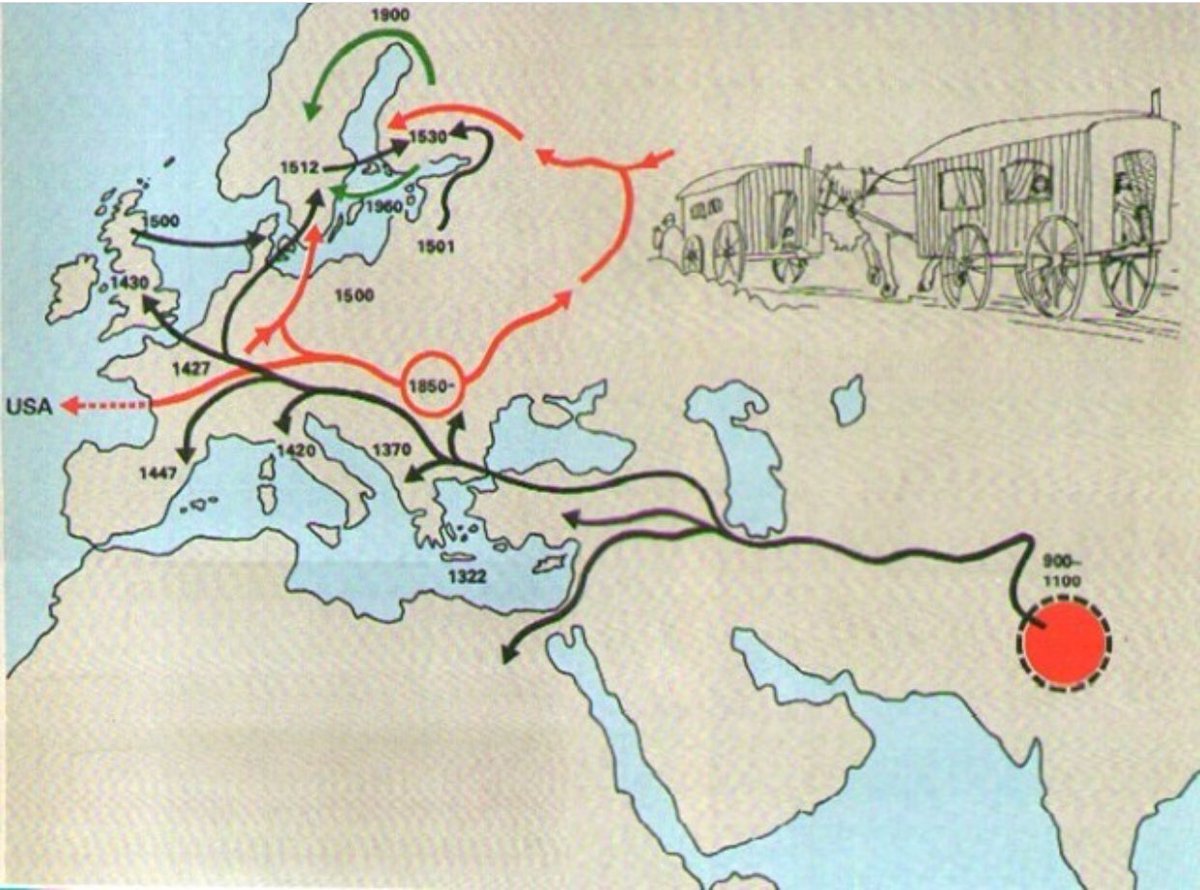
The Romani people did not start in Europe.
They started in North India about 1,000 years ago.
Then they slowly moved across many countries.
🗺️ Romani Migration Route
- India → Persia (Iran)
- Persia → Middle East
- Middle East → Turkey & Greece
- Greece → Europe (France, Spain, Germany, UK)
Today, Romani people live all over Europe and America.
👉 This is why the word “gypsy” is wrong — people thought they came from Egypt, but they came from India.
From teaching students, I noticed many are surprised to learn this history. When they see the migration map, they understand the real story behind the word.
👥 Difference Between Roma and Traveler
Many people mix these two, but they are not the same.
| Term | Meaning |
|---|---|
| Roma / Romani | An ethnic group from South Asia with their own language and culture |
| Traveler | People who move often but may not be Romani |
✅ Roma
- Real ethnic group
- Own language (Romani language)
- Shared history and culture
✅ Traveler
- Lifestyle, not ethnicity
- Can be Irish Travelers, New Age Travelers, or others
- Not always Romani
Example:
❌ “All travelers are gypsies.”
✅ “Roma are an ethnic group. Travelers are people who move often.”
From my work explaining words to students, this difference helps people avoid mistakes and speak respectfully.
💬 “Gypsy” Meaning in Different Contexts
| Context | Meaning / Use | Tone |
|---|---|---|
| Cultural / Ethnic | Refers to the Romani ethnic group. | Neutral (if accurate & respectful) |
| Figurative | Describes a free-spirited traveler or artist. | Romantic / Casual |
| Pop Culture | Used in songs or media (e.g., “Gypsy soul”). | Often romanticized |
| Insensitive Use | As a stereotype for nomads or thieves. | Offensive / Avoid |
💭 Examples of “Gypsy” in Conversations
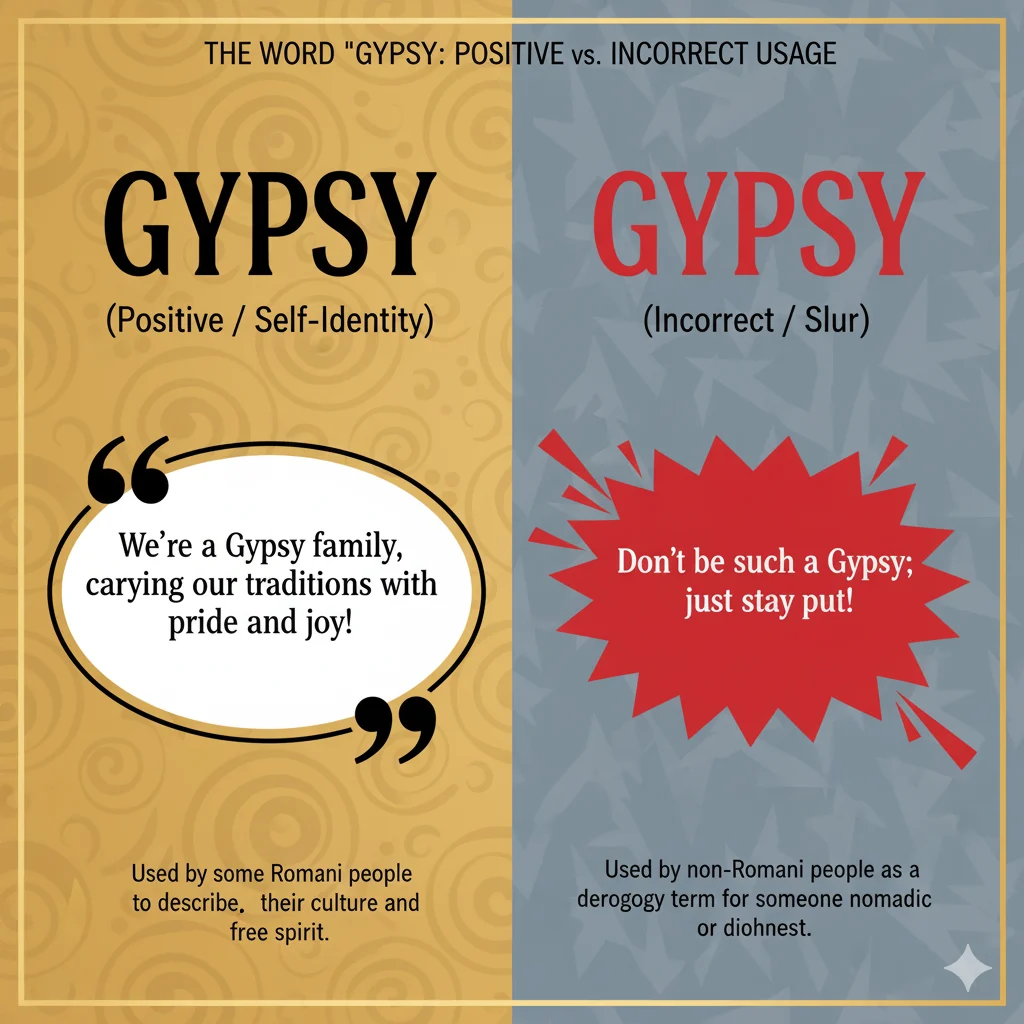
Example 1:
“She has a gypsy spirit — always chasing sunsets and stories.”
👉 Figurative and poetic use (not about ethnicity).
Example 2:
“The Romani gypsy community celebrates cultural festivals every year.”
👉 Ethnic use — acceptable if factual and respectful.
Example 3:
“That shop looks so gypsy.”
🚫 Avoid — this can sound stereotypical or offensive.
🔗 Similar or Related Terms
| Term | Meaning |
|---|---|
| Romani | The correct ethnic term for the group historically called “Gypsies.” |
| Nomad | Someone who moves frequently, not tied to one place. |
| Bohemian | Describes an artistic, free lifestyle. |
| Traveler | A general, neutral term for a person who moves from place to place. |
These terms are sometimes used interchangeably, but only “Romani” correctly refers to the ethnic group.
🧭 How to Use “Gypsy” Correctly
✅ Do:
- Use “Gypsy” when referring to the historical or cultural term, with sensitivity.
- Prefer “Romani” in formal or respectful discussions.
- Clarify context — cultural vs. lifestyle metaphor.
❌ Don’t:
- Use it as an insult or stereotype.
- Label people as “gypsies” based solely on appearance or lifestyle.
- Use it casually if you’re unsure of the cultural implications.
⚠️ Common Mistakes or Misinterpretations
Many people assume “Gypsy” just means “traveler” or “free soul.”
While this poetic idea exists, it overlooks the real people and history behind the term.
Another misconception: Some believe it refers to fortune tellers or nomadic performers — stereotypes that have roots in old media and do not represent the Romani culture accurately.
❓ FAQ Section
1. What does “Gypsy” mean in modern language?
It can mean a member of the Romani people or describe a free-spirited traveler. However, it should be used carefully due to its cultural sensitivity.
2. Is “Gypsy” considered offensive?
In some contexts, yes. It’s better to use “Romani” when referring to the ethnic group to avoid offense.
3. What’s the difference between “Gypsy” and “Romani”?
“Gypsy” is the outdated English term, while “Romani” is the correct and accepted name of the ethnic group.
4. Can I call myself a “Gypsy” if I travel often?
It’s best not to. Use words like “wanderer,” “traveler,” or “bohemian” instead, unless you belong to the Romani community.
5. Where is the word “Gypsy” most used today?
It appears in literature, music, and fashion, though many brands and media are now replacing it with culturally respectful terms.
6. Why is “Gypsy” controversial?
Because it has been used historically in stereotypical or discriminatory ways, misrepresenting Romani people.
🎵 Fleetwood Mac “Gypsy” Meaning
Many people search fleetwood mac gypsy meaning.
The song “Gypsy” by Fleetwood Mac, written by Stevie Nicks, is about her memories of youth, freedom, and change in life.
It is not about Romani people.
It means feeling free and remembering the past.
🎤 Stevie Nicks “Gypsy” Meaning
The stevie nicks gypsy meaning is about her early life before fame.
She used “gypsy” as a symbol of freedom and simple living, not ethnicity.
📺 Gypsy Meaning in Peaky Blinders
People search gypsy meaning peaky blinders.
In the show Peaky Blinders, “gypsy” refers to Romani heritage.
The Shelby family has Romani roots.
It is used as culture identity, not slang.
👥 Romanichal Gypsy Meaning
The romanichal gypsy meaning refers to a Romani group living in England.
Romanichal people are part of the Romani ethnic family.
🧠 Gypsy Meaning Slang
In slang, gypsy can mean a free traveler or someone who moves often.
But this slang can be offensive, so it is safer to avoid it.
💬 Gypsy Soul Meaning
“Gypsy soul” means a person who loves travel and freedom.
But remember, this phrase comes from Romani culture, so use it carefully.
🎨 Bohemian Gypsy Meaning
Bohemian gypsy meaning describes an artist or traveler with a free lifestyle.
It is a poetic phrase, not an ethnic meaning.
🪶 Living Like a Gypsy Meaning
Living like a gypsy means traveling often or not staying in one place.
This is a figurative meaning, not about Romani identity.
⚠️ Is Gypsy a Slur?
Many people search gypsy meaning slur.
Sometimes yes.
Because of history and stereotypes, the word can be hurtful.
Romani or Roma is more respectful.
🗿 The Sleeping Gypsy Meaning
The painting The Sleeping Gypsy by Henri Rousseau shows mystery and dreamlike travel life.
It uses “gypsy” as a romantic idea, not real culture.
🏁 Conclusion
Now that you understand the true meaning of “Gypsy”, you can appreciate both its rich cultural history and modern nuances.
Use the term with care, respect, and awareness of its origins.
Language evolves — and knowing the story behind words helps us communicate with empathy and understanding.
✨ Keep exploring our site for more word meanings, cultural insights, and modern slang guides!

Claire Fuller is a word-meaning specialist at Meanovia.com. She explains complex words, phrases, and language trends in a clear, relatable way, helping readers quickly understand the exact meaning behind every term.