Ever heard the word “Elysium” in a movie, song, or book and wondered what it really means? You’re not alone. The term Elysium often evokes feelings of peace, paradise, and perfection — but its roots and meanings go much deeper.
In this article, we’ll break down:
- The definition of Elysium
- Its origin in ancient mythology
- How it’s used in modern culture and language
- Real-life examples, meanings across contexts, and related terms
🌟 What Does “Elysium” Mean?
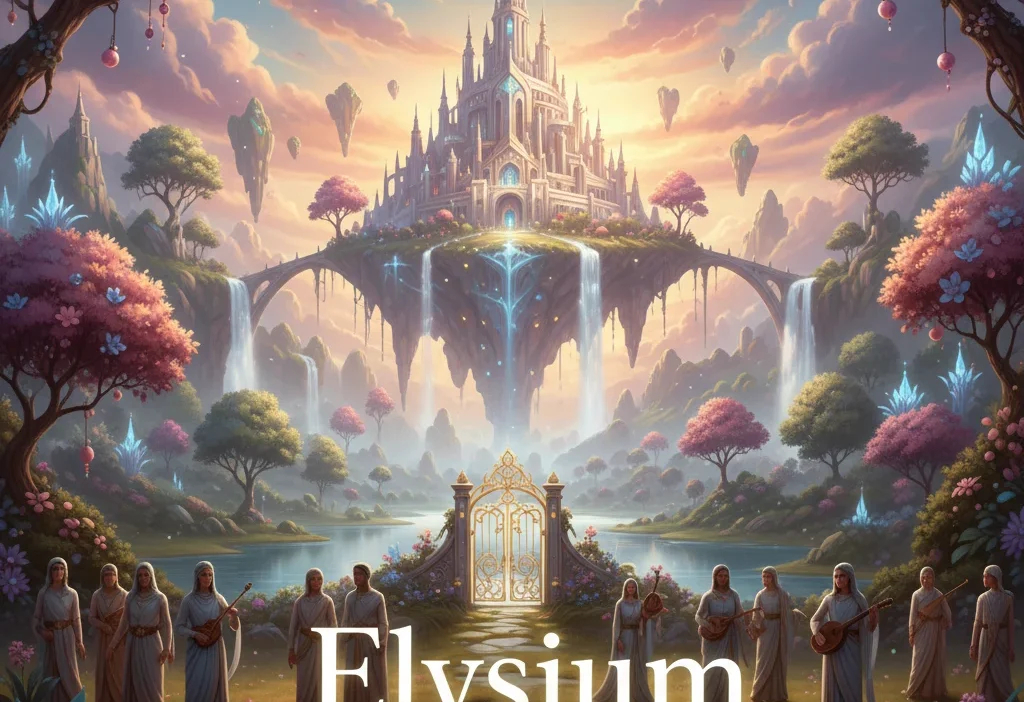
Elysium means a place or state of perfect happiness, peace, or bliss.
The term comes from ancient Greek mythology, where Elysium (or the Elysian Fields) was the final resting place for heroes and virtuous souls — a paradise after death.
Today, it’s used to describe a perfect world, ultimate peace, or heavenly joy — both literally and metaphorically.
🏛️ Origin and Popularity of “Elysium”
The word Elysium originates from the Greek term “Ēlýsion pedíon”, meaning the Elysian Plain — a mythical paradise described in Homer’s Odyssey (8th century BCE).
In classical Greek belief, Elysium was not for everyone — only gods, demigods, and heroic mortals could enter after death. Over centuries, Roman poets like Virgil popularized it as a heavenly afterlife similar to “Heaven” in Christian theology.
📜 Quick Timeline:
- 8th Century BCE – Mentioned by Homer as a divine afterlife for heroes.
- 1st Century BCE – Roman writers adopt the concept.
- 18th–19th Century – Romantic poets use Elysium metaphorically for bliss and beauty.
- 21st Century – The word resurfaces in movies, games, and music to mean a perfect utopia.
🌍 “Elysium” Meaning in Different Contexts
1. In Literature and Poetry
Writers often use Elysium to describe a dreamlike, heavenly state or a poetic afterlife.
“His soul drifted into Elysium, far from the world’s pain.”
2. In Modern Culture (Movies, Music, Games)
- 🎬 “Elysium” (2013) – A sci-fi film where the wealthy live in a utopian space habitat called Elysium, while the poor suffer on Earth.
- 🎵 Music artists use Elysium to evoke serenity or transcendence (e.g., songs by Hans Zimmer and Bear McCreary).
- 🎮 Video games and fantasy fiction use it as a realm of peace or reward.
3. In Everyday Language
People use Elysium metaphorically to mean:
- “a state of perfect happiness”
- “a peaceful retreat”
- “a moment of bliss”
Example: “This garden feels like my own little Elysium.”
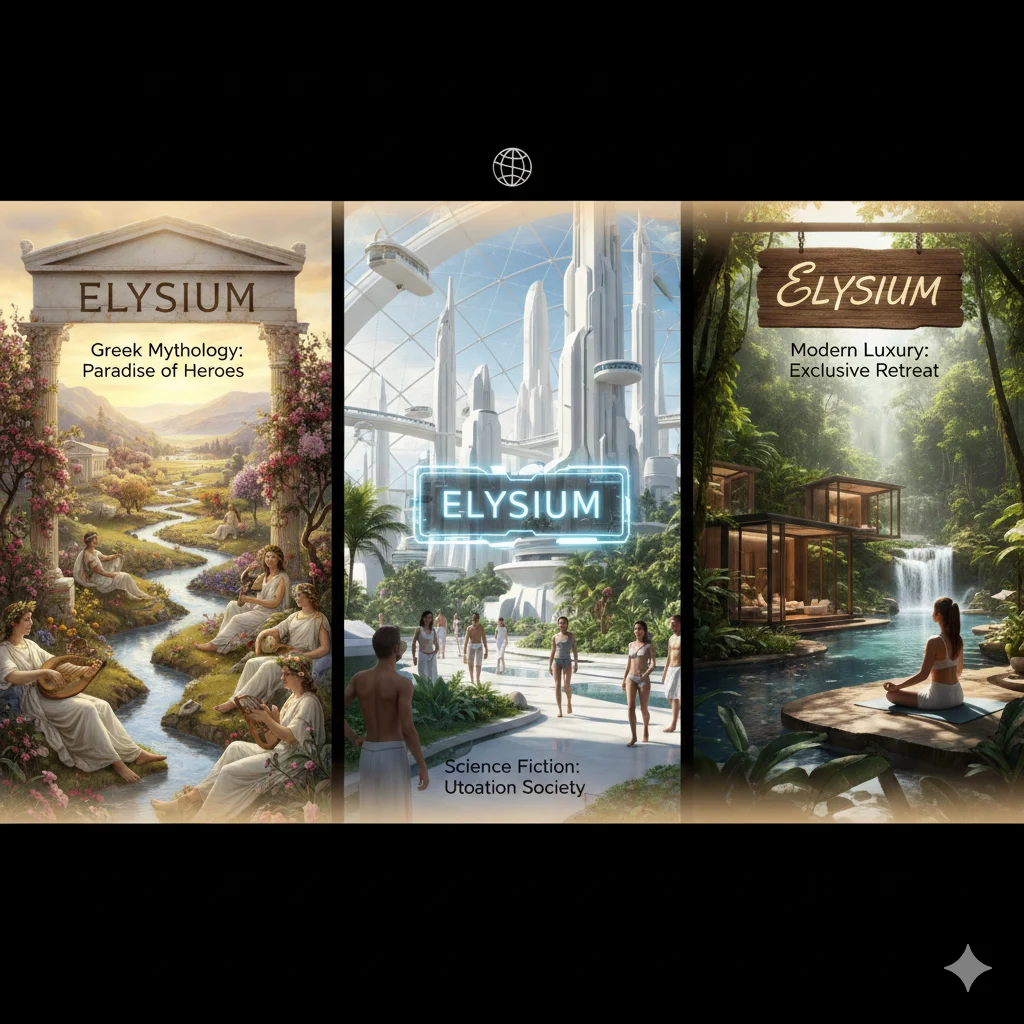
| Context | Meaning of Elysium | Example |
| Mythology | Paradise for heroes | “Achilles rests in Elysium.” |
| Modern Culture | Utopia or ideal world | “The movie shows a future Elysium.” |
| Everyday Use | Personal bliss or peace | “Her smile is pure Elysium.” |
💬 Examples of “Elysium” in Sentences
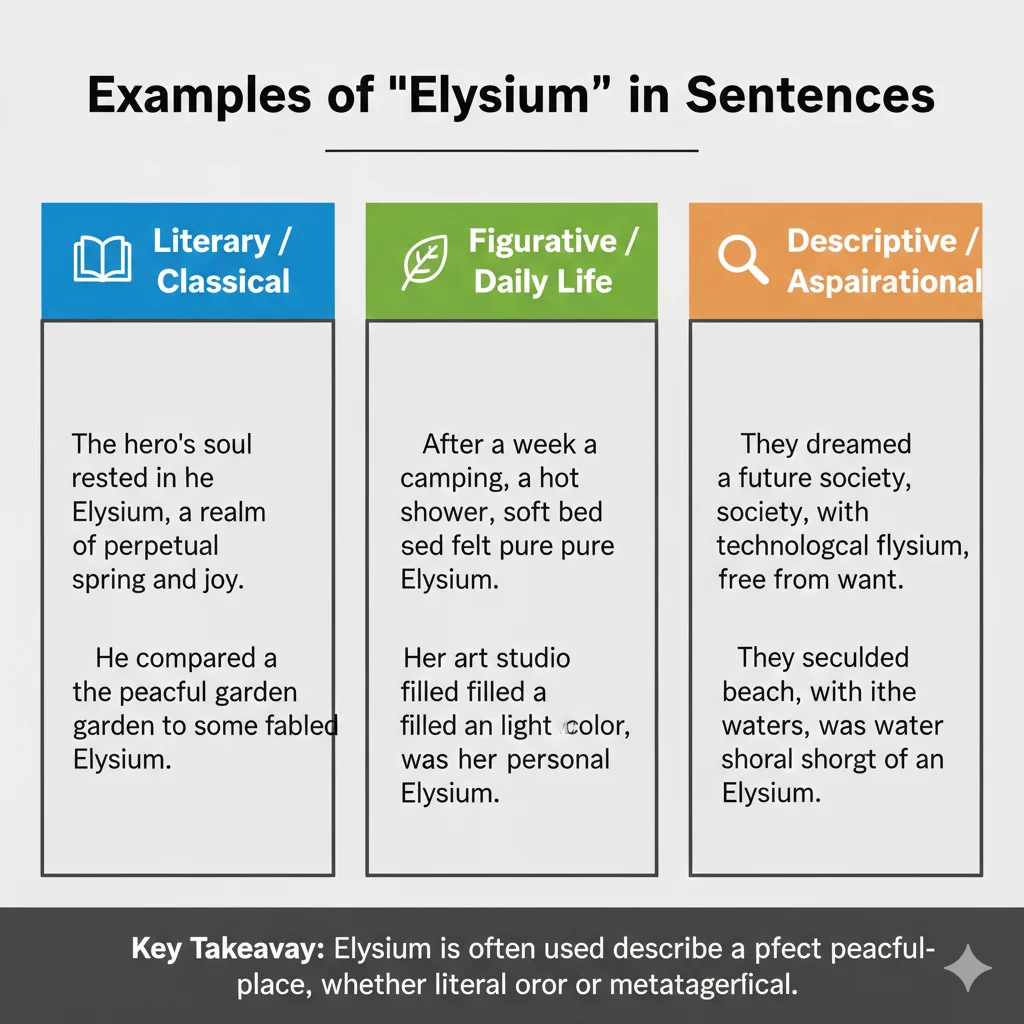
Example 1 (Literary):
“The poet’s words painted an Elysium beyond the reach of pain.”
Example 2 (Casual Conversation):
Friend 1: “This beach is incredible.”
Friend 2: “Total Elysium, right?”
Example 3 (Formal):
“Architects designed the resort to capture a sense of modern Elysium — a sanctuary of luxury and calm.”
Example 4 (Pop Culture Reference):
“In the movie Elysium, paradise comes with a price.”
💭 Crashing Out Meaning: What It Really Means and How to Use It
🔤 Similar or Related Terms to “Elysium”
| Term | Meaning | Usage |
| Paradise | A perfect or heavenly place | Religious and everyday contexts |
| Utopia | An ideal but imaginary society | Literature and philosophy |
| Heaven | The abode of God or eternal peace | Religious contexts |
| Nirvana | State of perfect peace in Buddhism | Spiritual or metaphorical use |
These words are often used interchangeably with Elysium, but Elysium specifically carries mythological and poetic undertones.
✅ How to Use “Elysium” Correctly
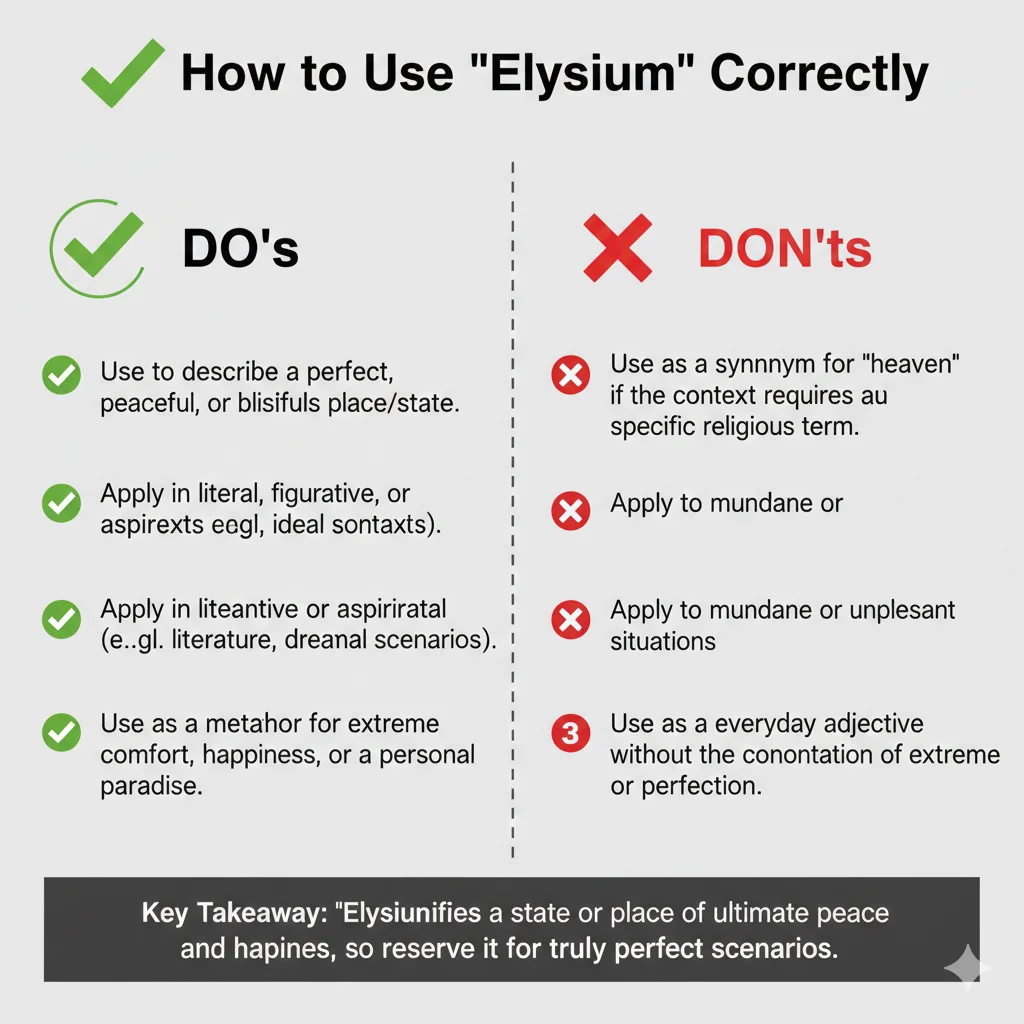
- Do use Elysium to describe serene beauty, bliss, or paradise.
- Do use it in poetry, creative writing, or thoughtful captions.
- Don’t use it casually without context — it’s a sophisticated word.
Examples:
✅ “Her garden is her Elysium.”
❌ “I’m heading to Elysium” (unless referring to a movie or game).
⚠️ Common Mistakes or Misinterpretations
- Confusing “Elysium” with “Utopia”
- Elysium refers to afterlife paradise; Utopia means a perfect but imaginary society.
- Elysium refers to afterlife paradise; Utopia means a perfect but imaginary society.
- Using it as a proper place name incorrectly
- Unless referencing the movie or a specific brand, Elysium should not be capitalized mid-sentence without context.
- Unless referencing the movie or a specific brand, Elysium should not be capitalized mid-sentence without context.
- Mispronunciation:
- Correct: ih-LIH-zee-um
- Incorrect: eh-LY-see-um
- Correct: ih-LIH-zee-um
❓ FAQ About “Elysium”
1. What does Elysium mean in simple words?
Elysium means a paradise or perfect happiness, originally from Greek mythology as the resting place for heroes and the blessed dead.
2. Is Elysium a real place?
No. Elysium is a mythical concept, symbolizing heaven or ultimate peace — not a physical location.
3. What’s the difference between Elysium and Heaven?
Elysium comes from Greek mythology; Heaven is from Christian belief. Both represent blissful afterlife states but differ in cultural origins.
4. How do you use “Elysium” in a sentence?
Example: “After years of hard work, retirement felt like Elysium.”
5. Where is the term “Elysium” most used today?
It appears in literature, movies, music, and luxury brand names to evoke a sense of perfection or divine peace.
6. What does “Elysium” symbolize?
It symbolizes eternal joy, purity, reward, and the ideal state of being.
🪶 Conclusion
Elysium is more than just a word — it’s a timeless symbol of bliss, paradise, and perfection. From ancient Greek myths to modern sci-fi films, the concept continues to capture humanity’s longing for peace and eternal happiness.
Now that you know what Elysium means, you’ll never miss its deeper significance — whether you hear it in a poem, a song, or a movie. 🌸
✨ Keep exploring our site for more fascinating meanings behind trending words, slangs, and cultural terms.

Evie Wyld is a word-meaning specialist at Meanovia.com. She simplifies complex words, phrases, and language trends, helping readers quickly grasp the exact meaning behind every term in a clear and approachable way.