Last winter, my aunt in Lahore made chicken soup for a sick neighbor. She said, “Bring stock, not broth.” I was confused. I thought they were the same.
That day I learned the difference between stock and broth. In many homes, people mix these words. But cooks, students, and chefs need to know the real difference between stock and broth.
It helps us cook better food. It also helps us read recipes right. When you know the difference between stock and broth, your soup tastes better. Your sauces look rich. So today we will learn the easy difference between stock and broth in simple words.
Key Difference Between Them
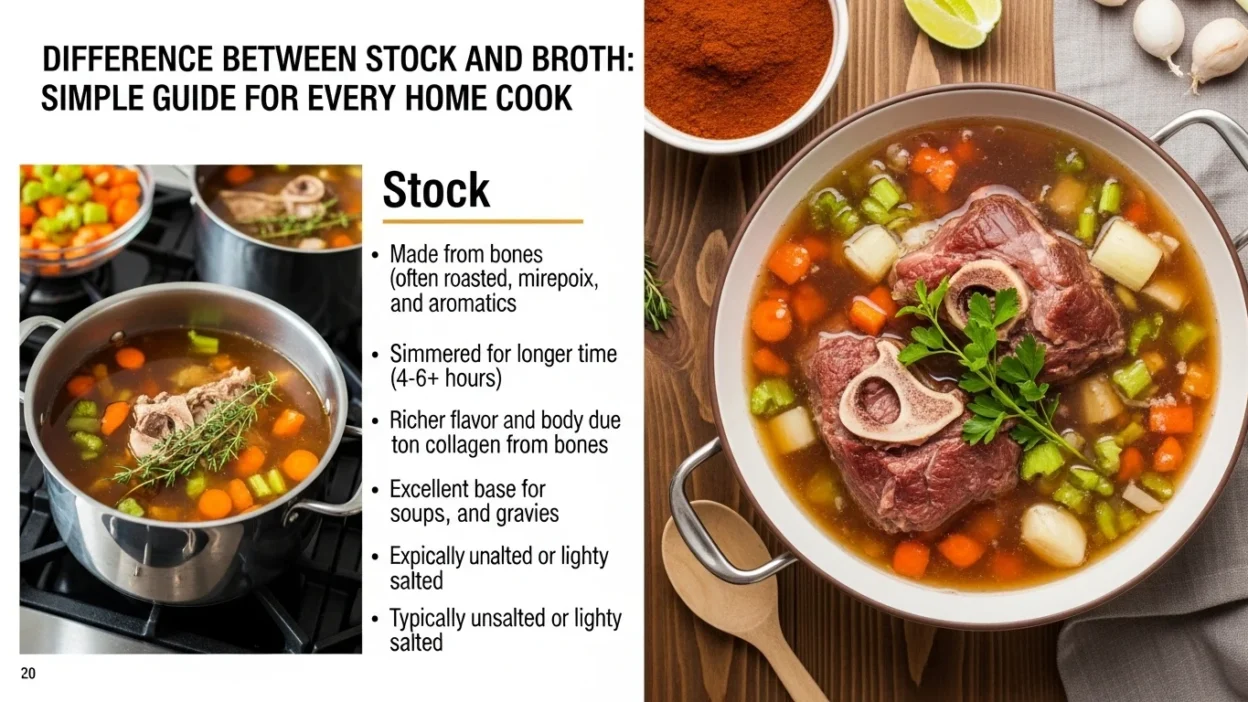
Stock is made from bones.
Broth is made from meat.
Stock is thick and rich.
Broth is light and tasty.
Why This Difference Is Important for Learners and Experts
Students need this knowledge to follow recipes.
Home cooks save time and money.
Chefs make better soups and sauces.
Restaurants keep food quality high.
In society, good food brings people together. Knowing cooking basics helps families eat healthy and happy.
Pronunciation
- Stock
- US: stok /stɑːk/
- UK: stok /stɒk/
- Broth
- US: broth /brɔːθ/
- UK: broth /brɒθ/
Now that we know the basics, let’s move to the main part.
Difference Between Stock and Broth
1. Main Ingredient
Stock uses bones.
Broth uses meat.
Examples:
- Chicken stock from chicken bones.
- Chicken broth from chicken meat.
2. Cooking Time
Stock cooks longer.
Broth cooks shorter.
Examples:
- Beef stock cooks 6 hours.
- Vegetable broth cooks 1 hour.
3. Texture
Stock is thick and jelly-like when cold.
Broth is thin like soup water.
Examples:
- Cold stock turns into gel.
- Broth stays liquid.
4. Flavor
Stock has mild taste.
Broth has strong taste.
Examples:
- Stock in white sauce.
- Broth as hot soup drink.
5. Use in Cooking
Stock is base for sauces.
Broth is served as soup.
Examples:
- Gravy with stock.
- Noodle soup with broth.
6. Salt Level
Stock has little or no salt.
Broth has salt added.
Examples:
- Chef adds salt later in stock.
- Broth ready to drink.
7. Nutrition
Stock has collagen from bones.
Broth has protein from meat.
Examples:
- Bone stock good for joints.
- Meat broth good for energy.
8. Color
Stock looks cloudy or deep.
Broth looks clear.
Examples:
- Beef stock dark brown.
- Chicken broth light gold.
9. Purpose
Stock is cooking base.
Broth is final dish.
Examples:
- Rice cooked in stock.
- Sick person drinks broth.
10. Cost
Stock uses leftover bones.
Broth uses fresh meat.
Examples:
- Cheap stock from scraps.
- Costly broth from meat cuts.
Nature and Behaviour
Stock:
Calm taste. Thick body. Works behind the scenes in cooking.
Broth:
Bright taste. Light body. Ready to eat and serve.
Why People Get Confused About Their Use
People hear both words in recipes.
Some shops label them wrong.
Movies and TV mix the words.
So learners think they are the same.
Table: Difference and Similarity
| Point | Stock | Broth | Similarity |
|---|---|---|---|
| Main item | Bones | Meat | Both liquid |
| Taste | Mild | Strong | Both tasty |
| Texture | Thick | Thin | Both for soup |
| Salt | Less | More | Both can be salted |
| Use | Sauce base | Soup drink | Both cooking tools |
Which Is Better in What Situation?
Stock is better when you cook sauce, gravy, or rice. It gives body and rich feel. It helps food look shiny and smooth. Chefs love stock for deep taste.
Broth is better when you want quick soup. Sick people drink broth. Kids love broth noodles. It is easy and light for stomach.
How Stock and Broth Are Used in Metaphors and Similes
Stock in metaphor means “strong base.”
Broth in metaphor means “warm comfort.”
Examples:
- “Good values are stock of life.”
- “Her words were warm like broth.”
Connotative Meaning
Stock – Positive or Neutral
- “Family stock is strong.”
Broth – Positive
- “Her care was like warm broth.”
Negative use is rare.
Idioms or Proverbs
- “Back to square one stock” (rare joke phrase)
Example: We lost our stock plan. Start again. - “In the same broth” (made-up funny saying)
Example: We are all in the same broth today.
(No famous idioms exist for these words.)
Works in Literature
- Chicken Soup for the Soul – Self-help, Jack Canfield, 1993
- Bone Broth Miracle – Health, Ariane Resnick, 2016
Movies Related to Food Broth or Soup
- Ratatouille – 2007, USA
- The Ramen Girl – 2008, USA/Japan
(No famous movies named stock or broth only.)
Five FAQ
1. Is stock same as broth?
No. Stock uses bones. Broth uses meat.
2. Can I replace stock with broth?
Yes, but taste will change.
3. Which is healthier?
Both are healthy in balance.
4. Which is thicker?
Stock is thicker.
5. Can vegetarians use broth?
Yes. Vegetable broth is common.
How Stock and Broth Are Useful for Surroundings
They reduce food waste. Bones and scraps become stock.
They help sick people recover. Warm broth gives comfort.
They bring families together at dinner time.
They support food business jobs.
Final Words for Both
Stock is the quiet helper in cooking.
Broth is the warm friend on the table.
Both are simple, useful, and tasty.
Conclusion
Knowing the difference between stock and broth is easy and helpful. Stock comes from bones and cooks long. Broth comes from meat and cooks fast. Stock makes sauces rich. Broth makes soups warm.
Many people mix these words, but now you know the truth. Whether you are a student, a home cook, or a chef, this small lesson will make your food better.
Good cooking starts with simple knowledge. Next time you read a recipe, remember the clear difference between stock and broth, and cook with confidence.

Patrick Gale is a word-meaning expert at Meanovia.com. He explains complex terms, definitions, and language trends with clarity and precision. His goal is to help readers understand the exact meaning behind every word they search.