Ever heard someone say “She’s got daddy issues” or seen it trending on TikTok or Twitter and wondered what it really means? You’re not alone. The phrase “daddy issues” is one of those expressions that gets thrown around casually—but few people understand its full meaning, origin, and contex
Daddy issues is a popular term used to describe emotional challenges or behavioral patterns that stem from a complicated or strained relationship with one’s father.
The term daddy issues is often heard in conversations, social media, or pop culture, and people want to understand its meaning and implications. It generally refers to emotional struggles, attachment issues, or patterns in relationships that may develop when a father is absent, neglectful, controlling, or emotionally distant.
While the phrase is widely used casually or humorously, it can sometimes carry negative judgment. Understanding the meaning helps recognize that these patterns are not inherently a flaw, but often a reflection of past experiences influencing current behavior.
🧠 What Does “Daddy Issues” Mean?
“Daddy issues” is a slang term used to describe emotional struggles or behavioral patterns—often in women—stemming from a complicated or absent relationship with their father. It’s typically used (sometimes unfairly) to explain trust issues, attachment problems, or attraction to older partners.
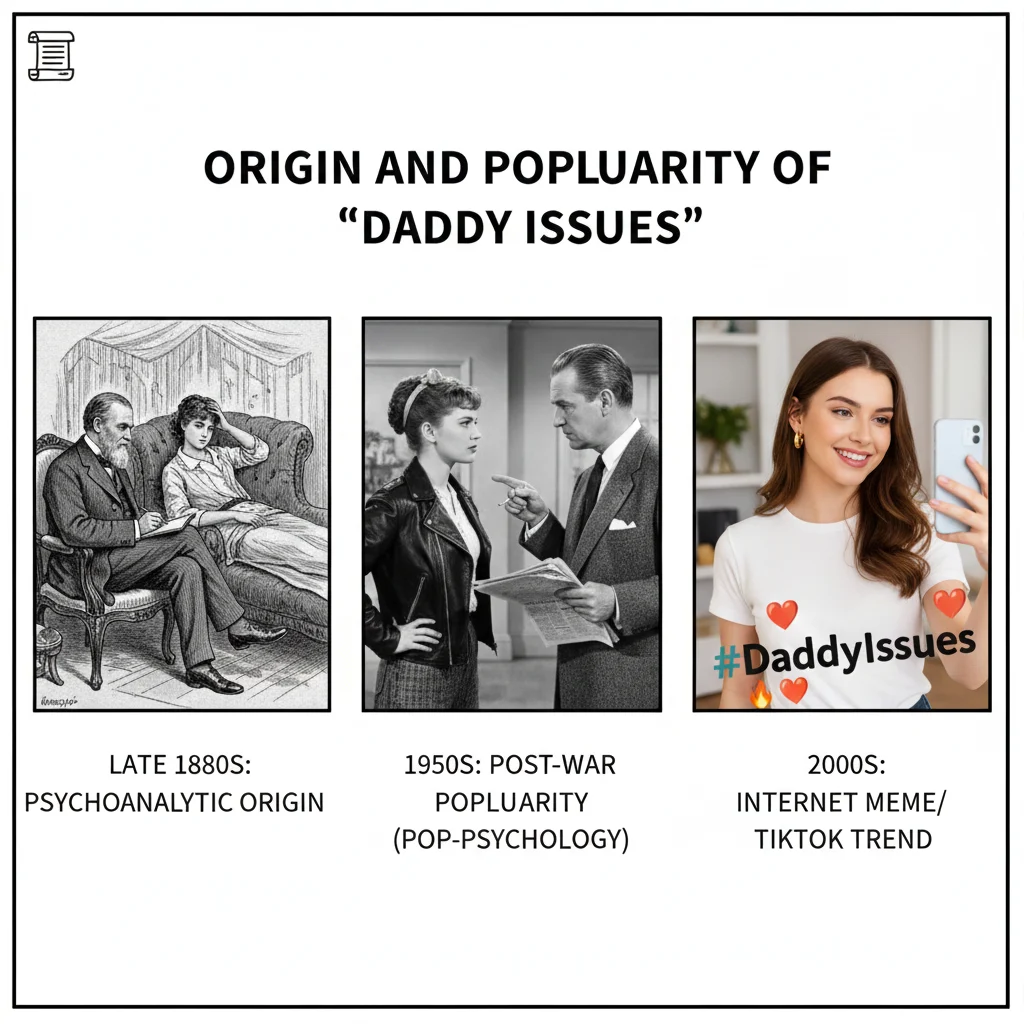
📜 Origin and Popularity of “Daddy Issues”
The term originated in psychology, derived from Freudian theory in the early 1900s. Sigmund Freud described the “father complex”—a child’s unconscious feelings toward their father, both positive and negative.
By the late 20th century, pop culture began turning the concept into slang, using “daddy issues” to stereotype women with difficult relationships with their fathers.
- 1950s–70s: Appeared in psychology and self-help books.
- 2000s: Became popular in movies and music lyrics.
- 2020s: Widely used on TikTok, Twitter, and Reddit, often humorously or self-referentially.
💬 “Daddy Issues” Meaning in Different Contexts
| Context | Meaning & Tone | Example Usage |
| In Psychology | Describes unresolved emotional issues from an absent, strict, or abusive father figure. | “Therapists often help clients work through underlying daddy issues.” |
| On Social Media | Used playfully or sarcastically to explain attraction to older men or emotional patterns. | “I like older guys — must be my daddy issues talking 😅.” |
| In Everyday Conversation | Sometimes used as an insult or stereotype (which can be harmful). | “People shouldn’t judge others by calling them out for daddy issues.” |
💡 Examples of “Daddy Issues” in Conversations
Example 1 (Casual):
Friend 1: Why do you always date guys twice your age?
Friend 2: Haha, maybe it’s my daddy issues! 😅
Example 2 (Therapeutic):
Therapist: It sounds like your trust problems stem from unresolved daddy issues.
Example 3 (Pop culture):
“Ariana Grande’s lyrics in ‘thank u, next’ touch on themes that some interpret as reflecting daddy issues.”
🔍 Similar or Related Terms
| Term | Meaning |
| Mommy Issues | Similar emotional struggles but linked to one’s mother. |
| Father Complex | Psychological term for deep-seated feelings toward one’s father. |
| Attachment Issues | Difficulty forming emotional bonds due to early family dynamics. |
| Abandonment Issues | Fear of being left alone or rejected. |
✅ How to Use “Daddy Issues” Correctly
Here’s how to use the term thoughtfully and appropriately:
Do’s:
- ✅ Use it when referring to psychological concepts or self-reflection.
- ✅ Use it humorously about yourself, if comfortable.
Don’ts:
- ❌ Don’t use it to insult or shame someone.
- ❌ Avoid it in formal or professional settings.
- ❌ Don’t assume someone’s behavior comes from “daddy issues” without context.
Example:
✅ “She’s in therapy working through her daddy issues.”
❌ “She dates older men—she must have daddy issues.”
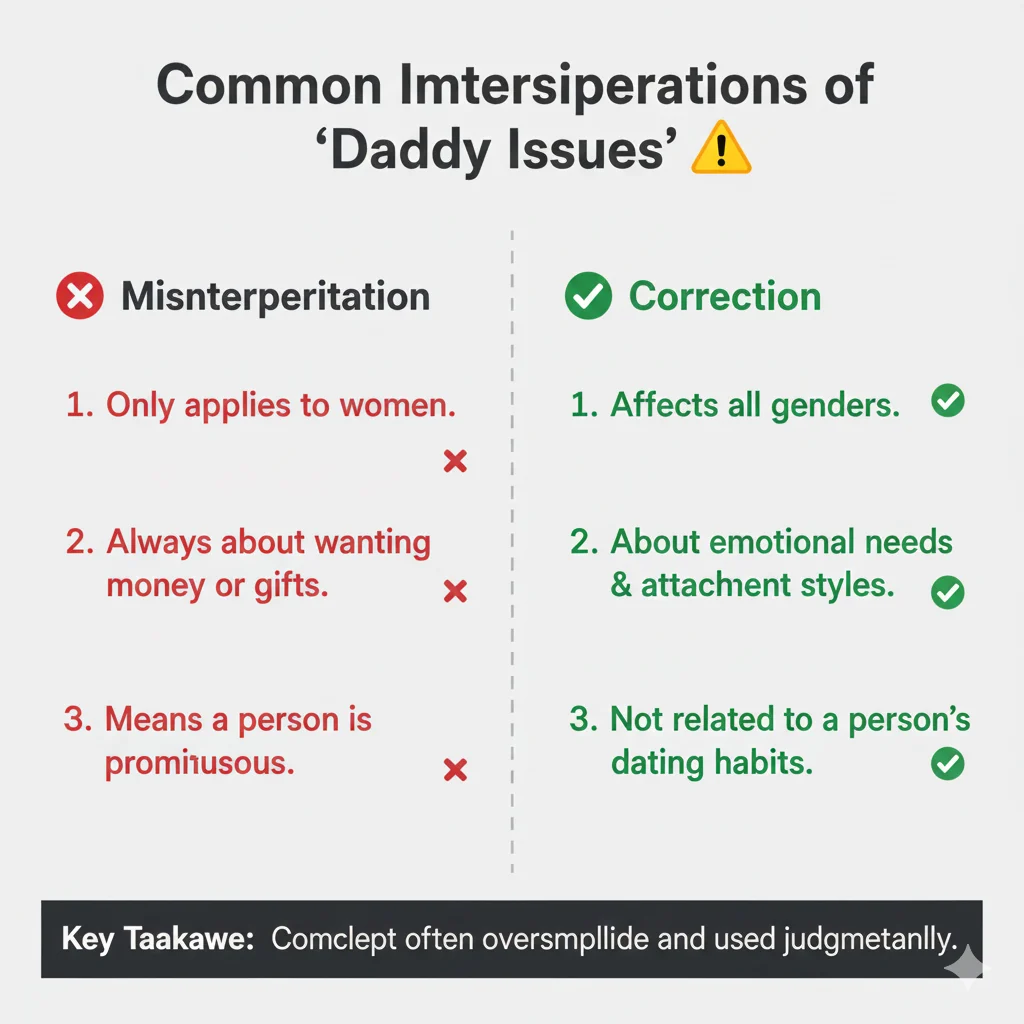
⚠️ Common Misinterpretations of “Daddy Issues”
Many people misuse the phrase to label or shame women’s preferences, which distorts its actual meaning.
Here are some misconceptions:
- ❌ It’s not just about dating older men.
→ It can relate to trust, attachment, or emotional needs. - ❌ It doesn’t only apply to women.
→ Men can have daddy issues too. - ❌ It’s not always negative.
→ Recognizing it can lead to emotional growth and healing.
❓ FAQ: Daddy Issues Explained
1. What does “daddy issues” mean in texting or chat?
It’s often used jokingly to describe attraction to older men or complex emotional behavior. The tone depends on context—sometimes funny, sometimes serious.
2. Is “daddy issues” a slang or psychological term?
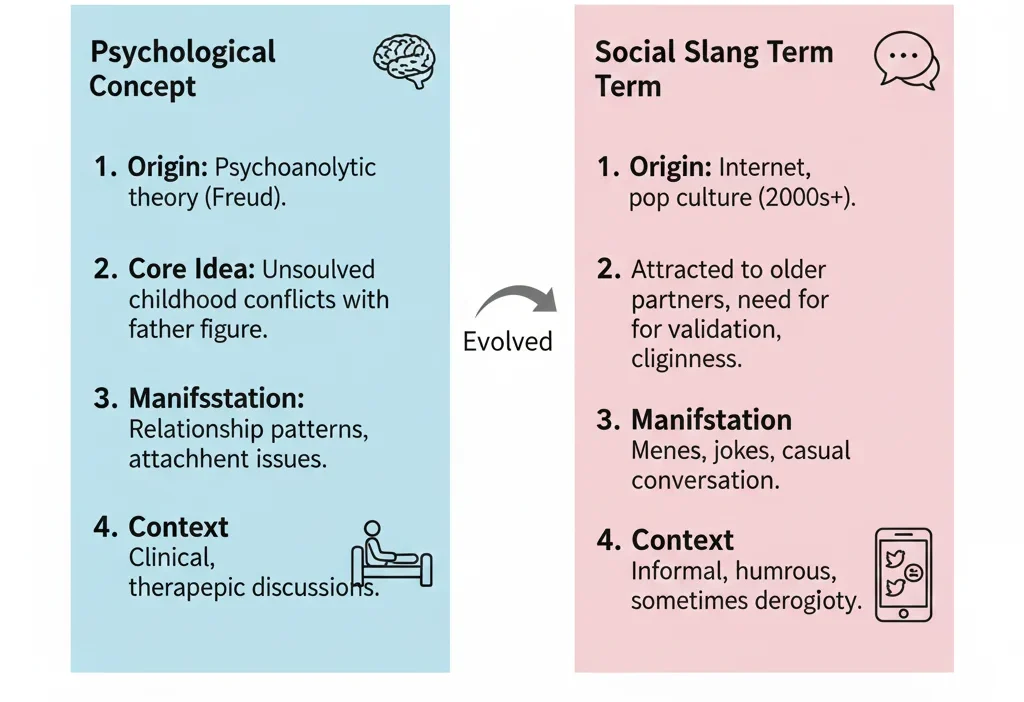
Both. It started as a psychological concept (father complex) and evolved into modern slang used on social media and in casual conversation.
3. Can men have daddy issues too?
Yes. Anyone, regardless of gender, can have unresolved feelings about their father that affect relationships and self-image.
4. What’s the difference between “daddy issues” and “mommy issues”?
“Daddy issues” stem from paternal dynamics; “mommy issues” come from maternal ones. Both can shape attachment styles and trust patterns.
5. How should you respond if someone says they have daddy issues?
With empathy. It’s best not to joke about it unless the person uses humor themselves. A supportive response can build trust.
6. Is it okay to joke about daddy issues?
It depends on tone and context. Self-referential humor is common online, but using it to mock others can be hurtful or insensitive.
🧩 Conclusion
Now you know the true meaning of “daddy issues” — not just as a slang term, but as a concept rooted in real emotional experiences. It began in psychology, evolved through pop culture, and now exists as both a serious and humorous expression online.
Remember: words matter. Using the term respectfully helps reduce stigma around mental health and relationships.
✨ Now that you understand what “daddy issues” really means, you’ll never be confused again! Keep exploring our site for more trending terms and slang meanings.

Claire Fuller is a word-meaning specialist at Meanovia.com. She explains complex words, phrases, and language trends in a clear, relatable way, helping readers quickly understand the exact meaning behind every term.