
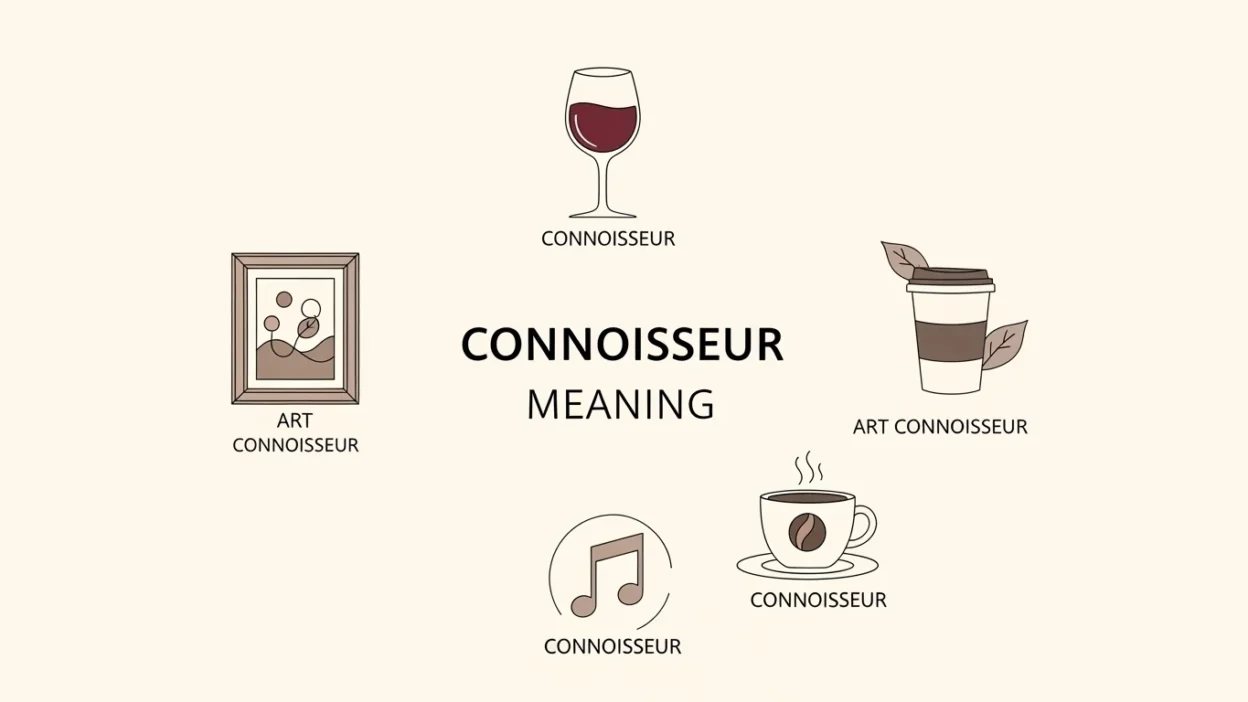
Have you ever met someone who can instantly tell good food from bad, or real art from fake? People often call such a person a connoisseur—but what does that word really mean?
Quick answer: A connoisseur is someone who has deep knowledge and refined taste in a specific subject, like food, art, music, or wine.
A connoisseur doesn’t just like something—they understand it, judge quality, and notice small details others miss. The word is usually positive and shows respect for someone’s expertise.
In 2026, connoisseur is commonly used in reviews, blogs, lifestyle content, and daily English. Students, bloggers, and English learners search this term to improve vocabulary and use it correctly in writing and conversation.
Next, we’ll explore real examples of a connoisseur, synonyms, sentence usage, and how this word differs from expert or fan.
📘 What Does Connoisseur Mean?
A connoisseur is a person who has expert knowledge and refined taste in a particular field, especially in the arts, food, or wine.
The term is formal and used in both everyday and professional contexts to describe someone with deep appreciation and expertise.
In short: A connoisseur is someone who not only loves something but truly understands it.
🕰️ Origin and Popularity
The word “connoisseur” originates from the French word “connaître,” meaning “to know.”
It entered the English language in the 18th century, used to describe people with cultivated tastes — often in art, literature, or fine dining.
Quick Timeline:
- 1700s: Adopted into English through French culture and aristocracy.
- 1800s: Popular among art critics and collectors.
- 2000s–Today: Used in lifestyle, food, travel, and digital content to describe experts or enthusiasts.
Its enduring popularity stems from its sophisticated tone, often used in marketing, reviews, and lifestyle branding to convey authority or elegance.
Read More Lascivious Meaning Explained in Simple Words 😏 | 2026
🌍 Connoisseur Meaning in Different Contexts
The word connoisseur isn’t slang — it’s a formal term with nuanced meanings depending on the setting.
Here’s how it’s commonly used:
🍷 In Food & Drink
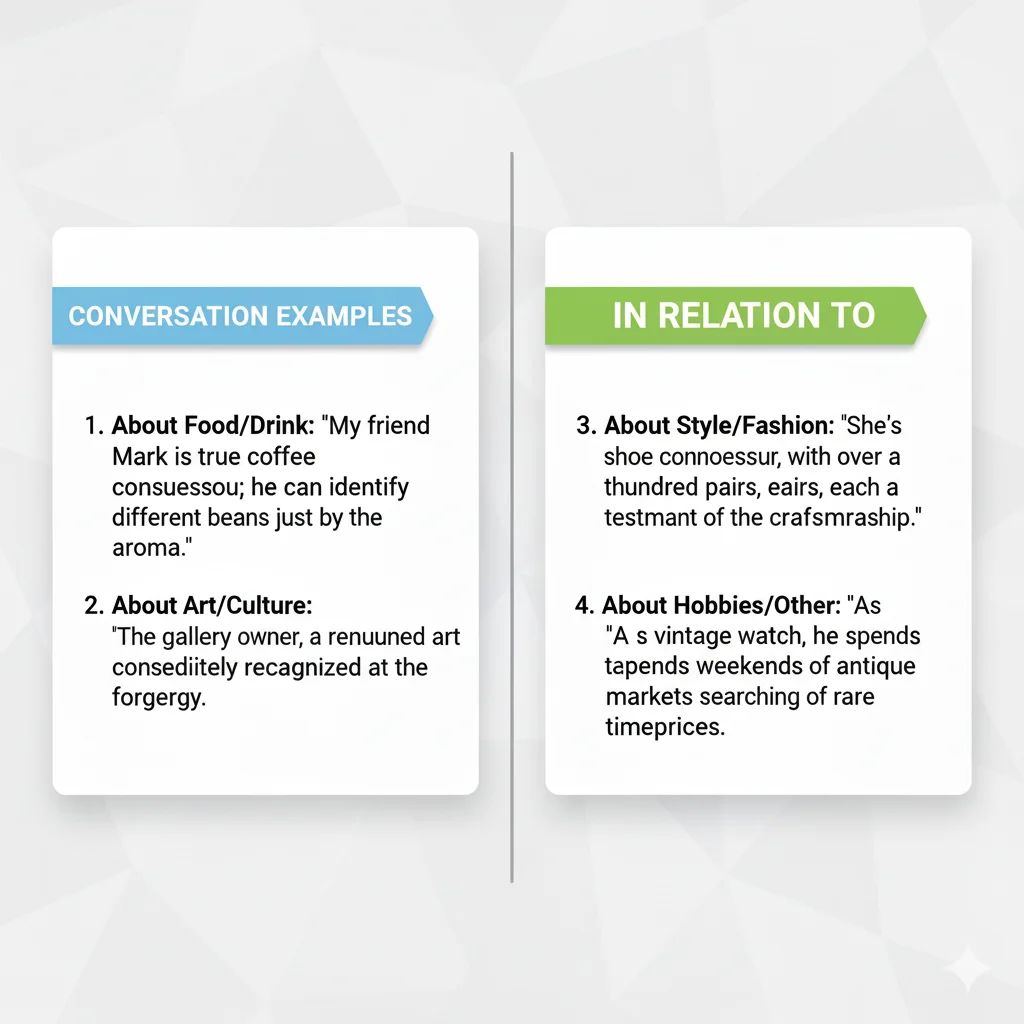
Used to describe someone with refined taste in wine, coffee, or cuisine.
Example: “He’s a true coffee connoisseur — he can tell the origin of a bean just by tasting it.”
Wine connoisseur meaning
A wine connoisseur is someone who has deep knowledge of wine. They understand flavors, aromas, grape varieties, regions, and quality differences. Wine connoisseurs can judge wine by taste, smell, and texture.
Food connoisseur meaning
A food connoisseur is a person who has refined taste and strong knowledge about food. They can recognize high-quality ingredients, cooking techniques, and flavors, not just eat for pleasure.
Coffee connoisseur meaning
A coffee connoisseur is someone who deeply understands coffee beans, roasting methods, brewing styles, and flavor notes. They can tell the difference between average coffee and premium blends.
Tea connoisseur meaning
A tea connoisseur is a person who appreciates different tea types, origins, and brewing methods. They understand taste, aroma, and quality in teas like green, black, herbal, or oolong.
Beer connoisseur meaning
A beer connoisseur is someone knowledgeable about beer styles, brewing processes, and flavor profiles. They can identify quality differences between craft beers, lagers, ales, and specialty brews.
Water connoisseur meaning
A water connoisseur is a person who can distinguish between different types of water based on mineral content, source, and taste. This term is often used humorously but can also be serious in fine dining.
Chocolate connoisseur meaning
A chocolate connoisseur is someone who understands cocoa quality, origin, texture, and flavor notes. They can tell premium chocolate apart from mass-produced varieties.
Cheese connoisseur meaning
A cheese connoisseur is a person with deep knowledge of cheese types, aging methods, textures, and flavors. They appreciate quality and regional differences in cheese.
Taco connoisseur meaning
A taco connoisseur is someone who knows tacos well — from authentic fillings and tortillas to preparation styles. This term is often used playfully but still suggests strong knowledge.
Restaurant connoisseur meaning
A restaurant connoisseur is someone who understands dining quality, service standards, and cuisine styles. They evaluate restaurants based on experience, not just food.
🎨 In Art & Culture
Refers to an expert who judges or appreciates art based on deep understanding.
Art connoisseur meaning
An art connoisseur is a person who has expert knowledge of art styles, history, and authenticity. They can judge artwork quality and often help identify genuine pieces.
Music connoisseur meaning
A music connoisseur is someone who deeply understands music genres, composition, and sound quality. They listen carefully and appreciate musical details others may miss.
Movie connoisseur meaning
A movie connoisseur is a person who understands films deeply — including direction, storytelling, cinematography, and acting. They often analyze movies beyond entertainment.
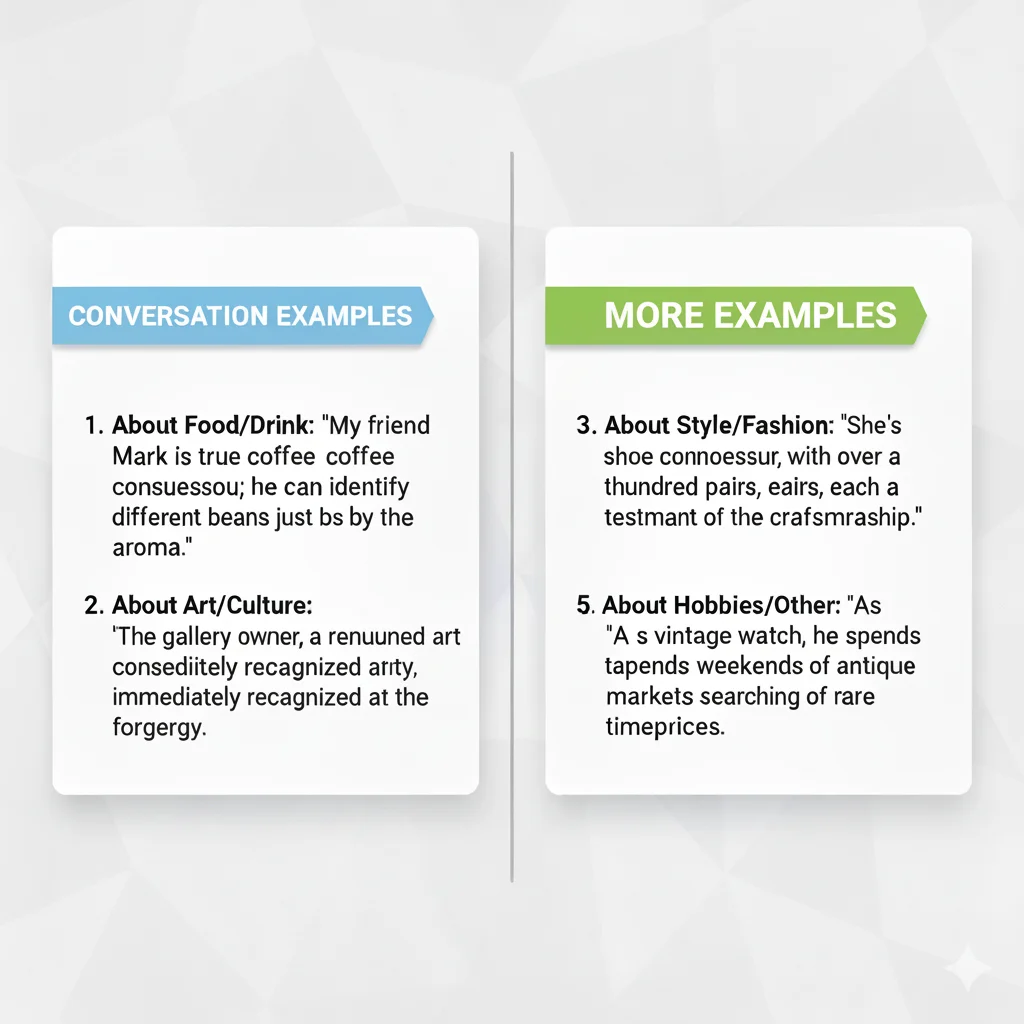
Example: “The gallery invited a connoisseur to authenticate the painting.”
Sarcasm connoisseur meaning
A sarcasm connoisseur is someone who easily understands sarcasm and subtle humor. This phrase is usually used humorously, not formally.
💼 In Everyday Use
Used casually to describe someone with strong enthusiasm and expertise in any niche.
Perfume connoisseur meaning
A perfume connoisseur is someone skilled at recognizing fragrance notes, scent layers, and perfume quality. They understand how perfumes develop over time on the skin.
Weed connoisseur meaning
A weed connoisseur is a person knowledgeable about cannabis strains, quality, aroma, and effects. The term is informal and usually used within casual or legal contexts.
Cannabis connoisseur meaning
A cannabis connoisseur is someone with deep understanding of cannabis varieties, cultivation, and quality. This term is more formal than “weed connoisseur.”
Example: “She’s a connoisseur of vintage fashion.”
| Context | Meaning of Connoisseur | Example Usage |
| Food & Drink | Expert in taste and quality | “Wine connoisseur” |
| Art & Culture | Skilled evaluator of aesthetics | “Art connoisseur” |
| Lifestyle | Enthusiastic expert in any niche | “Music connoisseur” |
💬 Examples of “Connoisseur” in Conversations
Example 1:
Friend 1: You’ve tried every café in town!
Friend 2: Guess I’m a bit of a coffee connoisseur.
Example 2:
“The film festival drew movie connoisseurs from all over the world.”
Example 3 (formal):
“Our restaurant is designed for wine connoisseurs who appreciate rare vintages.”
Example 4 (humorous):
“He’s a connoisseur of memes — he knows every viral trend before it blows up.”
🔍 Similar or Related Terms
To boost your vocabulary, here are some words similar to connoisseur — often used interchangeably or in related contexts:
| Term | Meaning | Formality |
| Expert | Someone highly skilled in a field | Neutral |
| Aficionado | Passionate fan or admirer | Informal |
| Critic | One who evaluates or judges quality | Neutral |
| Specialist | Professionally trained expert | Formal |
| Enthusiast | Someone very interested or excited about a topic | Informal |
🧠 Tip: Use connoisseur when you want to sound polished and knowledgeable — it’s the most refined of the group.
Connoisseur meaning synonyms
Synonyms for connoisseur include expert, aficionado, specialist, critic, and enthusiast. Each varies slightly in formality and depth of expertise.
✅ How to Use “Connoisseur” Correctly
Here’s how to use the term naturally and effectively:
Do’s:
- ✅ Use it to describe someone with refined taste or deep expertise.
- ✅ Pair it with specific areas (e.g., “wine connoisseur,” “art connoisseur”).
- ✅ Use in formal writing, reviews, or professional bios.
Don’ts:
- ❌ Don’t use it for casual preferences (“I like pizza” ≠ “I’m a pizza connoisseur”).
- ❌ Avoid using it as slang or exaggeration unless humorously intended.
- ❌ Don’t confuse it with collector — a connoisseur evaluates, while a collector gathers.
⚠️ Common Mistakes or Misinterpretations
- Using “Connoisseur” Too Casually:
Many people use it jokingly, but the term implies genuine knowledge and taste. - Spelling Errors:
Common misspellings include connesiour or connoiseur. The correct spelling is connoisseur. - Mixing It with “Aficionado”:
An aficionado is passionate; a connoisseur is both passionate and discerning. - Overusing It in Marketing:
Brands often use it to sound classy, but overuse can make it feel pretentious. - Cooter Connoisseur Meaning ⚠️:
- The phrase “cooter connoisseur” is slang and can be inappropriate depending on context. It is not a formal or respectful usage of the word connoisseur and should be avoided in professional or educational settings.
Informal and Humorous Uses of “Connoisseur”
🍕 Pizza connoisseur meaning
A pizza connoisseur is someone who knows pizza very well and can judge its quality. They understand different pizza styles, crusts, sauces, cheeses, and toppings. A pizza connoisseur can tell the difference between an average pizza and a well-made one based on taste, texture, and preparation.
This term is often used casually or humorously, but it still suggests strong knowledge and appreciation for pizza.
🍗 Connoisseur kfc meaning
The phrase connoisseur KFC meaning is usually used humorously. It refers to someone who claims to have expert-level knowledge or strong preference for KFC food items, such as fried chicken, burgers, or sides.
It is not a formal or professional term. People use it jokingly to describe someone who eats KFC often and believes they know what tastes best on the menu.
🥤 Diet coke connoisseur meaning
A Diet Coke connoisseur is someone who is very familiar with Diet Coke and notices small differences in taste, temperature, packaging, or serving style (can vs bottle, cold vs room temperature).
This phrase is mostly playful or light-hearted, used to exaggerate personal preference rather than serious expertise.
🍷 Connoisseur of lafitte meaning
A connoisseur of Lafitte usually refers to someone with deep knowledge of Château Lafite Rothschild, a famous and prestigious French wine estate.
It means the person understands:
- Vintage quality
- Wine history
- Flavor profiles
- Authenticity and value of Lafite wines
This is a formal and serious usage of the word connoisseur, often used in wine, luxury, or fine-dining contexts.
❓ FAQ Section
1. What does “connoisseur” mean in simple terms?
A connoisseur is someone who truly knows and appreciates quality in a specific area, like food, wine, or art.
2. Is “connoisseur” a positive term?
Yes, it’s highly positive and implies expertise, sophistication, and refined taste.
3. Can anyone be a connoisseur?
Technically yes — anyone who studies and develops deep understanding in a subject can be considered a connoisseur.
4. What’s the difference between a connoisseur and an expert?
An expert knows the technical side; a connoisseur combines knowledge with refined aesthetic judgment.
5. How do you pronounce “connoisseur”?
It’s pronounced “kon-uh-sur” or “kon-uh-sir”, depending on accent.
6. What’s a synonym for connoisseur?
Common synonyms include expert, aficionado, specialist, or critic.
🪶 Conclusion
In essence, a connoisseur is someone who blends knowledge, experience, and refined taste to appreciate the finer details of a particular subject — whether it’s art, wine, music, or even coffee.
Using this word adds sophistication to your speech and writing, especially when describing people with genuine expertise and discernment.
✨ Now that you know what “connoisseur” means, you can use it confidently — or maybe even become one yourself! Keep exploring our site for more word meanings and cultural insights.

Deborah Levy is a word-meaning expert at Meanovia.com. She explains complex terms, phrases, and language trends in a clear, relatable way, helping readers quickly understand the exact meaning behind every word.