

Ever heard someone say “He conceded defeat” and wondered what exactly “conceded” means?
This word often pops up in sports, debates, politics, and everyday speech — but it carries more depth than you might think.
In this guide, you’ll learn:
- What “conceded” means
- Where it came from and how it became popular
- How to use it in different contexts (texting, news, and business)
- Real-life examples and common mistakes
🟩 What Does “Conceded” Mean?
“Conceded” means to admit or acknowledge something, often reluctantly, or to give in after resistance.
It can describe accepting loss, granting a point in a debate, or allowing something to be true — even when it’s uncomfortable.
🗣️ Part of Speech: Verb (past tense of concede)
📍 Commonly used in: Sports, politics, debates, and formal writing
📜 Origin and Popularity
The word “concede” originates from the Latin word “concedere,” meaning to yield, grant, or allow. It entered English in the 15th century, carrying the same sense of giving up or admitting truth.
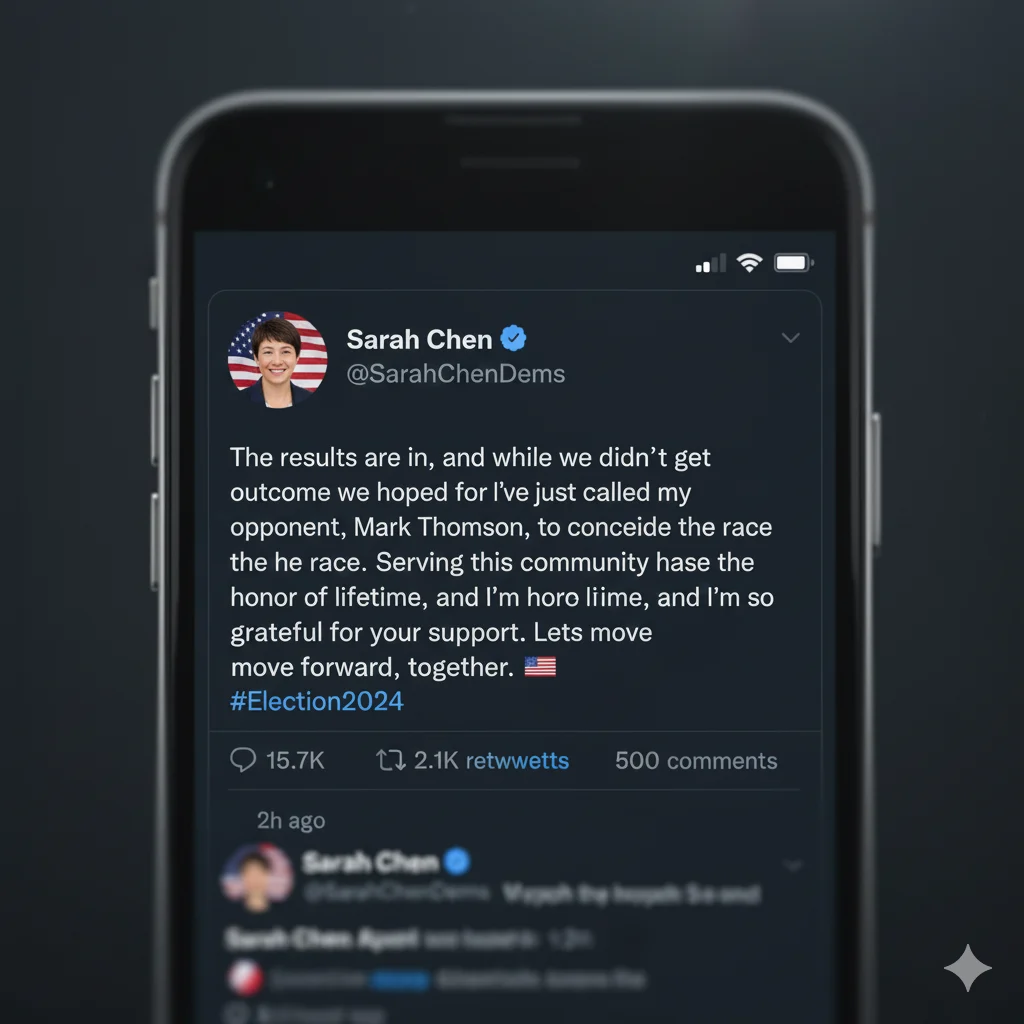
Over time, it became widely used in political speeches, especially during elections — for example, when a candidate “concedes defeat” after losing.
In sports journalism and news headlines, “conceded” is also popular to describe allowing a goal or loss, as in:
“Brazil conceded two goals in the final minutes.”
💬 Conceded Meaning in Different Contexts
| Context | Meaning of “Conceded” | Example |
| In Sports | Admitting defeat or allowing a score | “The team conceded a late goal.” |
| In Politics | Accepting loss after an election | “The candidate conceded the race gracefully.” |
| In Debates or Arguments | Admitting another’s point is valid | “She conceded that the idea had merit.” |
| In Everyday Conversation | Acknowledging truth reluctantly | “He conceded that she was right.” |
💡 Examples of “Conceded” in Conversations
🗨️ Example 1 (Sports Context):
Reporter: The team fought hard till the end.
Coach: Yes, but we conceded too many early goals.
🗨️ Example 2 (Politics):
News Anchor: The senator conceded the election after final results were announced.
🗨️ Example 3 (Casual Talk):
Friend 1: You said you’d win that argument!
Friend 2: Yeah, I conceded — she had better evidence.
🗨️ Example 4 (Formal Writing):
“The company conceded that the new product failed to meet expectations.”
🔍 Similar or Related Terms
| Term | Meaning | Example |
| Admit | To accept or confess something is true | “He admitted his mistake.” |
| Acknowledge | To recognize or accept a fact | “She acknowledged his contribution.” |
| Yield | To give way or submit | “They yielded to pressure.” |
| Surrender | To give up or stop resisting | “He surrendered after a long struggle.” |
These words share similarities with “conceded,” but “conceded” often carries a formal or reluctant tone.
🗣️ How to Use “Conceded” Correctly
✅ Do’s:
- Use it when admitting loss or truth in a respectful way.
- Great for formal writing, news, or discussions.
- Use it to show humility or acknowledgment after resistance.
❌ Don’ts:
- Avoid using it in casual slang or joking contexts (“I conceded my lunch” sounds odd).
- Don’t confuse it with “concentrated” or “conceited” — they sound similar but mean entirely different things.
🚫 Common Mistakes or Misinterpretations
- Confusing “conceded” with “conceited”
- ❌ “He’s very conceded.”
- ✅ “He’s very conceited” (means arrogant).
- ❌ “He’s very conceded.”
- Using “conceded” for non-admission actions
- ❌ “She conceded the package.”
- ✅ “She conceded the point.”
- ❌ “She conceded the package.”
- Overusing in informal chats
- It’s better suited for formal or serious contexts, not everyday slang.
- It’s better suited for formal or serious contexts, not everyday slang.
❓ FAQ: Conceded Meaning Explained
1. What does “conceded” mean in simple words?
“Conceded” means to admit something or accept defeat, usually after trying to resist or argue against it.
2. Is “conceded” a positive or negative word?
It’s neutral — it shows honesty or acceptance, though it can imply losing or giving in.
3. What’s the difference between “conceded” and “admitted”?
“Admitted” focuses on confession, while “conceded” implies reluctant agreement or acceptance after resistance.
4. How do you use “conceded” in a sentence?
Example: “He finally conceded that he was wrong.”
5. What does “conceded defeat” mean?
It means to accept that you’ve lost, often in sports, politics, or debates.
6. Can “conceded” be used in everyday speech?
Yes — but it sounds formal. You’d more likely use “admit” or “agree” in casual conversation.
🏁 Conclusion
To “concede” means to admit or accept something, often reluctantly or after losing.
From political speeches to sports headlines, it reflects humility, honesty, and acknowledgment of reality.
Now that you know what “conceded” means, you’ll easily spot it in news articles, debates, and even conversations — and use it with confidence.
💬 Tip: Next time you hear “He conceded defeat,” you’ll know it’s not just about losing — it’s about gracefully accepting the truth.

Jon McGregor is a language and word-meaning expert at Meanovia.com. He specializes in explaining complex words, phrases, and modern language trends in a clear, approachable style. His mission is to help readers quickly grasp the true meaning behind every term, making language learning and understanding effortless and engaging.