Ever watched a movie sequel or read fan theories and heard people say, “That’s not canon”? If you’ve wondered what that means, you’re not alone.
Canon refers to a set of accepted rules, works, or standards, or to something that is considered official or authentic within a field or story.
The word canon is used in different contexts, including literature, religion, art, and pop culture, which can make its meaning confusing. In literature and media, canon describes events or information officially recognized as part of a story’s universe. In religion, it refers to authoritative texts or laws.
Understanding the meaning of canon helps clarify discussions about what is considered valid, original, or accepted. It’s especially common in fandoms, debates, and academic writing, where distinguishing between canon and non-canon matters. Knowing how canon is used allows you to follow conversations accurately and avoid misunderstanding official versus unofficial material.
💬 What Does “Canon” Mean?
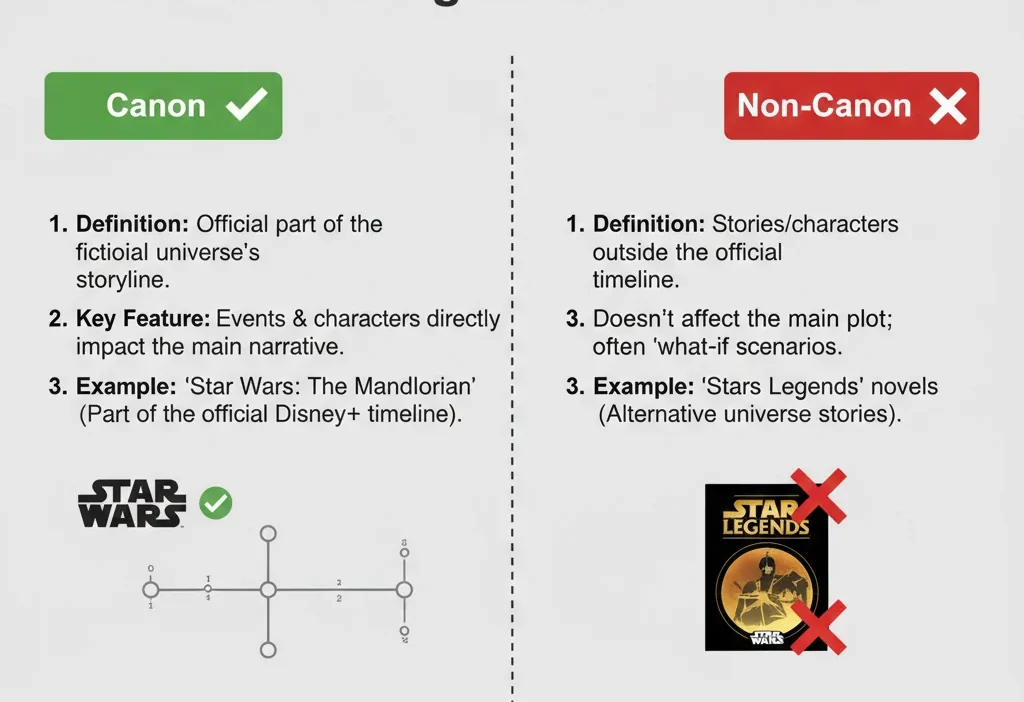
“Canon” means the officially accepted or recognized version of a story, universe, or event.
In pop culture, canon refers to what’s part of the original storyline or official continuity — as approved by the creator or rights holder.
For example:
“In Star Wars, everything in the main movies is canon, but some fan fiction is not.”
🕰️ Origin and Popularity of “Canon”
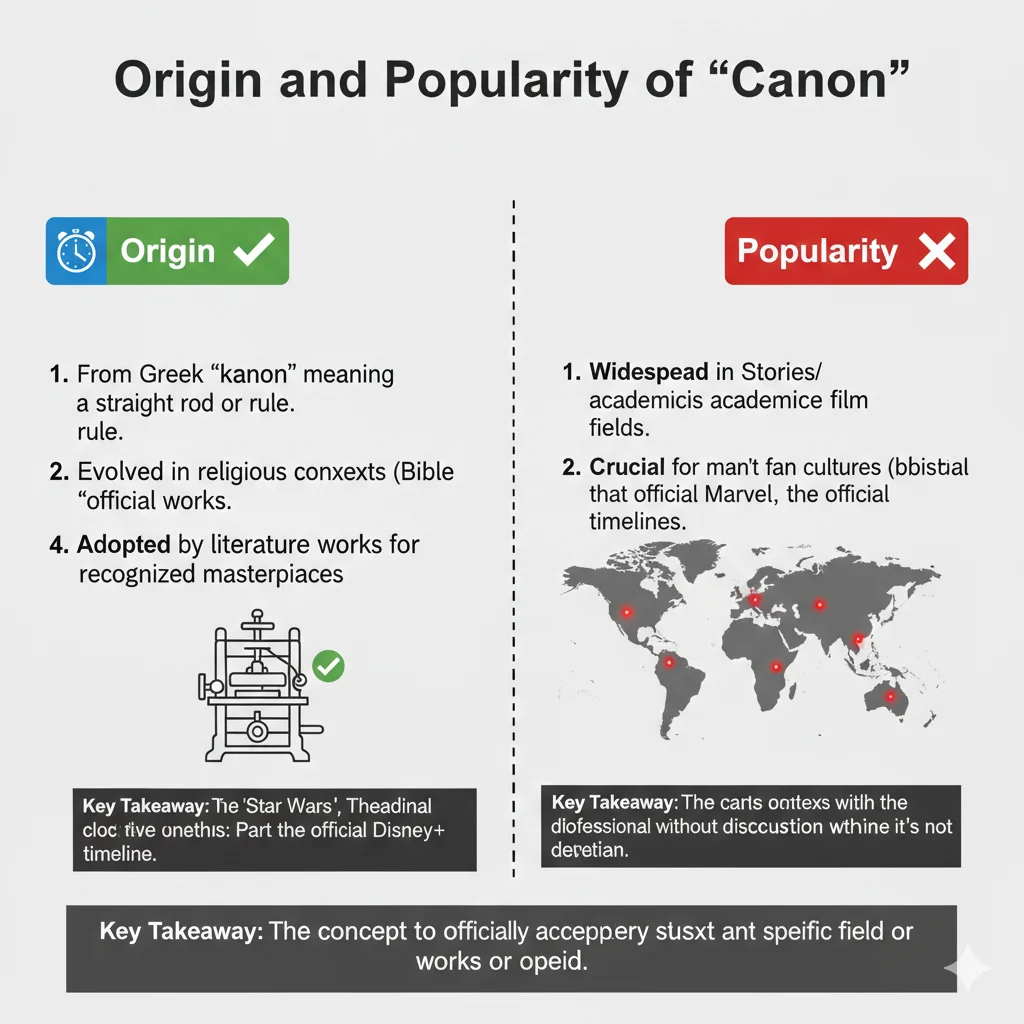
The word “canon” originates from the Greek word “kanon,” meaning rule or standard. It was first used in religious contexts — such as the biblical canon, referring to the officially accepted books of the Bible.
In the 20th century, the term evolved in literature and fandom culture, describing what is officially part of a fictional universe.
📈 It became especially popular with online fan communities and franchises like Marvel, Star Wars, and Harry Potter, where fans debate what counts as part of the true storyline.
🌐 Canon Meaning in Different Contexts
🎬 In Pop Culture and Movies
“Canon” defines what’s officially recognized in a series.
- Example: “Only the Marvel Cinematic Universe (MCU) movies are canon — the old X-Men films aren’t.”
📚 In Literature and Religion
In literature, canon can mean the official works by an author.
- Example: “Only seven of Shakespeare’s plays are considered part of his canon.”
In religion, the biblical canon refers to the officially accepted books of scripture.
💻 In Fandoms and Online Communities
Fans use canon to separate official storylines from fan fiction or alternate universes (AUs).
- Example: “That relationship isn’t canon — it’s just fan-made.”
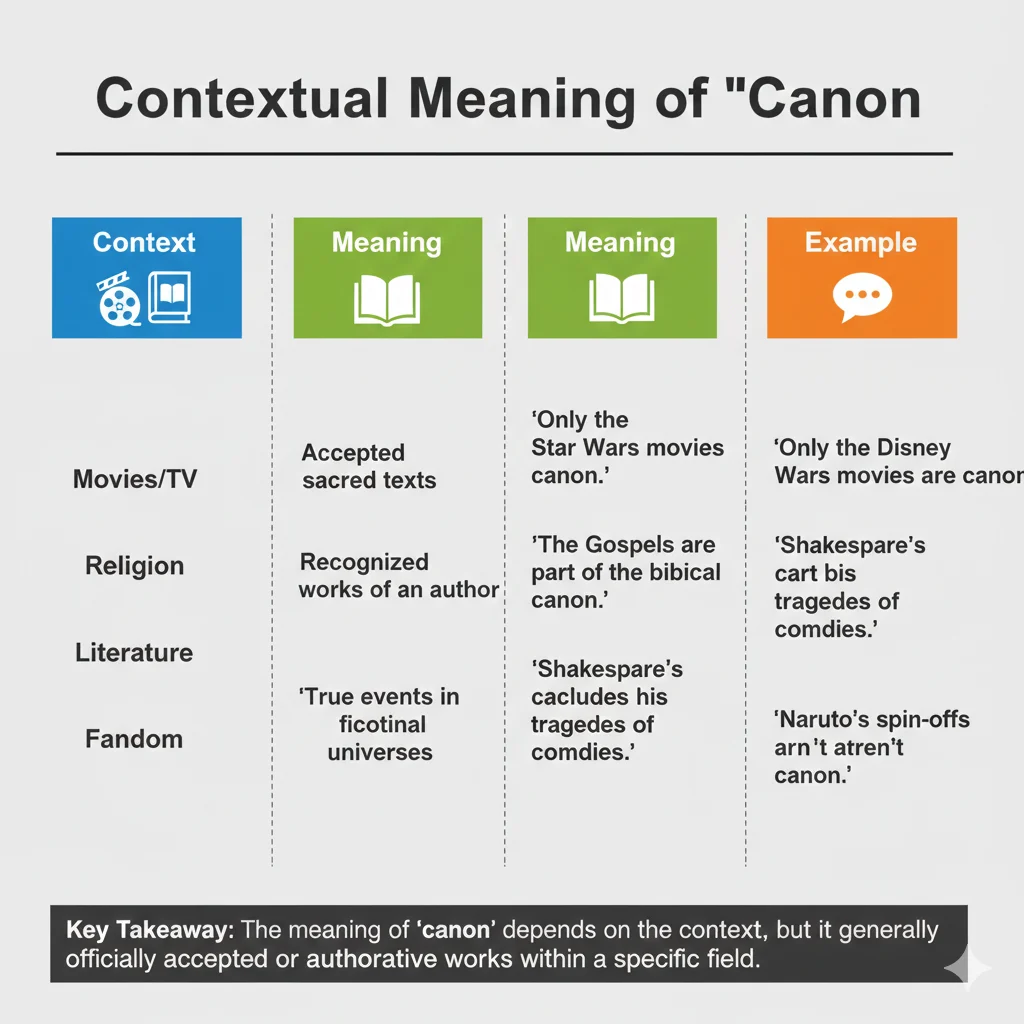
Table: Canon Across Contexts
| Context | Meaning of “Canon” | Example |
| Movies/TV | Official story continuity | “Only the Disney Star Wars movies are canon.” |
| Religion | Accepted sacred texts | “The Gospels are part of the biblical canon.” |
| Literature | Recognized works of an author | “Shakespeare’s canon includes his tragedies and comedies.” |
| Fandom | True events in fictional universes | “Naruto’s spin-offs aren’t canon.” |
💭 Crashing Out Meaning: What It Really Means and How to Use It
💬 Examples of “Canon” in Conversations
Example 1 (Pop Culture Chat)
Fan 1: Is that Harry Potter play canon?
Fan 2: Nope, J.K. Rowling said it’s not officially part of the main timeline.
Example 2 (Online Discussion)
User A: I love this fan theory!
User B: Same, but sadly it’s not canon.
Example 3 (Formal Use)
“The author’s literary canon reflects themes of justice and morality.”
🔍 Similar or Related Terms
| Term | Meaning | Example |
| Non-Canon | Not part of the official storyline | “The fan comic is non-canon.” |
| Headcanon | A fan’s personal belief about the story | “My headcanon is that they got married after the series ended.” |
| Fanon | Widely accepted fan idea not confirmed by creators | “That ship became fanon over the years.” |
| Expanded Universe | Additional stories outside the main timeline | “The old Star Wars books are part of the expanded universe.” |
These terms often appear together in fandom discussions to distinguish between official and fan-created content.
🧭 How to Use “Canon” Correctly
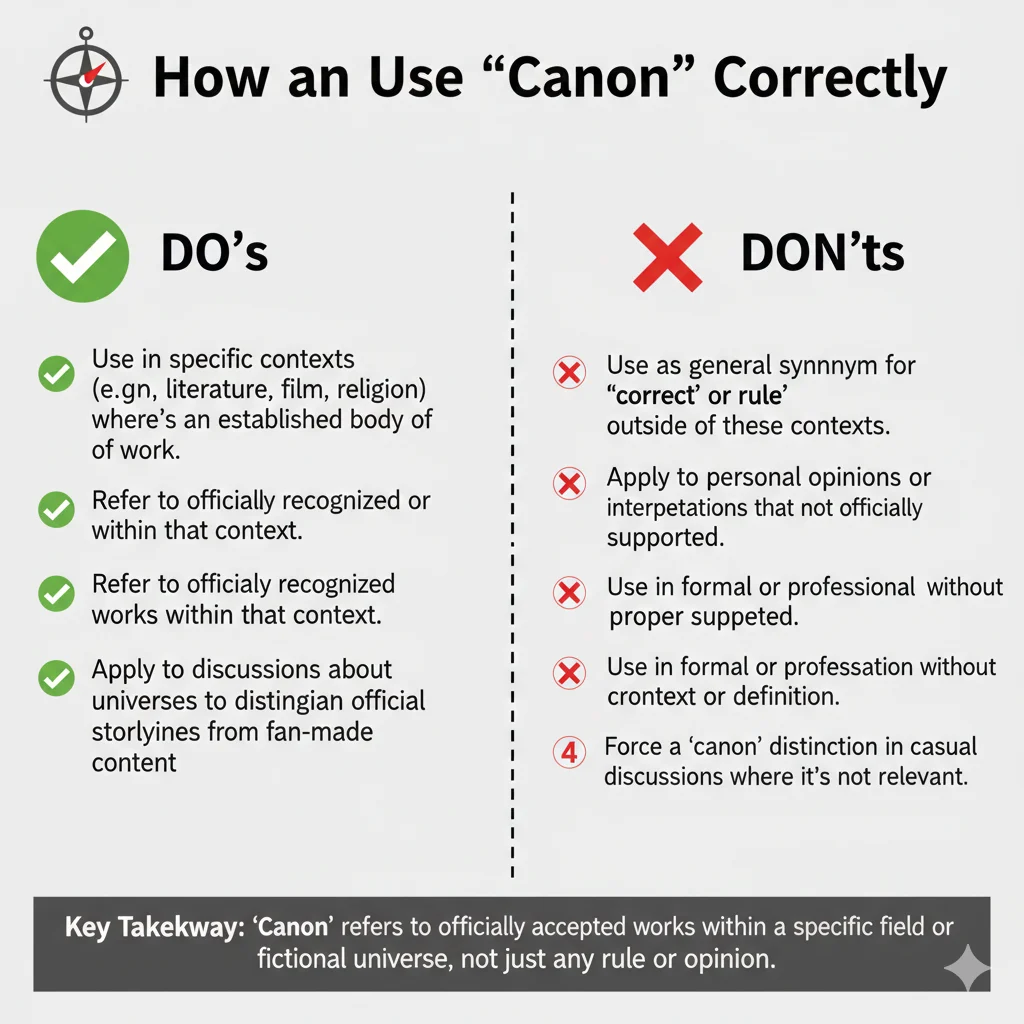
✅ Use “canon” when referring to official content in a series, universe, or religion.
❌ Don’t use it to describe personal opinions or theories — that’s “headcanon.”
Do’s:
- “This episode is canon.”
- “The novel adds new canon details.”
Don’ts:
- “I think it’s canon because I like it.” (subjective)
- “Fan fiction is always canon.” (incorrect)
⚠️ Common Mistakes or Misinterpretations
- Confusing “canon” with “cannon.”
→ “Canon” means official content, while “cannon” (with two N’s) is a weapon. - Mixing up “canon” and “headcanon.”
→ “Canon” = confirmed by creators. “Headcanon” = your personal belief. - Assuming all adaptations are canon.
→ Some remakes or spinoffs may be non-canon even if they feature the same characters.
❓FAQ: Canon Meaning Explained
1. What does “canon” mean in movies and TV?
In movies and shows, canon refers to what’s officially recognized as part of the main storyline or universe, as confirmed by the creators or studios.
2. Is “canon” the same as “official”?
Almost — “canon” means officially accepted within the story’s world, but “official” can refer to products, statements, or merchandise too.
3. What’s the difference between “canon” and “headcanon”?
“Canon” is confirmed by creators. “Headcanon” is a fan’s personal belief or interpretation not officially verified.
4. How do I know if something is canon?
Creators, studios, or authors usually declare what’s canon. Official websites, books, or interviews often confirm it.
5. Is “canon” only used for fiction?
No — “canon” also applies to religious texts, academic works, or music, referring to an accepted body of work.
6. Can something become non-canon later?
Yes. Sometimes creators retcon (retroactively change) a story, making earlier works non-canon — like Disney’s removal of old Star Wars stories from canon.
🧩 Conclusion
Now you know that “canon” means the officially accepted story or version within a universe, whether it’s from movies, religion, or literature.
It helps fans and creators keep track of what’s real vs. imagined in a fictional world. So next time you see a debate online about what’s “canon,” you’ll be in the know.
✨ Now that you understand what “canon” means, you’ll never mix it up again! Keep exploring our site for more clear explanations of internet slang, pop culture terms, and modern lingo.

Evie Wyld is a word-meaning specialist at Meanovia.com. She simplifies complex words, phrases, and language trends, helping readers quickly grasp the exact meaning behind every term in a clear and approachable way.