
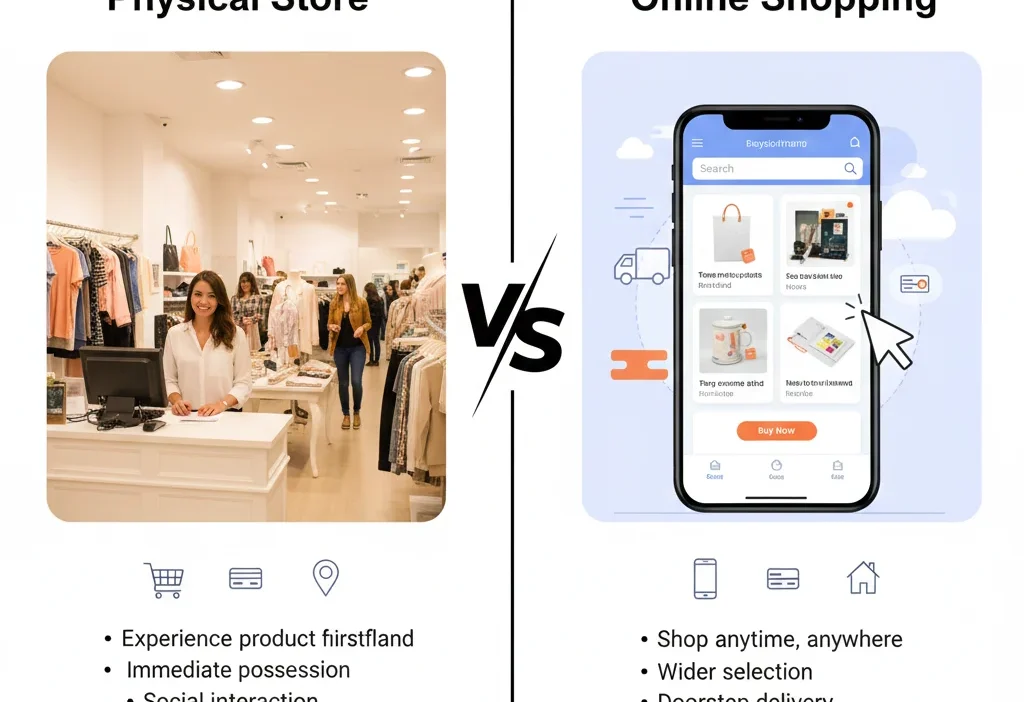
Ever heard the term “brick and mortar” and wondered what it really means — especially in the age of online shopping? 🛍️
You’re not alone! This classic business phrase often pops up in conversations about traditional stores versus e-commerce.
In this article, we’ll cover:
✅ The definition of “brick and mortar”
📜 Its origin and history
💼 Different contexts in business and daily use
💬 Examples of how it’s used
💡 Related terms and FAQs
By the end, you’ll easily understand how “brick and mortar” fits into modern business discussions — and when to use it correctly.
💡 What Does Brick and Mortar Mean?
“Brick and mortar” refers to a physical business location — a store, office, or establishment that customers can visit in person.
It’s a business term, used mainly to describe traditional stores that operate in buildings made of actual brick and mortar, unlike online-only businesses.
Example:
“Amazon began as an online retailer but now has several brick-and-mortar stores.”
🕰️ Origin and Popularity
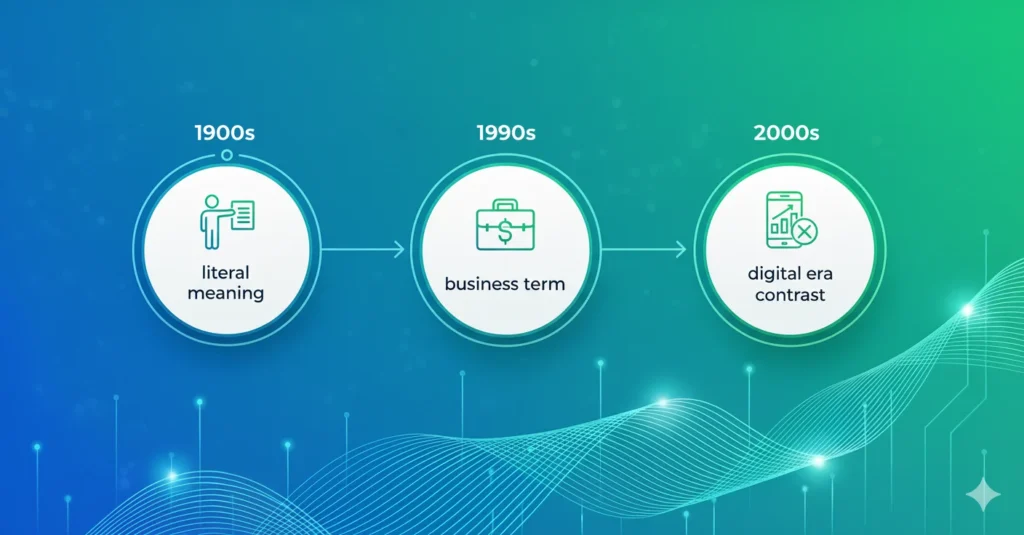
The phrase “brick and mortar” dates back to the early 20th century when physical construction materials symbolized stability and permanence.
- Brick = solid structure
- Mortar = the cement holding it together
As online businesses (or “virtual stores”) emerged in the late 1990s, the term became more popular — used to differentiate real-world stores from digital platforms.
By the 2000s, “brick and mortar” was a standard expression in business, economics, and retail industries worldwide.
🌐 Brick and Mortar Meaning in Different Contexts
🏬 In Business
Refers to traditional stores or companies with physical locations.
“Walmart is a brick-and-mortar retailer that also operates online.”
💻 In E-commerce Discussions
Used to contrast online-only companies with those that have physical stores.
“Many brick-and-mortar stores are adopting online sales models to stay competitive.”
🏫 In Education or Services
Can also describe physical institutions compared to virtual ones.
“Students returned to brick-and-mortar classrooms after months of online learning.”
| Context | Meaning of ‘Brick and Mortar’ | Example |
| Retail | Physical stores vs. online shops | “Nike’s brick-and-mortar outlets are expanding.” |
| Education | In-person learning environment | “He prefers brick-and-mortar classes to virtual ones.” |
| Banking | Physical bank branches | “Brick-and-mortar banks are adding digital options.” |
💬 Examples of ‘Brick and Mortar’ in Conversations
Example 1:
Manager: We should expand our online presence.
CEO: Yes, but our brick-and-mortar stores still attract loyal customers.
Example 2:
“Even with e-commerce booming, many shoppers still enjoy the brick-and-mortar experience.”
Example 3 (Formal):
“Brick-and-mortar businesses often focus on personalized customer service and local engagement.”
🔍 Similar or Related Terms
| Term | Meaning | Relation to Brick and Mortar |
| E-commerce | Buying/selling goods online | Opposite concept |
| Omnichannel | Combining physical and online sales | Includes both |
| Retail Storefront | Physical business space | Synonym |
| Click and Mortar | Businesses that operate both online and offline | Hybrid version |
Example:
“Many brands now follow a click-and-mortar model — combining the reach of online platforms with the trust of physical stores.”
🧠 How to Use ‘Brick and Mortar’ Correctly
✅ Do’s:
- Use it to describe real-world businesses or institutions.
- Ideal for business, marketing, and education contexts.
❌ Don’ts:
- Don’t use it for online-only entities.
- Avoid literal interpretation — it’s a metaphorical term, not about actual construction.
Correct:
“Starbucks is a successful brick-and-mortar business with thousands of stores.”
Incorrect:
“Facebook is a brick-and-mortar company.” (It’s a digital platform, not a physical store.)
⚠️ Common Mistakes or Misinterpretations
- Mistake 1: Thinking brick and mortar only applies to retail.
→ It also applies to banks, schools, and service providers with physical premises. - Mistake 2: Using it to describe online stores.
→ It specifically means physical presence. - Mistake 3: Forgetting it can coexist with online business models.
→ Many companies today are “click-and-mortar,” offering both options.
❓ FAQ Section
1. What does ‘brick and mortar’ mean in business?
It refers to a company that has a physical location where customers can visit — like a store, office, or branch.
2. Is ‘brick and mortar’ formal or informal?
It’s a formal business term used in marketing, retail, and economics to contrast physical and online operations.
3. What’s the difference between ‘brick and mortar’ and ‘click and mortar’?
“Brick and mortar” means only physical stores, while “click and mortar” combines physical and online presence.
4. Where is ‘brick and mortar’ most used?
Mostly in business, retail, and education discussions to differentiate traditional operations from virtual ones.
5. Why is it called ‘brick and mortar’?
Because traditional stores were literally built from bricks and mortar, representing solid, physical establishments.
6. Should all businesses remain brick and mortar?
Not necessarily. Many succeed through hybrid or online models — depending on customer needs and market trends.
🏁 Conclusion
To sum up, “brick and mortar” refers to businesses or institutions with physical, in-person locations. The term originated from the materials used in traditional buildings and now symbolizes stability, trust, and personal interaction — especially compared to online-only operations.
In today’s hybrid economy, brick-and-mortar businesses continue to evolve alongside digital platforms, proving that the physical experience still matters. 🏬💻
Now that you understand the brick and mortar meaning, you can confidently use it in business, education, and everyday discussions! Keep exploring our site for more insightful definitions and trending business terms. 🌟

Patrick Gale is a word-meaning expert at Meanovia.com. He explains complex terms, definitions, and language trends with clarity and precision. His goal is to help readers understand the exact meaning behind every word they search.