
Astute describes someone who is sharp, intelligent, and quick to understand situations. It refers to a person who shows keen judgment, insight, and the ability to notice important details that others might miss.
You may see the word astute used to describe a person’s thinking, decisions, or observations and wonder what it truly means. Being astute isn’t just about intelligence—it’s about perceiving things accurately and making smart, well-timed judgments. An astute person quickly grasps situations, understands people’s motives, and responds wisely.
The word is often used in business, academics, leadership, and everyday conversations to praise someone’s awareness and mental sharpness. Understanding the meaning of astute helps you interpret compliments correctly and use the word with confidence in both writing and speech.
This guide explains astute meaning, usage, and examples to help you use it naturally and correctly.
💡 What Does Astute Mean?
“Astute” means having or showing sharp judgment, insight, and practical intelligence.
It’s an adjective used to describe someone who is quick to notice details, assess situations wisely, and make smart decisions.
Example:
“She made an astute observation during the meeting that changed the company’s direction.”
🕰️ Origin and Popularity
The word astute comes from the Latin word astutus, which means “clever or shrewd.” It first appeared in the English language in the 17th century.
Over time, astute gained popularity in business, politics, and academic writing to describe people who demonstrate strategic thinking or mental sharpness.
By the 20th century, it became a common compliment for individuals who are not only smart but also tactically intelligent — people who can read between the lines and act wisely.

🧩 Astute Meaning in Different Contexts
1. 🗣️ In Everyday Conversation
When someone says a person is astute, they mean the individual is clever, observant, and has good judgment.
“That was an astute comment — you really understand people well.”
2. 💼 In Business and Professional Settings
Here, astute often describes a strategic thinker or smart decision-maker.
“The CEO’s astute leadership helped the company grow rapidly.”
3. 📚 In Academic or Political Discussions
Writers and analysts use astute to describe keen analysis or insight.
“The professor’s astute analysis revealed the deeper meaning behind the text.”
| Context | Meaning of ‘Astute’ | Tone |
| Everyday Conversation | Smart, observant, quick-minded | Positive |
| Business Setting | Strategic and insightful | Highly Positive |
| Academic/Political | Intellectually sharp or analytical | Respectful |
💬 Examples of ‘Astute’ in Conversations
Example 1:
Friend 1: That was a clever way to solve the issue.
Friend 2: Thanks! I just tried to be astute about the timing.
Example 2 (Business):
Manager: Your astute handling of that client really impressed the board.
Example 3 (Academic):
“Her astute interpretation of the poem offered a fresh perspective.”
Example 4 (Observation):
“He’s too astute to fall for such a simple trick.”
🔗 Similar or Related Terms
| Word | Meaning | Difference from ‘Astute’ |
| Shrewd | Clever and practical | Slightly more cunning tone |
| Perceptive | Quick to notice details | Focuses on observation, not judgment |
| Clever | Quick-thinking or witty | Less formal and broader |
| Insightful | Deeply understanding or intuitive | Focuses on emotional or intellectual insight |
🧠 How to Use ‘Astute’ Correctly
✅ Do’s:
- Use it to describe sharp thinkers or wise decisions.
- Use it in positive contexts to compliment intelligence or awareness.
❌ Don’ts:
- Don’t use it to describe simple intelligence — astute implies strategic, real-world smartness.
- Avoid overusing it casually; it’s best for thoughtful or formal communication.
Examples:
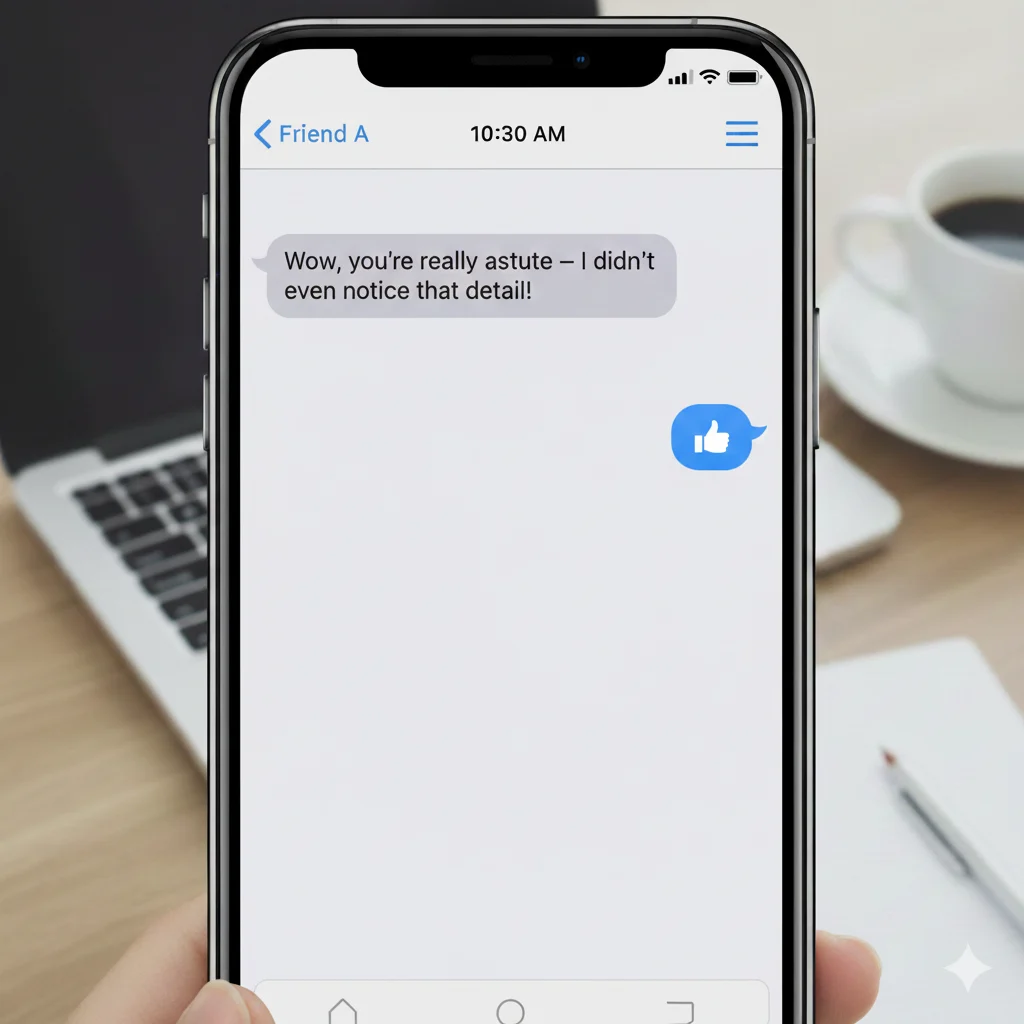
✅ “That’s an astute observation — it hadn’t crossed my mind.”
❌ “My dog is astute at fetching the ball.” (Incorrect — it refers to mental insight, not basic ability.)
⚠️ Common Mistakes or Misinterpretations
- Confusing “Astute” with “Smart”
→ Smart is general; astute implies sharp judgment and practical awareness. - Using It Negatively
→ Astute is typically positive, unless used sarcastically (e.g., “An astute move… for a disaster”). - Misspelling It as “Astuate” or “Astoot”
→ The correct spelling is A-S-T-U-T-E.
❓ FAQ Section
1. What does “astute” mean in simple words?
“Astute” means being clever, quick to understand things, and able to make smart decisions.
2. Is “astute” a compliment?
Yes! It’s a positive word that praises someone’s insight, intelligence, or judgment.
3. Is “astute” formal or informal?
It’s a formal word, often used in business, education, or professional writing.
4. What’s the difference between “astute” and “shrewd”?
Both mean clever, but “shrewd” can imply cunning or calculated, while “astute” suggests wisdom and tact.
5. Can you use “astute” to describe actions?
Absolutely! You can say “an astute move,” “an astute remark,” or “an astute plan.”
6. When should you not use “astute”?
Avoid it for emotional intelligence or physical skills — it’s more about mental or strategic ability.
🏁 Conclusion
To sum it up, “astute” means sharp-minded, perceptive, and wise in judgment.
It comes from Latin roots meaning “clever,” and today, it’s a go-to adjective for describing people who make smart, insightful choices.
Whether you’re writing a professional email, describing a leader, or complimenting someone’s awareness — using astute shows linguistic precision and respect.
Now that you know the astute meaning, go ahead and use it with confidence!

Jon McGregor is a language and word-meaning expert at Meanovia.com. He specializes in explaining complex words, phrases, and modern language trends in a clear, approachable style. His mission is to help readers quickly grasp the true meaning behind every term, making language learning and understanding effortless and engaging.